Farming and conservation go hand-in-hand in the Burren

We take for granted the lunar landscape of the Burren. We did primary-school nature projects on its renowned flora, but often forget that it is so unique.
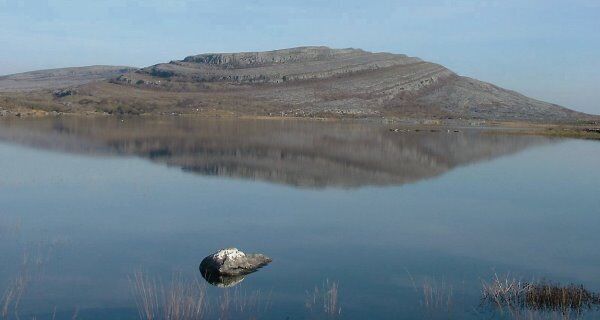
The charity Burren Beo was established in 2009 to preserve what is one of the world’s greatest examples of a glacio-karst landscape, but which 360m years ago was a tropical ocean.
In conjunction with the Irish Farmers’ Association and Burren Farming for Conservation, Burren Beo has restarted a local farming tradition that, it has emerged, is essential to the biodiversity of the Burren, but which had been discontinued because of ill-informed conservation policies.
In protecting this ancient landscape, the most important people are the farmers who own the fields and the cattle that graze there.
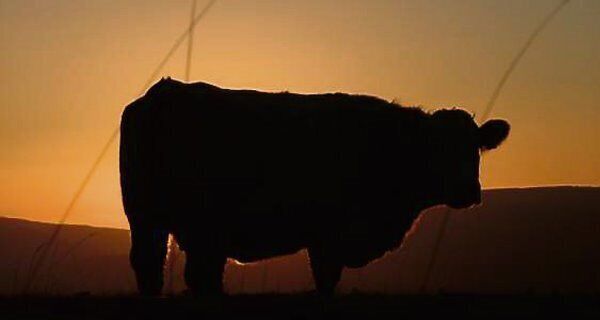
For thousands of years, Burren farmers had marked the end of summer by herding their cattle up onto winter pastures in the limestone uplands, a tradition known as winterage or ‘transhumance’, but then the powers-that-be decided it was harmful to the environment.
Michael Davoren says the support of the charitable trust has made winterage a realistic farming method once more.
“As farmers, we own most of the land and have to do the lion’s share of the work, but by bringing the community together, the trust has helped everyone to work together,” he said.
Michael, whose family has raised cattle on the Burren for centuries, says taking his herd of 30 cows to the uplands for the winter has been beneficial economically, environmentally and personally.
“Two thirds of the land in the Burren is made up of rocky ground with coarse grass,” he says. “So the green land is valuable to farmers and can be fertilised heavily in the winter, when the animals have left for the higher ground.
“Now, all the farmers are given a winterage feed that is made up of all the minerals and nutrients a pregnant cow needs during the winter months, and during the winter we visit the animals every few days with supplies.”
The feed is high in minerals and protein, which create a craving for roughage.
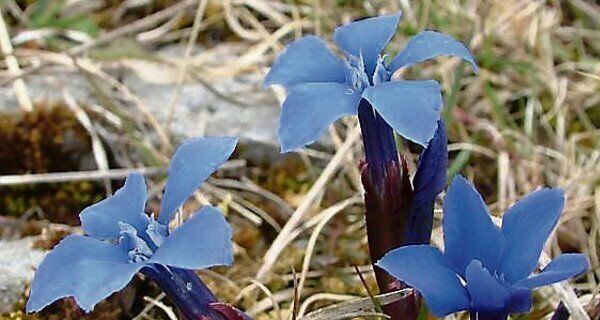
So, during their months in the upland, the cows will graze on the sparse grasses, which allows light to shine on the flowers beneath. These would otherwise be in shadow.
“The winterage programme makes so much sense on so many levels,” says Michael. “While the lowlands are being fertilised, the animals are eating grass on the high ground, which sheds light on the flowers below — this is really important, as some of them only grow to about two inches.
“Then, in the springtime, when the cows return with their calves, the grass contains all the nutrition they need. Because of the support of this project, it is cheaper for us farmers to look after animals in the winter, our cows are healthier and we are blessed with a blanket of colour, as all the flowers are able to blossom.”
The farmers are positive about the winterage programme and the charity is also hoping this will protect this unique corner of Ireland for future generations.
“Burren Beo was set up to create greater appreciation for future generations to enjoy,” says Brigid Barry, trust co-ordinator. “We work closely with Burren Farming for Conservation Programme and the Burren branch of the Irish Farmers’ Association. Through our 20-week programme in local schools, Ecobeo, we work with the farmers’ children — which creates awareness and an interest at a young age”.
Change can be difficult, but Burren Beo has captured the interest of the local community and reinforced the importance of sustaining the area for the future.
“The farmers are the people that best manage the landscape, but, sometimes, through the misguidance of top-down applications, the Burren suffered in the past,” says Brigid. “It has a unique agricultural system and needs to continue to be farmed to sustain it.
“But ‘healthy’ environments rely on healthy and sustainable communities, so the Burren is only ecologically safe when there is a mechanism which allows farmers to farm and vibrant communities to support this region.
“For the past two years, we have held a ‘Winterage Weekend’, where locals and visitors are encouraged to walk with the farmers as they drive their cattle to the higher ground. Hundreds of people turn up — to enjoy the walk and to find out where the cows spend the winter months. Everyone really gets into the spirit of things, and by taking part in the drive it makes people feel connected and really understand why this needs to be done.”
www.burrenbeo.ie

CONNECT WITH US TODAY



Be the first to know the latest news and updates

















