Take good care of your feet
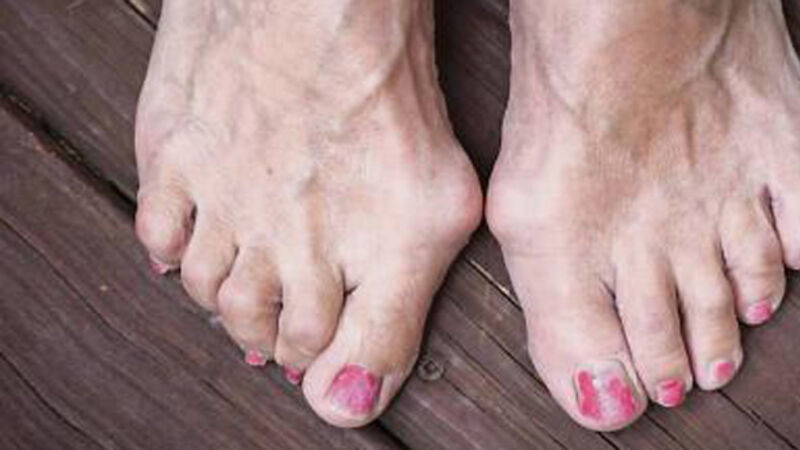
I am worried I might have inherited the family tendency to bunions. Is there anything I can do?
It is possible that the change you have noticed and the pain is caused by a bunion. A bunion is a deformity of the joint at the base of the big toe. This can make the big toe point in towards your other toes and forces the bony joint to stick out resulting in:

Pain and tenderness if inflamed or infected.
Change in the shape of your foot.
Sore skin over the area of the bunion.
Hard skin where the big toe and second toe overlap.
Although a family history of bunions may increase your risk of developing bunions, it does not mean that you will get bunions. Bunions are more common in women, possibly down to our footwear. Other causes of bunions include ill-fitting shoes and conditions such as arthritis and gout. I think it is important for you to have a diagnosis and would advise you to make an appointment with your GP, who can examine both feet and make a diagnosis.
Good foot care is important for everyone. You may find the following general suggestions useful:
* Wear shoes that fit properly; they should not be too high, too tight or too pointed.
* The next time you are buying shoes ask to have your feet measured so that you are wearing the correct size shoes.
* Don’t wear tightly fitting socks or tights.
* Wash your feet regularly and always dry thoroughly especially between the toes.
* Visit a podiatrist or chiropodist regularly so that any problems can be identified early on.
I am sure that your GP can reassure you and suggest the best treatment for you.
Food allergies and food intolerances are very different things. With a food allergy the body reacts abnormally to a particular food. These reactions may be unpleasant and can range from immediate to delayed and from mild to severe — anaphylaxis.
The body sees a particular food as harmful and makes specific antibodies called IgE antibodies to fight these allergens. Histamine and other chemicals are released in the body and they produce the symptoms or allergic reaction.
These symptoms can occur very quickly, within minutes, with just a small amount of food and require urgent medical attention, they include the following:
* Itchy skin or a rash.
* Swelling of the lips or tongue.
* Vomiting.
* Diarrhoea.
* Coughing and sneezing.
* Wheezing.
Any food can cause an allergic reaction but some are more common including peanuts, eggs, milk and shellfish.
Food intolerances are more common than food allergies and can affect different people in different ways. It is possible to be intolerant to more than one food. The symptoms develop more slowly over a period of time, often hours after eating a particular food and include headaches, bloating, diarrhoea and stomach cramps.
Some people cannot tolerate food additives so it is important to read food labels to check for additives. With lactose intolerance the body does not produce enough of the enzyme that is needed to break down the lactose (sugar) in milk. If you suspect an allergy or intolerance you need to make an appointment with your GP to get a diagnosis.
It is useful to write down a diary of the foods taken and the symptoms. Your GP will be able to offer advice and also to assess the need for any further tests if an allergy is suspected.