Ogawa’s collection is a work of meta-fictional splendour
Generally regarded as one of Japan’s most important living writers, Yoko Ogawa has, over a 25-year career, produced a stellar body of work and won all of her country’s major literary honours.

Ogawa’s collection is a work of meta-fictional splendour

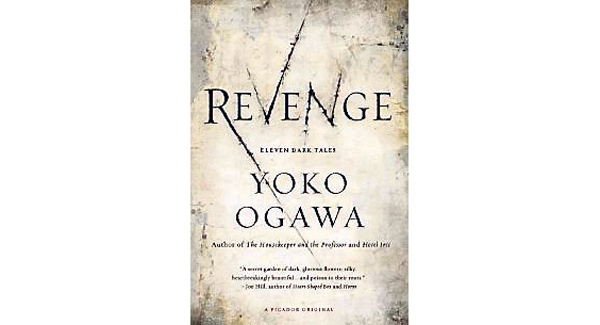
Revenge

Yoko Ogawa (translated by Stephen Snyder)

Vintage, €8.99; ebook, €6.49

Internationally, and commercially, she tends to be overshadowed by the behemoth of Haruki Murakami, but her talents have not gone completely unnoticed either.

In fact, her work is widely translated, and Revenge is her fourth book to reach English audiences, following a collection of novellas, The Diving Pool and two short, beautiful novels, The Housekeeper and the Professor and Hotel Iris, which was short-listed for the Man Asian Literary Prize (that continent’s equivalent of the Booker Prize) in 2010.

The collection opens slowly, with a sad and, in its way, quite beautiful story of a woman buying a strawberry shortcake to celebrate the birthday of her son, who died after climbing inside a refrigerator.

The horror is insinuated, an acceptance of fate’s small monstrosities, and this will be echoed throughout the book. But while there are hints as to what might lie ahead, their measured nature only properly reveals them in hindsight. They accumulate in gentle fashion until suddenly they become overpowering.

Among the other stories, a writer moves into an apartment building and befriends her landlord, an old woman who likes to lurk in the fields at night and who grows carrots that look eerily like hands; a cabaret singer who was born with her heart outside her body finds a bag designer to create a protective pouch for her most precious part; after a murder has taken place in a museum of torture, a young hairdresser develops a fascination for dark things; and a woman goes to confront her husband’s lover but instead witnesses the dying moments of a pet tiger.

Revenge might look slight but in reality is anything but. In Ogawa’s world, surfaces mean little. Each story here can stand alone as a surreal, grotesque and, more often than not, downright weird take on life as the author perceives it to be.

Nothing restrains her imagination; the ghosts of Borges, Poe, Kafka and Cortazar haunt these pages, to fine effect.

But her ambition doesn’t stop there. Because it soon becomes clear that something deeper is going on, that the stories are bound to one another in some strange and tenuous but ultimately inextricable fashion. They share the same air. The girl crying, as a kind of aside, in the opening story’s bakery kitchen is the same girl who feasts, in the next story, with her estranged father.

The kiwi fruit that she and her friend devour in the abandoned post office are the very kiwis harvested from the trees of the old landlady in another story. And then there is the man who gets stuck on a train in a summer snowstorm while on his way to the funeral of his stepmother, a woman who once wrote a short story about an old landlady who grew carrots in the shape of hands.

The result, taken as a whole, is a piece of meta-fictional splendour, a sort of internalised internet. Everything is connected.

Across eleven dark tales, Ogawa has created an entire universe.

And the revelations, in the subtle way they unfold, are thrilling to experience. If the world can raise itself from its Murakami swoon, it will be spellbound by Yoko Ogawa. ‘Revenge’ is full of beautifully pitched short stories, with a depth that defies brevity, but it also pushes the boundaries of what a collection of short stories can be.

This is a book that can stand comfortable comparison with anything published this year.

More in this section

Cookie Policy Privacy Policy Brand Safety FAQ Help Contact Us Terms and Conditions

© Examiner Echo Group Limited













