Fake it ‘til you make it
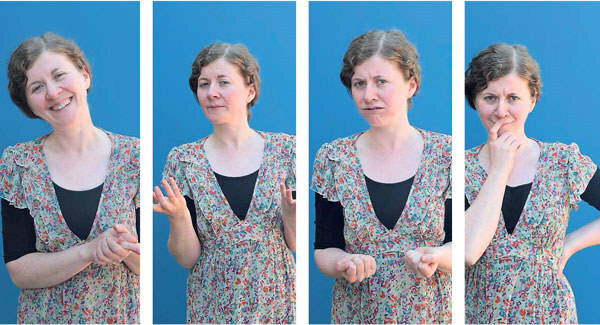
FEW books can make a credible claim to change your life but I may have found one that does. Compelling People: The Hidden Qualities That Make Us Influential argues that charisma isn’t just a character trait some lucky people are born with. It’s something we can all emulate and learn. I’ve spent a week putting the authors’ tips to the test and am now converted to their way of thinking.
John Neffinger and Matthew Kohut are American communications experts who specialise in tutoring corporate executives, politicians and media personalities in public speaking. They have drawn on this experience to write an insightful book that has already become required reading at Harvard Business School.
“When we first met, we were both writing speeches and articles for professors at Harvard and we’d eat lunch together and puzzle over why one speaker would light up a room and another would fall flat,” says Kohut. “It became pretty clear that getting the words right were just one part of the puzzle. The best speakers — whether they were politicians or not — knew how to connect with audiences. We wanted to understand how that worked.”
Adds Neffinger: “We looked at what happens when you size someone up and when you get sized up yourself. Character judgements happen quickly but shape every aspect of our lives. They determine our professional fates, determining who gets the job, who gets promoted and who gets shown the door when times are tough. Our book explains how they work and how you can make them work for you.”
Through observation and research, they realised that two key factors determine this character judgement. The first is strength or a person’s capacity to make things happen through ability or force of will. Strength commands respect.
The second is warmth or the sense that someone shares our feelings, interests and view of the world. We like people who project warmth.
“The two most common problems we notice with clients is either they’re warm but lacking confidence or strong but lacking empathy,” says Neffinger. “This is what led us to realise the importance of strength and warmth.”
Says Kohut:“We warm to warm people and dislike cold ones. We take strong people seriously and disregard those who seem weak and inconsequential. Strength and warmth are the principal criteria on which all our social judgments hinge.”
The most charismatic people combine both. If you can project strength and warmth, you will be liked and respected, admired and maybe even loved.
Bill Clinton did it. He showed people he was strong enough to lead and warm enough to represent them for two terms as US President.
Oprah Winfrey has traded on her innate warmth and strong personality to create one of the most successful media brands in the world.
Closer to home, Mary McAleese used her impressive background as a lawyer and journalist and her ability to connect with people to become one of the most popular Presidents of Ireland. And Gay Byrne’s sharp mind and strong sense of empathy made him the best known media personality in the country.
These people make it look simple but in practice, projecting strength and warmth at once can be next to impossible.
“It’s like the old parlour game of rubbing your stomach and patting your head at the same time – definitely doable but not so easy,” say the authors.
This book aims to make it easier. It does this by explaining exactly what is involved in depicting strength and warmth and how men and women need to exploit these differently to get what they want.
Men are expected to be strong and are rewarded for dominant behaviour. But it’s different for women. They are expected to be warmer than men but in touch with their emotions and not overly ambitious or intellectual.
This can cause problems, particularly for women who rebel against such expectations. Successful women are often viewed as strong but cold. They are criticised for neglecting their families and held up as a threat to the social order.
Hillary Clinton suffered from this stereotype. “She was distrusted because she was strong,” says Neffinger. “One study found she had been the butt of more jokes than any other human being in history.”
Yet she overcame this and now looks set to run for President of the United States in 2016. By learning how to depict warmth, she proved it is possible to change the way people perceive us.
I decided to follow her example at a work meeting last week. I had to make a point that was important to my own advancement but knew there would be others present who would oppose what I had to say. I read this book looking for tips to win them over.
One of these was to dress the part. Women dressed in dark colours tend to be judged more competent than those in light colours. With this in mind, I wore a navy dress that felt comfortable, looked smart and yet portrayed warmth.
I practised the authors’ recommended exercises before the meeting too. Because our bodies and our emotions are hardwired together, stretching out to dominate the space around you releases testosterone and promotes confidence. Stretching my limbs and puffing my chest (in the car where nobody could laugh at me) made me feel relaxed and powerful.
When it was my turn to speak, I did so at a relaxed pace and was careful about how I said what I had to say. I had learned it would hurt my case to come across as strident or angry. Extreme strength in women can invoke negative reactions in others. I had to stay calm and in control.
I also avoided appearing selfish. Sometimes forgiven in men, this is rarely tolerated in women. So, I used ‘we’ instead of ‘I’ and framed my argument in terms of how it would help us as a connected circle of people, instead of only me.This idea of the circle is one of the strongest concepts in the book. “Connect with your audience where you find them,” advises Kohut. “Get into the circle with them. Meet them where they are and you can then get them to walk with you.”
What was the outcome of my meeting? I felt able to steer the conversation in the direction I wanted it to go and by the end, everyone accepted my proposal without any of the disagreement I had anticipated.
I was so successful that I’ve decided to embrace this idea of strength and warmth in all aspects of my life. These traits don’t have to be the sole preserve of ultra successful people like the Clintons.
By learning how to control the way we are perceived by others, we can shape the world around us to our own advantage. As the authors of this book insist: “at the end of the day, character is who you choose to be, not the way you happen to be born”.
1. Stand up straight and smile. “So many people fail to get this right that it bears repeating,” says Neffinger. “Good upright posture projects strength and a smile projects warmth.”
2. Consider the way you move. Entering a room head first conveys weakness; entering with a puffed chest signals strength. Walking quickly with short steps implies nervousness; a long stride shows confidence.
3. Introduce warmth by tilting your head when listening to others.
4. Dominant people make a lot of eye contact. Maintain eye contact but break it occasionally so it doesn’t become too intense.
5. People judge strength and warmth from your handshake. The best technique is to match the other person’s degree of squeezing.
6. Get yourself into the right frame of mind before important meetings. Stretch your body into a dominant position and keep it there for a few minutes to encourage the release of testosterone. If you can’t physically stretch, imagine yourself doing so.
7. Many of us have bad speaking habits, using filler words such as “um” and “like”. This gives the impression of inexperience. Record yourself speaking and listen back. This will make you more aware of what you say and the tone you use.
8. Avoid expressing anger in a professional context as it projects weakness as much as strength. Be assertive and stern instead.
9. Aim for a relaxed and alert speaking speed. Too fast implies nervousness and too slow a lack of interest.
10. If you find yourself fidgeting with your hands, imagine you are holding a volleyball slightly away from your body between your waist and your hips. Curl your fingers as if there were a ball there. Have the ball grow larger or smaller. Hold it out to the audience. Shake it to make a point. It sounds odd but countless public speakers do this and it always looks natural and relaxed.
Find more information on www.compellingpeople.com
See the authors illustrate their advice on YouTube: http://exa.mn/5eh

CONNECT WITH US TODAY



Be the first to know the latest news and updates

















