Being there for the terminally ill makes a world of difference
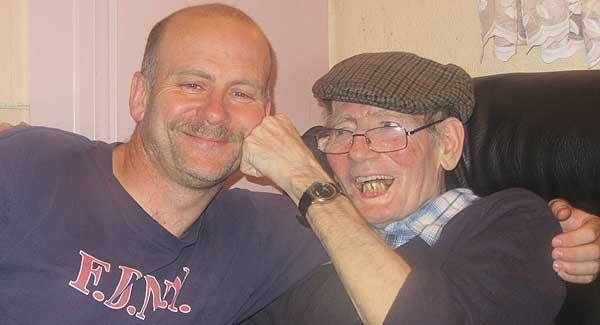
This quote sits on the home page of Kerry Hospice Foundation’s website. It echoes the experience of Ned Keane, whose dad, John, recently passed away at the age of 72.
A retired truck driver from Listowel, John was diagnosed with motor neurone disease, a progressive degeneration affecting the brain and spinal cord, on March 18, 2011.

Early on, palliative care was mentioned.
“My father was always an independent man. I thought there wasn’t a hope he would go into it. But he did, straight away,” says Ned.
It was a wise decision. John went into the hospice in Tralee on Mondays and Fridays between 11am and 4pm. In time it became the only event he looked forward to.
“A big deal was made of him by the nurses. They’d sit down and speak to him. They understood — that was a huge part of it. They would talk about the condition and about day-to-day things with him. And even when he couldn’t talk back to them, they still took the time to talk to him.”
There was also a welcome for his wife Sheila who accompanied him.
“She could sit down, have a cup of tea and a scone. And if she needed her dinner, she could have it, too.”
During John’s early visits, there were art classes, physiotherapy and newspapers to read at the hospice. But as the disease progressed simpler interventions became important, hydrotherapy, in the form of a bath, and reflexology.
“A lot of it was just being there,” says Ned.
The hospice was also a valuable resource for the family. “We had access to all the nurses and doctors. We could ring them whenever we wanted, when we had concerns and visa versa — they often rang me at home,” says Ned. “If we ever needed anything they were always available to us.”
At one stage when John’s speech was affected, the hospice organised a Lightwriter [a speech-generating device]. It also supplied a wheelchair, specially adapted bed and a non-invasive ventilator that he wore at night and at certain times during the day.
When it came to John’s final days, a hospice nurse visited him at home. He passed away surrounded by his wife and four sons.
“What my father had was incurable, but what they did for us was to make life as comfortable as possible,” says Ned. “When we needed them they were always there for us.”
* Kerry Hospice Foundation is one of nine charities to benefit from this year’s Ring of Kerry Charity Cycle, on Saturday, July 5













