Vintage view: Vintage fireplaces
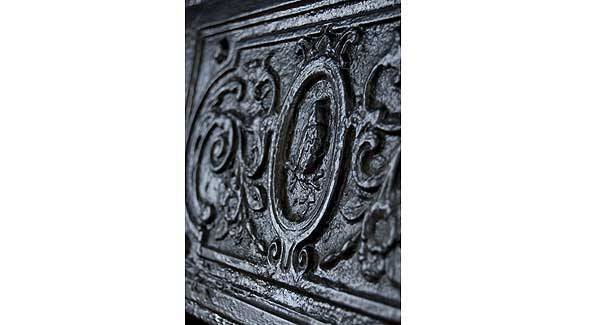
IF you’re lucky enough to live in a period house, antiques will not only comprise of furniture and ornaments, but the fixtures, fittings and elements of architecture in the house.
The eras for old houses is set out roughly with the English reigns. 1714-1847: Georgian (all three of the Georges- so a very stylistic run) 1800-1830: Regency 1837-1901: Victorian 1901-1910: Edwardian 1920-1950s: Art Deco. An echo of Deco is present in many Irish houses right through to the 1950s.
Each of these periods has typical characteristics but every individual house, great and small, has layers of accrued history. The house may have been constructed over several decades and what was modish in 1880 was well out of favour by 1920. Still, screwed, cemented or put in place when the house was built, earlier elements from servant’s bells to finger plates and boot scrappers can survive. This frees you to enjoy tiled fireplaces from the Edwardian life of the house, alongside the Victorian heavily encrusted ceiling rose. Don’t simply rip things out to the earliest date you can establish for the property before assessing their individual appeal and value.
Adding madly to what’s already there can unbalance the surrounding too. If there’s 1940s parquet flooring sleeping under the carpet, rejoice before rejecting it in favour of wide ‘authentic’ reclaimed plank from a 19th century American cotton-mill. Tiling, panels, stained glass, doors, floors and windows — once their gone, they are gone, and a chapter of the building’s history is lost. Windows, the very soul of many old houses are especially vulnerable to ‘renovation’. It seems ludicrous to enthusiastically sign up to composite units with a guarantee of a decade as the century old wood sashes, still in good condition, are taken to the skip.
There are many designers skilled in creating a counter-point of modernity in older buildings. Even if you’re saddled with the obligations surrounding a listed building, an architect with conservation experience can reveal how to sympathetically insert contemporary life into vintage surrounds (www.riai.ie). Flip through the lush illustrations in specialised magazines to get a hint of how this alchemy is done. Stabilise what you can where restoration is impossible or inadvisable. Homes from the mid-1800s onward would have had painted doors, both external and internal and treacle dark floors. If you want to strip the doors and live with a roughed up finish against the glitter of brass door furniture, where possible retain the original door or reinstate the correct panelled style. Salvage yards are heaving with doors, and second fix carpentry ready to return to its rightful place.
Reproduction is not a dirty word and hand crafted elements, be they encaustic tiles for a hall or hand-turned spindles for a staircase will stand out. That slight touch of variety in finish over machine-made perfection sits well in the raked light of a 19th century setting. Deep, chunky skirting is vital in a Victorian house, and bare or painted — anything less than 30cm reads as mean. Dado rails also intended to protect the wall also split the volume, bringing a high ceiling down to earth.
Few of us want to live in museum correct surroundings pickled in aspic. The house must be made warm, dry and habitable. Still, there are few original fireplaces, doors, windows and second fix carpentry so over-stated or impossible to replace (like with like) that they have to be sacrificed to make family life work. There are some well-worn lessons. For example Georgian architecture with its symmetry and classical proportion welcomes in furniture and accessorising of other eras with clean, unfussy lines. Edwardian homes, with the exception of highly stylised Arts & Crafts buildings, can wear just about all contemporary styling without effort.
Cramming wall to wall trappings of earlier eras into obviously later rooms makes purists cringe. For my money if you find a fabulous piece of architectural salvage you can’t live without — stage it exactly as you like (even re-imagined for some new role) and enjoy it. One of my favourite things from my years past was the ghostly imprint in paint left by two huge strap hinges on the kitchen door from the early 1700s. That would have been so easy for someone to have thoughtlessly sanded out.


CONNECT WITH US TODAY



Be the first to know the latest news and updates