John Grant: Coming in from the cold
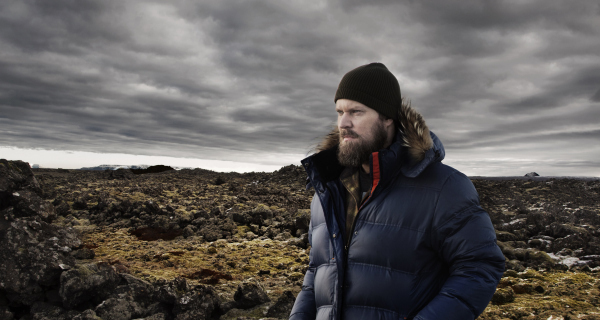
JOHN Grant nods solemnly when conversation turns to Philip Seymour Hoffman, the Oscar-winning actor who recently died from a reported drug overdose. The two had a great deal in common: like Hoffman, the singer spent many years in a spiral of chemical dependency. He cleaned up, got his career on track, made peace with his demons. But he knows those dark urges could return at any moment — that he, like Hoffman, could fall off the wagon, into the abyss.
“You have to be wary of that beast,” says Grant. “Every day, it’s with you. The risks can’t be overstated. It’s a wily creature. Philip Seymour Hoffman was not an idiot. It [the compulsion towards self-destruction] is cunning, so insidious. When you see someone like that succumb, you think, ‘it could be me’. You don’t want to be too cocky about where you are. It could all come tumbling apart.”
Grant was in a gloomy frame of mind even before Hoffman’s death. Two years ago, he was diagnosed HIV positive. So far, he is managing the condition. Still, it weighs on him. All his life, he has been accumulating hurt and pain. And then, when it seemed happiness was in reach, this happens.
“Do I have demons? It depends on the context,” he muses. “I mean, yeah, it is definitely true. Then, couldn’t you say that about anybody? Don’t we all have demons?”
Grant has become a success at 45 and is still adjusting. Through his 20s and 30s he fronted struggling alternative band Czars. Good reviews never translated into anything approaching commercial success. With the group fizzling out, Grant crashed off the rails — losing himself in drugs, booze, self-loathing. He was waiting tables in New York when members of alt.country outfit Midlake convinced him to record at their Texas studio. Thus was born his remarkable solo debut, Queen of Denmark.
“I’ve made a lot of mistakes in my life,” says Grant. “Been humbled many times. I know I’m not immortal. You appreciate success more when you have travelled a long road. I’ve seen people have success at a young age and sometimes I’m jealous. Then I think, you know, maybe you are better having that later, when you can handle it better.”
Grant is gay and grew up in a small town in Colorado. The community was extremely conservative and homosexuality was regarded as a lifestyle choice. As a teenager, he was crippled with self-loathing. His family could not love him for who he was. And so, neither could he.
“I was constantly trying to escape from myself,” he says. “I was in denial as to the reality of who I was. When you run from those things, constantly push them downward, they come out in different ways — anxiety, depression, substance abuse. These are all things people do to escape. If I had been able to have a dialogue with someone who wasn’t judging perhaps it would have been easier. In my circumstances that wasn’t an option. I was told, ‘you have to get rid of it’.
“I couldn’t talk about it at school. Later I found out there were people at school who knew I was gay but didn’t care, who didn’t think I was a piece of shit. I was young and I didn’t have any perspective. Would things be different if I was growing up today? I don’t know. It depends on where you live. There are still lots of bigoted young people, there is still so much discrimination. Kids are picking it up at home from their parents.”
Having regarded himself as a misfit all his life, Grant feels a natural connection with other outsiders. Perhaps that is why he bonded with Sinéad O’Connor. They meet whenever he is in Ireland. This week she joined him on stage in Dublin for a duet of the title track from Queen of Denmark.
“I appreciate Irish humour,” says Grant. “It’s extremely dark. People tell you what they feel. Before coming here, I worried. Ireland has a long, rich history — would I feel outside of that? But no, Irish people made me very welcome. I do think, ‘If Ireland has embraced me, I must be doing something right’.”
Maybe he enjoys rugged North Atlantic landscapes. Grant recorded his second album, Pale Green Ghosts, in Iceland and was so besotted he has made it his home.
“Iceland is unique,” he says. “I connected with the people. I have a fascination with language so I was drawn to the old Nordic tongue. Plus, I like how you are treated there. They let you go about your business. Nobody is interested in what you are doing. I don’t want to paint it as a utopia. They have plenty of their own problems. However, there is lots that is special about the country.”
Pale Green Ghosts was a departure from his debut. In place of the bucolic melodies and hazy ’70s atmospherics, Grant deploys harsh, clanging synths. It’s an electro-pop record, inspired by a youthful infatuation with Gary Numan and Depeche Mode. Did he worry fans might not share his enthusiasm for retro keyboards and chilly atmospherics?
“I was a little nervous,” he says. “It felt good that it was well received. An electronic record was something I’d always aspired to. I’ve always loved those sounds. That’s what guides me — I want to give voice to whatever I am hearing. You have to honestly articulate what is going on in your head.”

CONNECT WITH US TODAY



Be the first to know the latest news and updates

















