A haunting matter of life and death
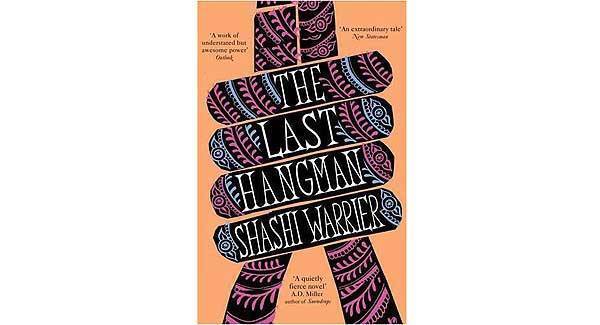
THE Last Hangman opens with a long quoted outline of measures, rope lengths and formulas necessary for calculating, with allowances for weight and height, the most efficient possible manner of execution.
The ritualistic element of the practice is clear, but the information is presented in such matter-of-fact fashion that what comes across is the innate sense of craftsmanship, an assurance that the hands in charge are as able and knowing in their duties as those of a carpenter or a surgeon.
A short prologue, which presents the story’s framing device, gives the perspective of an unnamed writer, from the moment he learns about the passing of Janardhanan Pillai, the hangman in question, the man he has worked so hard to coax into recounting the details of a remarkable life. Janardhanan, we soon learn, has left a treasure behind, in the form of seven reminiscence -laden notebooks, that capture random musings and the jumbled facts of his past. It is the writer’s task to cut and edit and nurture these journals into usable shape, and to make sense of and preserve the voice behind the words.
The main text of the book is straight memoir. Understandably guarded at first, the glimpses Janardhanan offers keep very much to the surface. His home, a one-room shack, dark and sweltering on hot days; Chellammal, his wife, and her quarrelsome ways; the crude rice meals that seem to emphasise their poverty. He lays out, too, his initial impressions of the writer, and the writer’s female translator, particularly the comfortable closeness that the two seem to share, though they are not married and are only vaguely related. Not quite intimacy, but a kind of like-mindedness that he finds intriguing.
He knows that his story is in demand. He is a relic, a symbol of the old ways just as much as the writer symbolises the new. Others have come before, to take his photograph and write about him for newspapers. But this is different. This writer wants to produce a book about the hangman’s life, something that goes beyond the fleeting, to preserve his story for years to come.
The proposition is tempting, fuelled by a promise of a payment set to run to at least 5,000 rupees, though he has doubts. The memories are painful, the worst of them a kind of darkness. But it is the writer’s words that finally convince: “This book is not about money. This is about your mind, your soul. If you are going to talk you will talk regardless of money.”
And so, the hangman takes the notebooks and promises to put down his memories. Gradually, the writing scrapes away protective layers to expose the lurking repressions. His hand aches from guiding the pen, but the task of unfurling his life onto paper has a therapeutic value. And whenever the path into the past turns muddy, a single question lights the way: “If the 117 people you hanged could hear you today, what would you tell them?” There was a time, some two hundred years earlier, when the position of Hangman to the King was considered a vaunted one, the chosen families rewarded with a gift of sixty acres of karamozhivu — precious tax-free land — as well as a generous allowance of 17 rupees per month. And with this elevated status there came, inevitably, a yearning to escape the taint of professional blood. The solution was to subcontract the work, for an annual 300 kilo weight of rice and a pittance wage, to a distant relative. During Janardhanan’s first years in the job, the executions were ordered in the name of the king, whose people had ruled the land for 2,000 years and who was deemed — even though he pandered to the British — to be God’s representative on earth. Hypocrisy riddled these years, as typified by the endless charade of pardons, issued by royal decree but invariably held back an hour too late to benefit the victim. Put down to bureaucratic error, it was a way of salving consciences all around. Except, of course, for the one who tied the noose.
When the monarchy fell and independence was achieved, the role of executioner still had to be fulfilled. “There are seven of us, most of us from the same clan. I am the aratchar, the hangman, and the others are my adiyaans, or assistants. We are like a firing squad, dividing the work amongst us so that the death of the condemned man rests not on any one of us but on all. But as their leader I bear the burden.”
In the 1940s Janardhanan Pillai became hangman for the king of Travancore, and over three decades oversaw the executions of 117 men.
With The Last Hangman, Kerala-born Shashi Warrier, author of three thrillers and two children’s books, has achieved something genuinely impressive: A fictional portrait of a real person that never compromises the facts, and a novel that deftly walks the tightrope between reality and myth. The result is a haunting and provocative story that brings the reader inside the head of a man who fuels his existence, and that of his family, with death. It is a job that sees him largely ostracised from society, makes it difficult to find husbands for his daughters, and batters him with nightmares and regret. Yet he faces all his traumas with dignity. This is the life laid out for him, of obedience to clan, king and state. His father before him worked the hangman’s rope. There were no other footsteps to follow. “Does it matter whether there is a god or not?” says Maash, his old teacher and friend, “or whether there is rebirth or not? Just do your duty, the rest will take care of itself. What else is dharma all about?”

CONNECT WITH US TODAY



Be the first to know the latest news and updates

















