All hail the queen of Irish design
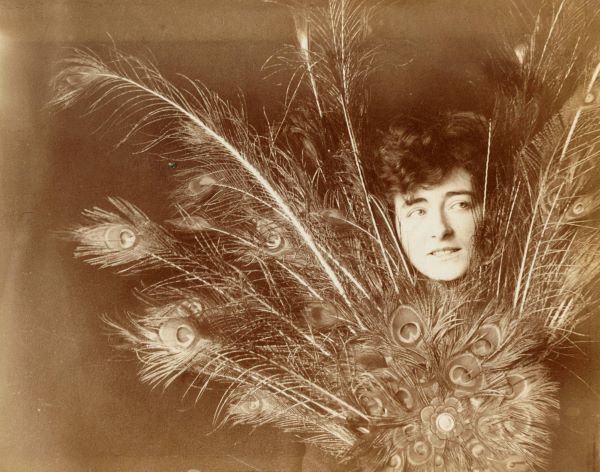
THE major Eileen Gray retrospective at the Irish Museum of Modern Art in Dublin is one of the most eagerly anticipated exhibitions in Ireland this year. It is the first exhibition in IMMA’s main building since extensive renovation work was completed this summer.
The exhibition, curated by Cloé Pitiot, premiered in a different format at the Centre Pompidou in Paris earlier this year. “I selected the most beautiful pieces in the Paris exhibition to come here to Dublin,” says Pitiot. “I wanted to find other pieces so I worked with Jennifer Goff, who is a specialist on Eileen Grey. Collins Barracks loaned a lot of new pieces and new prototypes previously unseen. We also have new drawings and new letters, because I wanted something more intimate.
“The building is very different from the Centre Pompidou. In IMMA I think it’s like the house of Eileen Gray in her birth country so I wanted the exhibition to reflect her — it’s a more modest exhibition than in the Pompidou.”
Gray (1878-1976) was born in Enniscorthy, Co Wexford, to an artistic family, but spent most of her adult life in France. She studied painting in London and Paris, and worked as a self-taught architect.
In 1907 Gray took up permanent residence in an apartment at 21 rue Bonaparte in Paris where she lived for the rest of her days. While Gray continued painting her entire life, she is best known for her interiors, furniture design, carpets and architecture. Her colourful lifestyle also had a hand in keeping her in the public consciousness. Gray never married but several relationships with male and female partners are documented.
Gray’s interest in Japanese lacquer techniques was a major part of her career. She used the process of applying layers of heavy high gloss finish on screens and furniture she designed for commissions. The intriguing Asian influence gave her work a distinction. One of her most famous lacquer works, the ‘Block Screen’, is on loan from the Victoria and Albert Museum in London. It is a piece of furniture which challenges its own function. When opened, one can see through between the blocks. “Normally a screen is to separate two spaces,” says Pitiot. “With Eileen Gray the screen in fact unifies two spaces. It is a play between the void and the blocks.”
Another piece of furniture with hidden layers of meaning is ‘The Siren Chair’. Jennifer Goff, curator of the Eileen Gray collection in Collins Barracks explains: “It’s the idea of the mermaid and the siren. The person she did the siren chair for was Damia, her lover at the time. The whole idea is of the siren being the singer, the person that puts you under the spell.”
Gray sold her furniture from her own Paris gallery, Jean Désert. She never went into industrial furniture production. Pitiot thinks she was more interested in developing new furniture and moving forward with her designs. The original works that have survived are mostly one-offs. This makes the exhibition in IMMA a rare opportunity to see the work first hand, as many of the pieces will return to private collections.
Gray set up a studio with Evelyn Wyld in 1909 for the production of her rug designs. Many of the original gouache designs are on display in IMMA, with original rugs and rugs reproduced in the 1970s by Donegal Carpets. The rugs’ abstract designs are often coded renditions of other works by Gray. Pitiot and Goff have deciphered meanings from several of the rugs, including site plans, footprints of buildings and other hidden messages.
Gray’s 1923 design work on ‘Boudoir de Monte Carlo’ presented a sensual interior which was received with disdain by local critics. However, the project caught the attention of members of the De Stijl movement in Holland, who lauded her as a genius. This connection was a point of departure which saw Gray’s work develop with modernist sensibilities.
Gray’s friendship and collaborations with Romanian architect Jean Badovici propelled her move into architecture. Le Corbusier, a heavyweight in French architecture, was also a big influence, although their acquaintance was often fraught.
Tubular chrome and leather are two of the hallmarks of Gray’s furniture. She moved from lacquer work to a more pared back aesthetic and a function driven style in the 1920s. Her cork-topped table was designed for her residence E-1027 in the south of France, so that the clatter of glass and ware on the table would not disturb the sound of the ocean.
“She was very attached to modest materials,” says Pitiot. “In fact, the lacquer served every time the client came and said, ‘I would like a screen’ or ‘I would like a chair’. But with the modernist pieces of furniture, they are only for Jean Badovici or for herself. They are more ‘Eileen Gray’.”
Gray collaborated on E-1027, her first architectural project, with Badovici. This was the first project Gray treated as a cohesive living interior and exterior. Her design concept rubbed against the modern abstracted architecture of the period, as Gray insisted that the design was secondary to the needs of the inhabitants. “There are a lot of circles and rounds, no hard edges, sweet and strong,” says Pitiot. “If you have the occasion to go inside it is an incredible house, with an extraordinary view of the sea. It is really a manifest of modern architecture.”
It was important to Gray that she was remembered as Irish. Jennifer Goff has found ample evidence of this in her 12 years of research on Gray’s legacy. “She was writing letters back and forth with Prunella Clough, her niece, and Dorothy Walker, who was a very well known art critic. And again and again, over and over, ‘I long for Ireland’, ‘I want to come back to Ireland’. Many people said that when she left Ireland after her mother died in 1919 that she never came back. It’s not true, we have it recorded from interviews she did with Maeve Binchy that she came back right up until 1954.”
Ireland is fortunate to have acquired three collections of work through the National Museum. Gray has gone in and out of public consciousness, but interest revives when her work is publicised through major exhibitions and auctions. Most recently the sale of ‘The Serpent Armchair’ broke all records. It had been acquired in the 1970s by Yves St Laurent and realised €21.9m in Christy’s 2009 auction. Goff was in attendance at what she calls a frenzy of people bidding in €500,000s. “I have to say there was a sense of pride that there was this piece of furniture, by an Irish woman, that all of a sudden had achieved a world record price for any individual item that had ever been sold at auction. I also think she would have been laughing her head off.”
E-1027 was conceived as a Cote d’Azur retreat for Eileen Gray and Romanian architect Jean Badovici, her lover and collaborator. It was built between 1926 and 1929 in Roquebrune overlooking the sea. The flat-roofed L-shaped building is constructed on stilts, its strip windows dissecting the façade.
While Gray collaborated with Badovici on the project, she took the lead, immersing herself to the point of camping on-site during construction. The project adheres to Le Corbusier’s five points of new architecture: pilotis (reinforced concrete stilts), roof garden, free plan, strip windows, free façade.
While the flat white building can be said to be part of the Modernist movement that so interested Gray, its appeal to her is thought to be rooted in the primitive white buildings of the Algerian landscape, where she spent time in 1905.
E-1027 is a code that intertwines the names of Gray and Badovici — partly using numbers corresponding to the sequence of their initials in the alphabet. ‘E’ stands for Eileen, ‘10’ for Jean, ‘2’ for Badovici and ‘7’ for Gray.
The floor to ceiling strip windows operate on a pivot and slide mechanism and can fold back to open the whole living area to the outside terrace. They were designed and patented by Badovici, who also oversaw technical matters during the build.
When drawing up the plans for E-1027, Gray mapped out the plausible daily movements of the inhabitants, their guests and the maid. From here she laid out the rooms to keep crossover of routes to a minimum. Each bedroom was designed with the occupant in mind, with built-in furniture and integrated work desks.
E-1027 was furnished with Gray’s furniture, some designed specifically. The furnishings, subordinate to the overall design, were chosen to create a cohesive aesthetic throughout the house. The carpets and wall hangings are all intrinsic parts of the overall design. Gray was revolutionary in her development of the architectural plans, ranking the needs of the inhabitants higher than the exterior finish. The overall result is an interdependence of the exterior, interior and furnishings.
Badovici’s friend Le Corbusier was unsettled by Gray’s progression as an architect, not being comfortable with a female enjoying success in his line of work. On one of his visits to the villa he painted eight striking murals on the interior walls. Although permission had been granted by Badovici, they jarred with Gray’s carefully balanced interior. Incensed, she banished Le Corbusier from the villa. The French designer went on to build his own swimming cabin on the rocks nearby, infringing visually on the E-1027 site. It was under the gaze of E-1027 that he swam to his death in 1965.
E-1027 changed hands after Badovici’s death in 1956. The original furniture was sold at auction in the 1990s. The murder of a new owner in 1996 brought more controversy to the villa.
The local council of Roquebrune-Cap-Martin purchased E-1027 in 1999, and the house has been designated a National Cultural Monument. Restoration began in 2006 but has been blighted by criticism. A debate on whether Le Corbusier’s murals should stay or go is still a hot topic. E-1027 is expected to open as a public museum this year.
- runs at IMMA until Jan 19. www.imma.ie

CONNECT WITH US TODAY



Be the first to know the latest news and updates

















