Fuel economy is king again when choosing a new car
WOULD you buy a car with the number 13 on the registration plate? The new, two-period system — cars registered between January and the end of June are numbered 131, while those registered in the second six months of the year are numbered 132 — should calm fears, but eagle-eyed triskiadekaphobics (people who fear the number 13) may still not be deterred.
Whether it’s down to superstition or the ongoing economic mess, new car sales are still down.
It’s a far cry from the heady days of the boom, when tiger cubs bemoaned the waiting list for the latest model of the Audi TT, and we couldn’t wait for our SSIA money to mature, so we could put a down payment on a new Lexus.
On a good day in Dublin, you could easily spot Ferraris, Bentleys and Aston Martins. In the first five months of 2007, more than 137,000 new cars were registered in the State.
This year, the figure for the equivalent period was 51,500.
“Traditionally,” says Suzanne Sheridan, of SIMI, the Society of the Irish Motor Industry, “people changed their car every few years. Now, they’re saying I’m uncertain about wages, about my job, so they’re holding off. This is the second biggest investment after your house, after all.”
Examination of those figures reveals more about how our car-buying behaviour has changed in six short years.
Firstly, the change is more pronounced in rural areas. Meath has suffered the greatest fall in new car sales, down 74.7%, from 5,208 in the first five months of 2007, to 1,316 in the same five months this year.
Wicklow, Longford, Roscommon, Sligo, Monaghan, Cavan and Leitrim have also suffered falls of 70% and higher, while ten more rural counties sustained falls in the high sixties.
Dublin has suffered least by this measure, but, even so, new car sales have fallen by 55% in the capital.
When we buy, fuel economy has become over-riding.
Looking at individual car segments, sales of small standard-class cars, including models like the Ford Focus, Honda Civic and VW Golf, are down 68%.
Likewise, sales in the Mini standard class - models like Fiat Punto, Ford Fiesta and Opel Corsa — have fallen by 61%.
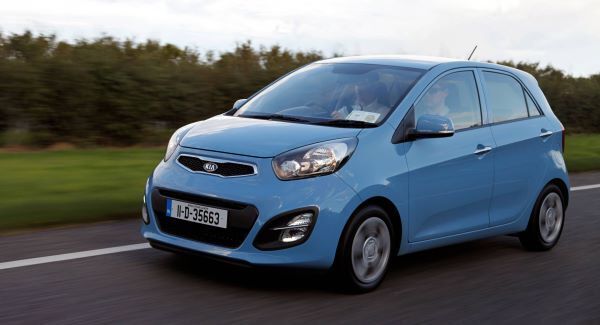
However, sales of micro-standard cars, which include the Ford Ka, the Opel Agila and the Kia Picanto, have risen. 1,684 of these cars were sold in the first five months of 2007, compared to 1,867 this year.
We’re all gone over to diesel. Sales of petrol cars are down a whopping 86%, while sales of new diesel cars are down by only a tenth of one percent.
“It’s really flipped,” says Sheridan. “Traditionally, with diesel, they’re more expensive to buy, but cheaper to run, so they tend to be suited to people who are doing a lot of mileage.”
The good news is that we’re driving a lot cleaner. The introduction of the new road-tax regime, in 2008, which set tax according to CO2 emissions rather than engine size, has transformed the environmental profile of the national car stock.
In the first five months of this year, 31,000 people bought new cars in the cheapest ‘A’ band, compared to just 2,000 six years ago.
So, not only has the environment benefited from a smaller number of cars on the road, those that are being sold produce far fewer emissions.
Curiously, sales of SUVs (sports utility vehicles) haven’t fallen by as much as some would expect - down only 23% on 2007.
The reason, Sheridan says, is related to the improving environmental profile of SUVs.
“Models in this sector would often come with high road tax, however, manufacturers have reacted to a demand for cleaner engines by producing more fuel-efficient versions.”
We don’t have full figures for 2007, she says, but, in 2008, the average Jeep/SUV had CO2 emissions of 246g/km.
So far, this year, that has dropped to 164g/km in that segment.
One model is worth talking about. The Nissan Qashqai was the best-selling SUV in 2013 and in 2007, but, this year, the car bucked the trend by some considerable distance, outperforming 2007 by 37% in the first five months of the year.
At the upper end of the market, things are as you would expect. Thirty-five Porsches were imported in the first five months of 2007. This year, so far, one lonely Porsche entered the country.
There is a human story behind this, Sheridan says. “At the end of 2007, there were 49,500 people working in the motor industry, and, at the end of last year, it was 37,500.”
The industry is now pinning its hopes on the new registration period. When a similar system was introduced in the UK, it gave rise to a second spike in car sales in July.
If would-be car buyers aren’t scared off by the number 13, the industry could well get a summer holiday from the recession.
CONNECT WITH US TODAY



Be the first to know the latest news and updates









