Following the money to a bloody outcome
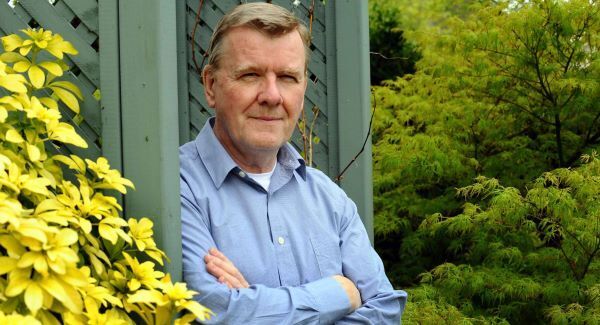
Mark O’Sullivan’s book taps into the zeitgeist of post-boom Ireland and there is, early in the narrative, an expectation that a shadowy auctioneer may be next to get his comeuppance, and, who knows, a cast of dubious bankers may also meet a gory end.
Without spoiling this carefully plotted novel, which is peopled with credible characters, it does not play out schematically as some righteous dude’s revenge on everyone who made big bucks in those heady times. But O’Sullivan is not above playing with the base expectations, if not the outright bloodlust, of Irish readers in these disgruntled times.
“There is a desire, out there, to see people punished for what has happened. In those Celtic Tiger years, most people, but not everyone, accepts that the moral balance was lost. It applied in government, and in society across the board, to an extent. When the moral balance is disturbed, there is a moral vacuum created, where anger, and all of those kinds of negative emotions, are going to come to the surface. That is very much what happens in any crime novel, in particular.
“I’ve picked an iconic period that represents the fall of the Celtic Tiger period, that week in November, 2010, the arrival of the IMF in Dublin and, also, the very cold snap, one of the coldest we had for many years in Ireland. I place the mystery in a very pertinent social period.
“I think, what I have done with that, is not to preach, but to overturn expectations. I’ve always tried to deliver something that was not quite expected. That applies, not just to stories, but also to characters.”
On that standard, O’Sullivan succeeds. The first surprise on reading Crocodile Tears is that this is the debut crime novel of the writer, who lives in his hometown of Thurles, Co Tipperary.
Set in Dublin, this police procedural has a cast of policemen and policewomen, and a more interesting cast of characters representing Ireland’s property story: developers, builders, auctioneers, and a couple caught in negative equity in a house built on a flood plain.
O’Sullivan has plenty to say about Ireland, but the book is far from preachy.
He lets the stories do the talking, without forcing himself on to the page as a moral commentator on events.
Occasionally, he lets his characters comment, like when Inspector Leo Woods arrives at the scene of a JCB crashed into the front of a house in a ghost estate, with someone presumed dead inside: “The JCB held its bucket up towards the heavens, like it was pleading with the gods to accept this human sacrifice. How many more silent sacrifices would be laid at that altar in the coming months and years?
“Jobless mortgage defaulters driven to madness or suicide. Broken marriages, homes and hearts. A lost generation paying for the sins of the rich.”
Inspector Leo Woods has a disfigurement on one side of his face, caused by Bell’s Palsy. O’Sullivan has based the disfigurement on three friends who have this condition, in particular one who dealt with it with a self-deprecating black humour.
This also ties in with a more self-conscious indulgence of the central character, namely his interest in a collection of ritual and ornamental masks.
Woods also indulges in cocaine. This kind of moral ambivalence makes him more interesting. Again, there is a calmness and some elegance to the writing, which doesn’t squeeze every narrative possibility out of every scenario.
“A work will survive if it is written well and the characters are interesting. In a commercial world, where the shelf-life of books of any kind seems to grow shorter all the time, AC Grayling wrote recently about writing as well as you possibly can, not to write lazily, or jump for the headlines,” O’Sullivan says. O’Sullivan wrote six novels for teenagers when his two daughters were that age.
“I had a context for writing that type of fiction, I was speaking to my kids. When they got a bit older and went to college (UCC), I felt I didn’t have a context for writing those kind of books anymore, and I moved on to a literary novel (Enright) that was published in 2005.
“I have been a reader of crime all my life. One influence would be Michael Dibdin and the Aurelia Zen novels set in Italy.
“They were very well-written — good prose, which I love. I also like, very much, Kate Atkinson books, which, again, lean more towards the literary than the detective. I was kind of looking for a territory somewhat like that myself.
“Another big influence would be the American noir writer, David Goodis, who wrote terrific novels, including Dark Passage, that was made into a film with Humphrey Bogart and Lauren Bacall. He had a lovely little ability to do something quirky with the language and also in the characters.”
O’Sullivan’s own credits include winning two Reading Association of Ireland biennial awards, the Eilis Dillon/Bisto Book of the Year Award, and three Bisto Merit awards.
His novels have been translated into six languages and he has received the Prix des Loisirs 1999, as well as a White Raven Book (European Libraries) Award.
His first love was poetry — publishing poems in Poetry Ireland, Poetry Australia, Poetry Wales, Fortnight and various other periodicals. Conscious of who was interviewing him, O’Sullivan said his first publishing break was in the 1970s, when he had poems published in what was then The Cork Examiner, through Tom Mullins, who edited a poetry section for the newspaper.
“Poetry was always my real passion. When you write a detective novel, like this one, the first thing is to make the story as compelling as possible and to conceal the mystery as much as possible.
“No matter what I read, and no matter what I write, I am interested in keeping the language as alive as possible.
“I think, having an interest in poetry you have an interest in writing right down to the word and line, and, I think, you also learn from writing poetry, even if you are not very successful at it, you learn a sense of rhythm and flow.
“I think, that can translate quite well into prose, into how a sentence can work and how a paragraph can work, and with the general flow of the piece.
“I did a lot of my writing for the young-adult market. You learn instincts, you learn about the shape of a work, the structure of work, those are not vague, artistic things. The reader, or viewer, will know immediately, because without them the book won’t work.
“The middle third of a book is where a book can fail. To maintain that middle third, you are taking your storylines and sending them in as many different directions as you can, so as to baffle the reader in the sense of ‘maybe it’s this or maybe it’s that’.”
As for the Detective Inspector, he certainly is a conflicted man, a man with a past, and while Crocodile Tears is a very satisfying crime read, there is a sense that there’s plenty more road for Leo Woods.
“I think, he quite courageously deals with his disfigurement and also courageously deals with how he is alone. The reader will only learn very slowly about him, it is over a period of time. Obviously, I hope this character will survive for at least a few more books,” O’Sullivan says.
Click here to buy this book.
CONNECT WITH US TODAY



Be the first to know the latest news and updates