The answer my friend is shining in the sky
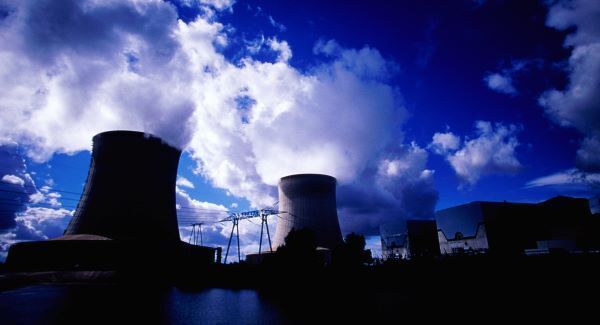
Decoupling food production from hydrocarbons is vital to our survival. John Sweeney considers a book that suggests we look to the sun for an alternative source of energy

The answer my friend is shining in the sky

Project Sunshine: How science can use the sun to fuel and feed the world

Steve McKevitt & Tony Ryan

Icon, London, €10.87;Kindle, £6.23

A TITLE that purports to address the four biggest challenges of the 21st century — population growth, food security, energy security, and climate change — inevitably grabs immediate attention.

Is it yet another popular science book or does it have a meaningful contribution to make in breaking down the barriers to addressing these global issues?

It is true that, to a large extent, scientists have failed to communicate effectively the urgency of tackling these interlinked problems. In conveying only an increasingly bleak message of environmental doom and gloom, they have frequently switched the public off as to what practical solutions may exist.

The communication of science has been in many respects one of the great disappointments of recent decades, as evidenced by the denigration of scientists as boffins or nerds in the popular press, or the character assassination of individuals by the likes of climate sceptics. It is therefore refreshing to see that Project Sunshine succeeds in communicating big issues in lucid and easily understood language. In offering a more positive message and an optimistic pathway, perhaps unrealistic in places, a “yes, we can” ethos permeates the 300 or so pages of this stimulating and thought-provoking text.

Project Sunshine is the product of two authors, a research scientist and a communications expert, who came together while making a promotional video for a research project of the same name at the University of Sheffield. The book essentially seeks to explore the practicalities of the looming transition from the age of carbon to the age of solar. The synergy between the authors’ disciplines is what makes it successful. The journey to the sun, as might be expected, raises more questions than it answers, but does provide a useful scientific perspective on the background and current state of play as radical ideas emerge to tackle the intertwined problems involved.

The text works its way from the Big Bang through the evolution of Homo Sapiens to the agricultural and industrial revolutions in a well articulated manner. The energy, food, and population background to the pivotal changes in human occupancy of the planet are carefully and skilfully laid out with entertaining diversions to side issues along the way. Progress is seen mainly as a consequence of individual technological advances. Energy sources, management, and distribution is seen as crucial. The convenience of liquid energy and the interchangeability of energy and food is emphasised and skilfully explained.

For example the energy density of everyday objects such as a chocolate chip cookie or a pat of butter is compared with an AA battery or a measure of petrol. For the lay person, some of the narrative is less well known, but similarly insightful. Quite rightly, the authors emphasise the industrial synthesis of ammonia from nitrogen and hydrogen by Fritz Haber as “more significant for the modern world than the invention of the aeroplane, nuclear power, television, and the internet combined”.

As the next breakthrough necessary to support a rapidly growing and resource consuming population is analysed, the energy issue moves centre-stage. Despite the fracking-led revival of the hydrocarbon economy, the days of oil and gas are numbered and the authors agree on the necessity to wean us off them before irreparable climate damage is done. In searching for alternatives, the need to use all possibilities is emphasised. Wind, hydro, wave, geothermal, and biomass are useful, but ultimately seen as not sufficient to replace oil and gas. The inability of renewables alone to provide the additional 11TW of energy the world will need within four decades is used to argue for the expansion of nuclear energy programmes.

More efficient reactor designs and reexamination of the potential of thorium as a safer, cleaner, and more economic fuel than uranium is advocated as part of this process. But even building one conventional nuclear power station a day somewhere in the world for the next 50 years is acknowledged as inadequate, as well as unsustainable in terms of uranium supplies.

The authors’ technological optimism prevails also in food production where organic farming is essentially given the thumbs down and GM is embraced. Here the failings of technology are glossed over at times. Yes, it is correct to state that food intake per capita across Africa is down 20% on 1960 and that average crop yields are similar to late 16th century Europe. But why has the Green Revolution not taken root here? Is it that climate variability has trumped technology or is it that high yielding crops don’t work when expensive energy doesn’t provide cheap fertilisers? What about the collateral damage of intensive food production to soils, biodiversity and health?

It is often when scientists get on to their own specialisms that the communications objective tends to play second fiddle to trying to encompass the complexity of the individual’s work. There is a latent fear of appearing to dilute one’s work to a caricature and perhaps of running the risk of peer criticism. In some respects, therefore, this text is weakest when the key issue of solar energy is addressed. This is the central focus of the research project underpinning the book and should therefore be the forté of the authors. Much of the first 11 chapters provide an excellent lead-in to this main feature: The potential of solar energy of various types to fill the looming energy gap.

Unfortunately after a promising start, Chapter 12 becomes rather parochial and a lot of namedropping betrays the text’s origins in the University of Sheffield research project. Consortium members and colleagues are lauded and the project assumes centre stage too much at the expense of the big-picture issues. Horizons are drawn in rather too much in terms of work being carried out in the UK and US, with awareness of the considerable research effort elsewhere in Europe and Asia not given much of an airing.

As might be expected when dealing with such a wide-ranging set of topics, the authors sometimes face the dilemma of whether they are writing a popular science book or a serious one. Periodically some of the language errs on the side of the former too much (“All of the things that seem so common to us here on earth — nitrogen, oxygen, iron, water, gold rings, X Factor contestants, and Tesco — are actually very rare indeed.” !Mankind… may be the only animal that plays Xbox Live, goes on holiday and makes chocolate brownies”.) However, these are minor criticisms and in general the handling of complex topics is exemplary for the audience targeted. This reflects well-sourced material as exemplified by the chapter-by-chapter references at the end of the text.

Ultimately the text concludes that commercialisation of key scientific research is essential to begin the effort at transition to the solar economy. Decoupling food production from hydrocarbons is seen as a first step of many. Encouragingly, the authors acknowledge the limits to growth and the finite nature of the planet’s resources. Using seven times as much water as in 1900, manufacturing 16 times as many products, and transporting them by aeroplane over 1.5 trillion miles each year is seen as unsustainable. Reducing consumption, creating a culture of abhorrence of waste and inefficiency is seen as essential. Ultimately the journey from carbon to solar, filled initially with technological optimism, ends on a familiar note of ‘think local act global’. This is no bad thing.

- Professor John Sweeney is director of the Irish Climate Analysis and Research Units (ICARUS) at NUI Maynooth. Over the past 35 years he has been involved in research and teaching on climate change and represents Ireland on a number of European academic bodies. He is president of An Taisce.

More in this section

Cookie Policy Privacy Policy Brand Safety FAQ Help Contact Us Terms and Conditions

© Examiner Echo Group Limited













