How all of life is rooted in the often strange, complex evolution of plants
The plant kingdom is the glue that binds together all of life. Without plants, there would not be animals, though without animals there could be plants. Plants are responsible for the creation and maintenance of the oxygen-rich atmosphere on which most other life forms depend.
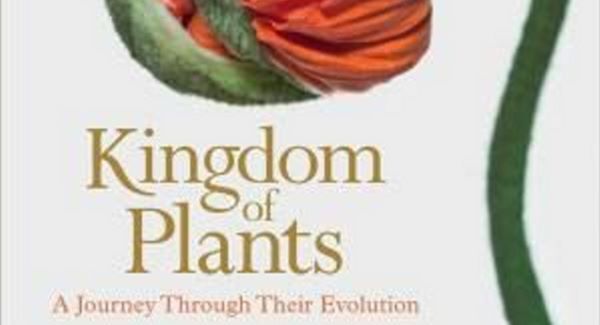
That is the message of Kingdom of Plants: A Journey Through Their Evolution. It examines the huge diversity of plant life on Earth, explains how it evolved, and shows the interdependence between plants and other plants in their habitats, as well as the complex relationships between plants and other life forms.
All this is done with meticulous, and up-to-date, scientific information that is simply and clearly imparted. It’s not just a book for botanists; it’s a book for everyone with an interest in the living world.
Neither is it a book of facts. It’s a celebration — there is joy and wonder in the writing and an enthusiasm for the variety and oddity of nature.
This is reinforced by the excellent photographs.
There are nine chapters. The first deals with plant evolution — the 500m-year-old story of how plants borrowed the trick of photosynthesis from bacteria and algae, developed it, took it out of the water and on to the land, and then diversified as they colonised and modified a wide range of habitats.
Just as photosynthesis had enriched our atmosphere with oxygen, the arrival of plants on land enriched it with soil.
A major step in the evolution of plants was flowers and seeds. The development of flowers meant an intensification of the relationship between plants and animals.
Most of these animals were insects which, in exchange for a feed of nectar or pollen, helped the plant to spread its genes when it reproduced.
But some plants use reptiles, birds or mammals to help pollination and seed-dispersal.
Much of the information in the book is imparted by anecdote, and there is good material on the plant explorers of the western world and the treasures they brought back for botanic gardens and wealthy sponsors.
The book accompanies a television series, Kingdom of Plants 3D, presented by David Attenborough for Sky 3D. Both the book and the series are a collaboration with the Royal Botanic Gardens, at Kew, in London. One possible criticism of the book is that it contains a lot of text in praise of Kew.
Kew is a major international centre for botanical collection and research, but the book gives the impression that it’s the only one in the world.
The form and function of plants — basically, what they look like and how they work — is dealt with in detail.
There are fascinating stories of weird adaptations so plants can cope with problematic environments and droughts, wildfires and browsing animals.
There’s also a fascinating section on the mathematical rules that underpin many of the shapes and patterns in the plant world.
Although Leonardo da Vinci developed a mathematical formula to determine the size and shape of trees, most of the mathematical analysis of shapes in nature is very recent.
Kingdom of Plants: A Journey Through Their Evolution examines how plants have shaped the world.
It expands on their role in maintaining a stable and oxygen-rich atmosphere on Earth, and discusses the related topic of their influence on climate.
There’s a discussion of the part that plants play in a variety of eco-systems, though this is largely confined to natural eco-systems. But the next section has the sub-heading ‘Plants and Humans’ — a massive subject that is dealt with quite briefly, though the contribution of plants to medicine is dealt with in more detail.
The next topic is plant communication. This might seem an oxymoron.
For centuries, it was thought that plants were silent and inactive in their habitats, but, nowadays, we know a lot more about their ability to communicate, through soil and air, with other plants and with other life forms.
Mostly, they use scent and colour to communicate, though some plants, including some Irish species, can produce heat to inform insects that they’re ready for pollination.
The relationship, usually mutually beneficial, between plants and animals, is dealt with next.
Anyone with a sense of wonder will be gob-smacked by the strangeness of some of these relationships.
Plants that pretend to be decaying meat to attract flies, plants that are pollinated by geckos or bats and the weird honey possum, or noolbenger, from Australia, a tiny marsupial that lives entirely on nectar.
The many strategies that plants utilise to survive in extreme conditions, particularly in deserts, are dealt with next. It’s anthropomorphic to ascribe ingenuity to plants, but there really isn’t another word that does justice to the variety of strange mechanisms they employ to overcome adversity.
The book discusses the reactions of plants to the adversity of humans and gives examples of many extinctions and near-extinctions. It tells the story of the cafe-marron, a small and rather beautiful flowering tree from the island of Rodrigues.
It was long thought to be extinct, until a school boy discovered a single specimen in a remote location. Cuttings were sent to Kew where, after a long struggle, they were able to propagate it from seed.
Again, it’s a bit of a eulogy to the heroic botanists of Kew, but it makes fascinating reading.
There’s a chapter on fungi, which might annoy purists because fungi are no longer regarded as plants. They now have one of the five kingdoms of biological classification all to themselves.
But the relationship between fungi and plants is so close the inclusion is justified.
It’s now reckoned that between 95% and 99% of plants rely on fungi for successful growth.
The final chapter has the ominous title ‘No Plants, No Humans’. It catalogues the fact that some 20% of the planet’s plant species are now in danger of extinction, due to human activity, and also the extent of the impact of this loss if we don’t work to avert it.
How all of life is rooted in the often strange, complex evolution of plants
By Dick Warner
Kingdom of Plants: A Journey Through Their Evolution
Will Benson
Collins, £25
Review: Dick Warner
The plant kingdom is the glue that binds together all of life. Without plants, there would not be animals, though without animals there could be plants. Plants are responsible for the creation and maintenance of the oxygen-rich atmosphere on which most other life forms depend.
That is the message of Kingdom of Plants: A Journey Through Their Evolution. It examines the huge diversity of plant life on Earth, explains how it evolved, and shows the interdependence between plants and other plants in their habitats, as well as the complex relationships between plants and other life forms.
All this is done with meticulous, and up-to-date, scientific information that is simply and clearly imparted. It’s not just a book for botanists; it’s a book for everyone with an interest in the living world.
Neither is it a book of facts. It’s a celebration — there is joy and wonder in the writing and an enthusiasm for the variety and oddity of nature.
This is reinforced by the excellent photographs.
There are nine chapters. The first deals with plant evolution — the 500m-year-old story of how plants borrowed the trick of photosynthesis from bacteria and algae, developed it, took it out of the water and on to the land, and then diversified as they colonised and modified a wide range of habitats.
Just as photosynthesis had enriched our atmosphere with oxygen, the arrival of plants on land enriched it with soil.
A major step in the evolution of plants was flowers and seeds. The development of flowers meant an intensification of the relationship between plants and animals.
Most of these animals were insects which, in exchange for a feed of nectar or pollen, helped the plant to spread its genes when it reproduced.
But some plants use reptiles, birds or mammals to help pollination and seed-dispersal.
Much of the information in the book is imparted by anecdote, and there is good material on the plant explorers of the western world and the treasures they brought back for botanic gardens and wealthy sponsors.
The book accompanies a television series, Kingdom of Plants 3D, presented by David Attenborough for Sky 3D. Both the book and the series are a collaboration with the Royal Botanic Gardens, at Kew, in London. One possible criticism of the book is that it contains a lot of text in praise of Kew.
Kew is a major international centre for botanical collection and research, but the book gives the impression that it’s the only one in the world.
The form and function of plants — basically, what they look like and how they work — is dealt with in detail.
There are fascinating stories of weird adaptations so plants can cope with problematic environments and droughts, wildfires and browsing animals.
There’s also a fascinating section on the mathematical rules that underpin many of the shapes and patterns in the plant world.
Although Leonardo da Vinci developed a mathematical formula to determine the size and shape of trees, most of the mathematical analysis of shapes in nature is very recent.
Kingdom of Plants: A Journey Through Their Evolution examines how plants have shaped the world.
It expands on their role in maintaining a stable and oxygen-rich atmosphere on Earth, and discusses the related topic of their influence on climate.
There’s a discussion of the part that plants play in a variety of eco-systems, though this is largely confined to natural eco-systems. But the next section has the sub-heading ‘Plants and Humans’ — a massive subject that is dealt with quite briefly, though the contribution of plants to medicine is dealt with in more detail.
The next topic is plant communication. This might seem an oxymoron.
For centuries, it was thought that plants were silent and inactive in their habitats, but, nowadays, we know a lot more about their ability to communicate, through soil and air, with other plants and with other life forms.
Mostly, they use scent and colour to communicate, though some plants, including some Irish species, can produce heat to inform insects that they’re ready for pollination.
The relationship, usually mutually beneficial, between plants and animals, is dealt with next.
Anyone with a sense of wonder will be gob-smacked by the strangeness of some of these relationships.
Plants that pretend to be decaying meat to attract flies, plants that are pollinated by geckos or bats and the weird honey possum, or noolbenger, from Australia, a tiny marsupial that lives entirely on nectar.
The many strategies that plants utilise to survive in extreme conditions, particularly in deserts, are dealt with next. It’s anthropomorphic to ascribe ingenuity to plants, but there really isn’t another word that does justice to the variety of strange mechanisms they employ to overcome adversity.
The book discusses the reactions of plants to the adversity of humans and gives examples of many extinctions and near-extinctions. It tells the story of the cafe-marron, a small and rather beautiful flowering tree from the island of Rodrigues.
It was long thought to be extinct, until a school boy discovered a single specimen in a remote location. Cuttings were sent to Kew where, after a long struggle, they were able to propagate it from seed.
Again, it’s a bit of a eulogy to the heroic botanists of Kew, but it makes fascinating reading.
There’s a chapter on fungi, which might annoy purists because fungi are no longer regarded as plants. They now have one of the five kingdoms of biological classification all to themselves.
But the relationship between fungi and plants is so close the inclusion is justified.
It’s now reckoned that between 95% and 99% of plants rely on fungi for successful growth.
The final chapter has the ominous title ‘No Plants, No Humans’. It catalogues the fact that some 20% of the planet’s plant species are now in danger of extinction, due to human activity, and also the extent of the impact of this loss if we don’t work to avert it.
CONNECT WITH US TODAY



Be the first to know the latest news and updates









