Life Hack: Here’s why you shouldn't keep milk in your fridge door
Are you using all parts of your fridge correctly? I wasn't...
Life Hack: Here’s why you shouldn't keep milk in your fridge door

Are you storing your milk in the worst spot possible in the fridge?
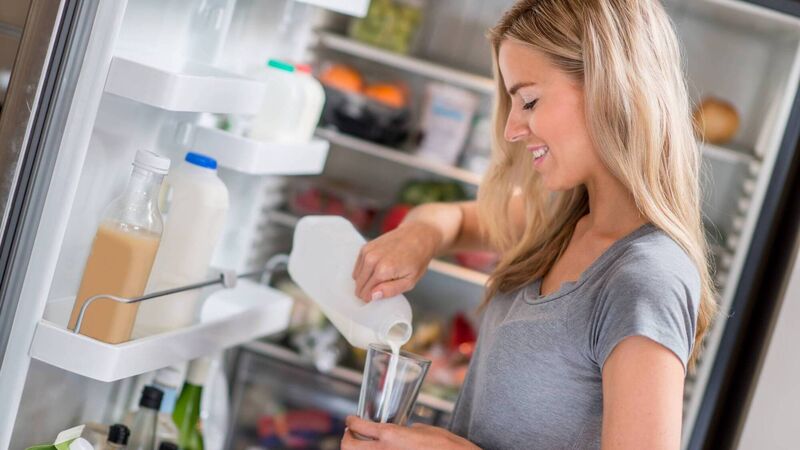
When unpacking the big shop, I imagine many people stack their grocery shopping in a fridge in a similar way: raw meats together on the bottom shelves where it’s coldest, cheese and yogurt placed up higher, and a bottle of milk sitting on the little shelf on the fridge door because it’s very clearly made to fit them. 

I know that’s how I typically store everything.

However, I recently read that many of us are storing some common food products incorrectly, particularly when it comes to those shelves on the fridge door.

Apparently, I’ve been putting my milk in the worst spot possible, even though it seems made for it.

Here’s what you need to know.

Why is a shelf on the door different?

A refrigerator’s temperature should be kept at between three and five degrees Celsius to ensure food is preserved and does not lose its quality for as long as possible.

This cool temperature helps to slow down the growth of bacteria and microorganisms, so your perishable groceries last longer and reduce the chance of illness.

Denise O'Donoghue: Apparently, I’ve been putting my milk in the worst spot possible, even though it seems made for it.

If you would like to make sure your fridge is perfectly cool, you should set it at a lower temperature for the best results.

“In general, fridges set at 3C or 4C will ensure that the food is between 0C and 5C,” the Food Safety Authority of Ireland says.

However, because of how often we may be opening the fridge door — and keeping it open while we browse for dinner inspiration — the shelves on the door can vary from this range.

It’s not that those shelves are particularly warmer when the fridge is closed, but the temperature there fluctuates so much due to frequent opening and closing.

This variability means items kept here can spoil faster than if they were stored in the main body of the fridge, as they spend so much time swinging out into room temperature conditions, which warms them up.

What products should I avoid storing on the door?

As I mentioned above, milk is one perishable that we’re advised to keep elsewhere in the fridge.

Dairy products such as milk and cream are at an increased risk of spoiling when stored on the fridge door shelves — no one wants to find themselves pouring lumpy milk into their morning cuppa, so I’ll be moving my bottles deeper into the fridge.

Milk and other dairy products are better stored inside the fridge, towards the back of the appliance, where it is colder.

Similarly, non-dairy alternatives, like oat and almond drinks, should be treated the same way, as should breast milk if it is being stored in your fridge.

What can I actually keep there?

If you do want to make the most of that space (and who wouldn’t), there are plenty of things you can place on your fridge door shelves instead. 

It is a good place for things like eggs (which are also safe to store at room temperature), condiments such as ketchup and brown sauce, jams, and fruit juice — basically anything that won’t be inching closer to its expiration due to a degree or two of fluctuation. 

Any soft drinks should be OK sitting here as well.

Any other parts of the fridge we might be using incorrectly?

It’s certainly possible. 

For example, those drawers you find at the bottom of the fridge are called crisper drawers, and they are made specifically for storing fruits and vegetables. They are designed to keep your produce fresher for longer as they offer a more humid environment. 

Some even come with vents in them — if a vent is closed, it’s on a high humidity setting, and when open, it’s low humidity. High humidity is ideal for leafy vegetables to stop them from wilting, while low-humidity drawers help to prolong ethylene-producing fruits, as the gas can escape. 

If, like me, your drawers don’t have a vent, consider them high-humidity and perfect storage for your salad leaves.

More in this section

Cookie Policy Privacy Policy Brand Safety FAQ Help Contact Us Terms and Conditions

© Examiner Echo Group Limited