Power of collective female voice is raising the bar for standards
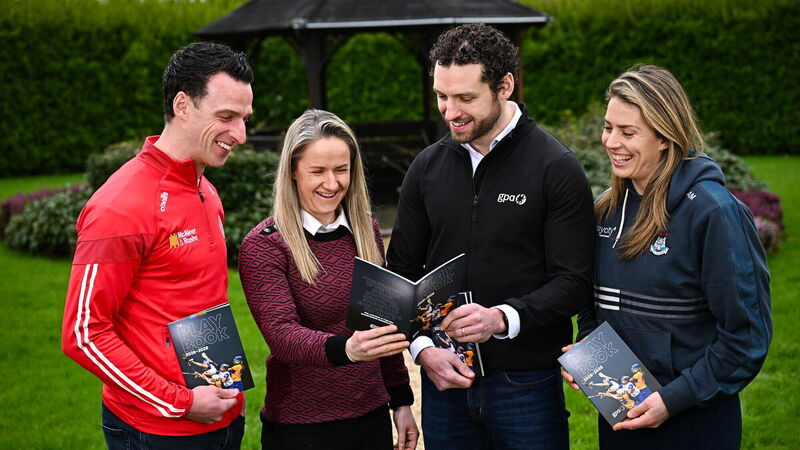
BY THE BOOK: Niall Morgan, Gemma Begley, Tom Parsons and Aisling Maher at the launch of the GPA Playbook. Pic: Seb Daly/Sportsfile
The never-ending fall of rain has proven an unlikely barometer.
For female inter-county players, the horrendous weather of recent weeks served as a harsh reminder of what must still be tolerated on the poorer side of the Gaelic games house.
The Wexford camogie bus was on the outskirts of Limerick when word arrived that the Clareabbey venue for their Division 1B League fixture against Clare was unplayable. Banner officials sourced use of a 4G pitch, but with none of Wexford’s training taking place on a synthetic surface, they refused this alternative for fear of risking injuries.
Meelick agreed at the shortest of notice to accommodate the fixture. A club hurling game was in play when Wexford pulled up.
With both dressing-rooms occupied, it was suggested to the 33 travelling Wexford women that they change on the bus. This was before they had to warm up on a field where sheep were grazing and then play a National League game on a wholly unplayable pitch, after which there were no hot showers.
The Clare men were at home the following afternoon in the National Football League. They hosted Laois at Cusack Park. Nobody was asked to change on a bus. Nobody went without a hot shower before their journey home.
The same February weekend as the Wexford and Clare women endured such demeaning treatment, the footballers of Roscommon and Down were given the same second-class welcome.
Páirc Esler was deemed unplayable the day before their Division 3 contest. Cherryvale 4G, a facility run by Belfast City Council, is where the tie ended up.
There was no dugout and no stand. When Roscommon’s Kate Nolan was forced off because of injury, her teammates covered her in coats as she was treated along the sideline in torrential rain.
Roscommon and Down’s male counterparts were in action at Pearse Stadium and Wexford Park that same weekend. No sub was forced to stand unsheltered on the sideline for the duration of proceedings. No injured male player had to be covered in coats while treated in the rain.
Gemma Begley is the GPA’s head of equality and player relations. The two episodes outlined stand in relative “isolation”, she says. They also stand as a reminder, though, of the need to constantly redefine acceptable standards in the women’s game.
With integration supposed to be just a year in the distance, Begley cannot understand why female fixtures are still being dealt with in isolation. Caps shouldn’t really still be in hand.
“It obviously still frustrates people when those negative experiences happen, and all the associated messaging that comes with that,” Begley began.
“My big frustration is why is there still not a joint fixtures committee in each county when we are this close to integration? Why are they all not sitting around the one table lining out their league fixtures and home venues and having a Plan A and then a Plan B if it is wet. It seems like a really obvious thing to do and there’s no financial cost to it either.
“All of these conversations about integration have been about costs, but there’s stuff like that you can do and it involves nothing more than organisation and communication.”
We’ll circle back to integration in a while. This being Women in Sport week and tomorrow being International Women’s Day, we reckoned it as suitable a time as any to examine the current status of the female inter-county player.
The first-ever female players’ charter, now in the final year of its three-year run, has made certain there’ll never be another Cavan strike for non-payment of travel expenses.
From a situation in 2023 where only 9% of female inter-county players were in receipt of mileage expenses, every female inter-county player, be she Ashling Thompson at midfield on the Cork senior camogie team or the wearer of the No.30 shirt in the Antrim junior football set-up, is now being paid 50 cent a mile.
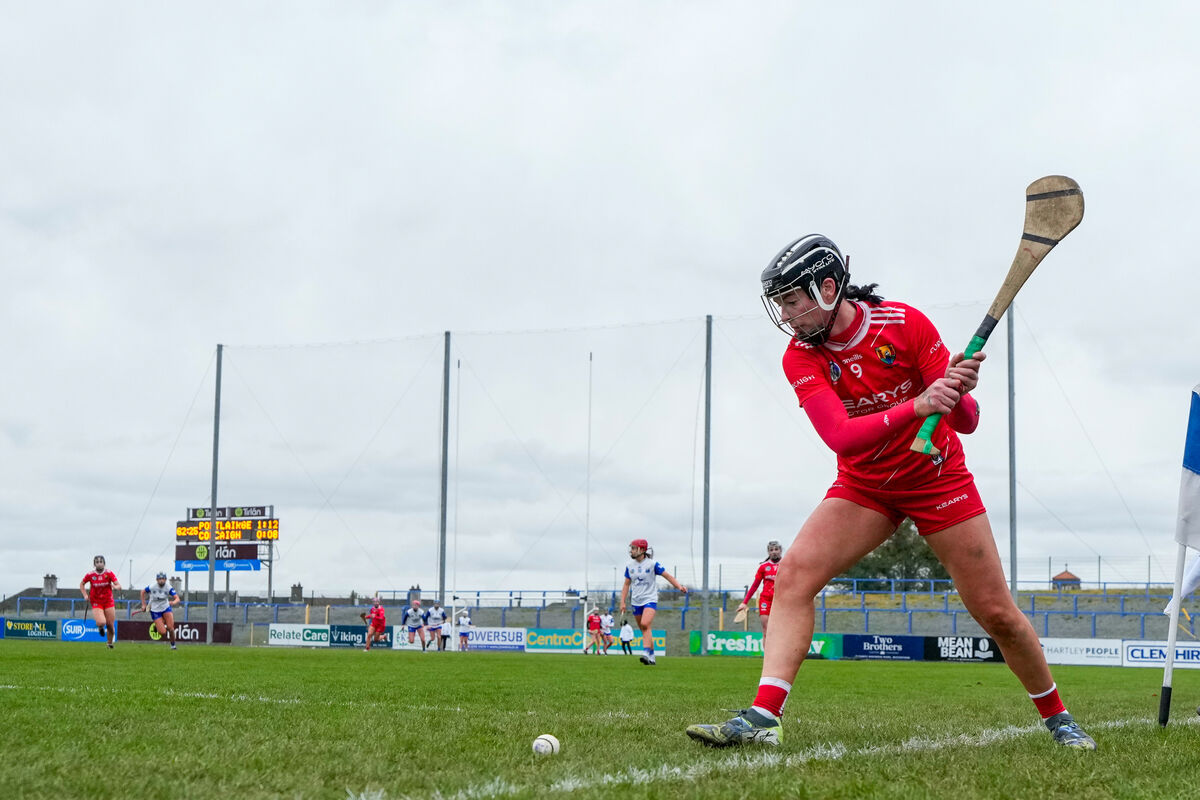
That flat fee, mind, is not guaranteed for the entirety of the 34-week inter-county season. The size of the available pot dictates such. An additional €800,000 in Government funding this year is most welcome and will further increase the amount of mileage paid to female players.
Conscious not to go down a rabbit hole of negativity or present them as ungrateful, but even the schedule of payments points to the gap that must still be made up to the men’s side of the house.
Where male inter-county players are paid their 70-cent-per-mile expenses every month, their female counterparts receive one payment at the end of the League and another at the end of Championship. For college students putting diesel in the tank across December, January, February, and March, having to wait until April for that first tranche of expenses to come through can be at times an uncomfortable wait.
“The charter has absolutely made a difference, just standardising what is being delivered,” Begley continued.
“For the middle-tier and lower-tier teams, just having that guarantee of standards across your strength and conditioning coaching, gym access, food after training, gear, physio; all of those things are non-negotiable now which is brilliant for your Division 3, 4 teams.
“A lot of the top teams were already delivering above and beyond the charter anyway, so it probably hasn’t had the most impact on them. What they will have seen is a significant uplift in expense reimbursement.”
The same as the pitch farce at Meelick and Cherryvale was a reminder of the inequality that continues to exist, focus has shifted to eradicating other preparatory shortcomings. The bar must constantly be raised.
The 2024-26 charter states that players must receive a minimum of two sessions a year with both a nutritionist and sports psychologist. Figures released yesterday regarding the health needs of elite female players highlight the urgent requirement to improve access to practitioners.
As part of an ongoing PhD study by student researcher Sarah Doran, preliminary findings show that 26.5% of female inter-county players reported experiencing loss of menstruation. 52% said they had received no education on the menstrual cycle, while 65% had experienced at least one symptom of pelvic floor dysfunction.
“Access to a nutritionist needs to increase so that female players aren’t suffering these issues, or that when they start to suffer these issues, they know who to talk to because there are very low instances of reporting,” Begley explained.
“When a player has an issue, say polycystic ovaries or the loss of their period, they are struggling with symptoms but don’t necessarily feel comfortable discussing this with anyone in the backroom team, so it then might impact on their training and games but the management team don’t fully understand what is going on with this player who might be dropping out of training or missing training.
“The more we can break down this perceived taboo amongst players, the better their playing experience and health outcomes will be. Education is essential here too to empower players and backroom teams because the stats show there are still very low levels of literacy amongst the players around menstruation, pelvic floor disruption, and breast health.
“Is one session [with a nutritionist] at the start of the year and one before the championship enough? That is what might be happening as per the very baseline charter, but you want to see that increasing as we become increasingly aware of just how important they are for female players.”
Charter renegotiations will take place against the backdrop of three associations attempting to become a single entity. For those with integration reservations, former Tyrone footballer Begley always goes back to the microcosm of the GPA and WPGA joining forces in 2021.
“There were the same shared concerns around the loss of voice and loss of representation from the female side and probably the same shared concerns around being able to finance it from the male side. We had a transitional national executive for six months and within the first couple of meetings everyone realised there is absolutely nothing to fear here, we are all on the same team.
“It goes back to your values. If we all agree that the GAA is the best community organisation in the world and represents our values as people, then it is time to start living up to that and bringing that to life.”
It is 13 years since Donal Óg Cusack asked Aoife Lane at the 2013 Camogie All-Stars why women weren’t doing more to look out for women. Little over 12 months later, the WGPA was launched. Lane was its first chairperson, Begley a fellow founding member.
Their first report was titled “Making Things Better”. That they certainly have.
“The power of the collective female voice was probably best seen in the skorts debate. That female inter-county players felt safe enough, empowered enough, and confident enough to collectively make their own voices heard.”
In good weather and bad, Begley and other leaders will continue to empower and continue to make things better for the female side of the Gaelic games house.
CONNECT WITH US TODAY



Be the first to know the latest news and updates