iPlaySafe: changing the conversation around sexual health
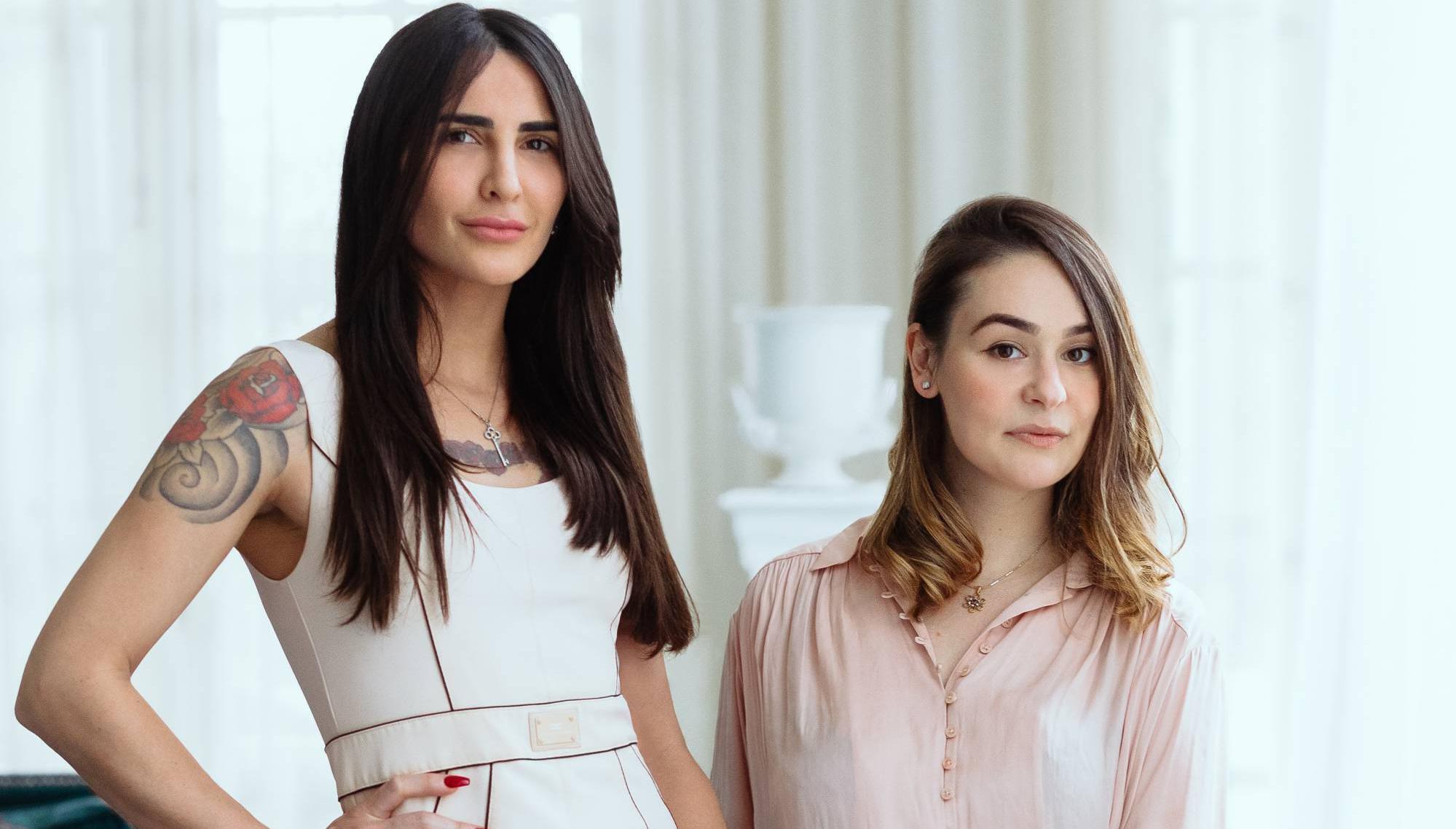
Bianca Dunne and Georgia Di Mattos: leading the way with sexual health app iPlaySafe
If we have become familiarised with one thing during the pandemic – apart from Netflix and baking – it’s health testing. Scraping our tonsils, sticking things up our nostrils, popping bodily fluids in post boxes, downloading QR codes, scanning ourselves endlessly. It’s become second nature. (As has having various bits of us analysed, from our gut microbiome to our DNA structure, for reasons of health future-proofing, ancestral curiosity etc).
Particularly since Covid, discussing and sharing our health status with others has become second nature – so why not apply this new awareness to our sexual health?
Let’s talk about STIs, baby. No, seriously. Whether you’re a serial monogamist, a sexual adventurer, or are in a committed relationship involving recreational sex with others, questions around your sexual health will inevitably arise. STIs – chlamydia, HIV, syphilis, gonorrhea, hepatitis B and C - have always existed; the pox, the clap, VD were the shaming names they were once given.
Transmitting or catching an STI can happen to anyone, and in the 21st century all are entirely treatable. But the thing is – how do you broach it? How do you ask a new sex partner about their sexual health status without turning an erotic situation into something awkwardly clinical?
Bianca Dunne, a 36-year-old sonographer from Dublin, and her friend Georgia Di Mattos, a 36-year-old architect from Brazil, have come up with a solution – a sexual health app that allows you to discreetly share your sexual health status with others via your phone.
The two women met when their children were babies, in a swanky part of south west London – think AbFab meets Motherland – and a friendship developed.
During one conversation, Di Mattos told Dunne how she and her husband, a hedge fund manager, were regulars at upmarket sex parties like Killing Kittens – and how this often led to the sexual health question. And inevitable awkwardness.
Unlike the porn industry, you do not generally have to show proof of sexual health status at sex parties. It is not a prerequisite. So how do you ask someone you are about to have sex with about their sexual health status? How do you broach it?
“The testing conversation is a passion killer,” says Bianca Dunne. “And when you’re young it can be an especially awkward conversation to have.” Two years ago, this led to Di Mattos sharing a business idea with Dunne.
An at-home sexual health kit that tests for the STIs listed above, via blood and urine samples taken not in a clinic, but in your own bathroom. Six tests for £99, delivered to your door. Once your samples have been sent off for lab analysis, the results then pop up on your phone a few days later. #
Which means you’re able to share your health status with other interested parties secure that everyone has a clean bill of sexual health. They called it the iPlaySafe app.
“It helps normalise testing behaviour,” Bianca Dunne tells me. “STIs happen. It’s a fact of life. It’s how you deal with them that counts – responsibly and unashamedly. We’re about proactively testing rather than reactively.” In other words, you take control of the situation, rather than taking a risk, or waiting until you develop symptoms to investigate further. Yet even if you take control and are entirely open and adult about your sexual health, it can still be tricky; I remember accompanying a partner to a walk-in sexual health clinic a few years back, and bumping into a friend there with her partner. As she and I chatted, the two men looked close to death from discomfort. An app would have been so much better.
“My mother in law is an former sexual health nurse who is almost 70, and she’s all for it,” Dunne tells me, adding, “I have two boys and I don’t want them ever suffering from embarrassment around their sexual health.” But as Di Mattos and Dunne developed their idea and raised funding for it, the pandemic hit, and all the labs they wished to partner with were suddenly inundated with Covid analyses. Now, however, things are up and running.
“We spent two years getting this over the line, and now it’s about getting it running smoothly,” says Dunne. “We’ve had several thousand download the app – the entry point is buying the box. We’re in talks with the NHS, and Ireland is our next stop. In Ireland, there’s been a spike in syphilis – and the thing with Ireland is that because it’s a small country, ordering a home testing kit means that people don’t have to go to clinics where their neighbour is on reception.” She continues, “Overall the app has been quite an Irish affair. It was developed by Zendra Health, a medical tech company run by twin brothers from Cork.” Nor is it just for people who go to sex parties. Dunne is keen to emphasise this – that it’s for everyone who has sex.
“Georgia’s lifestyle is not the same as everyone’s – so we want our app to have the universal appeal of, say, Love Island,” she says. “It’s aimed at any two people who have sex with each other.” Their brand ambassador is not, however, some Love Island lovely, but up and coming MMA fighter, Ian Garry, who Dunne refers to as “the next Conor McGregor” – Garry’s fighter name is The Future.
“Georgia and I box in a club in Richmond [in south west London], where we learned that before every MMA match, fighters have to test for hepatitis B and C, and HIV,” explains Dunne. “We wanted to rope in more men – so we took a punt on Ian Garry and sponsored him.” Such inclusivity and sex positive attitude led to the two women being asked why they don’t just run a dating app as well – but this is not where their interest lies. Or more to the point, why don’t dating apps, especially ones associated with hook-ups and casual sex, have sexual health verifications built into their software?
“Dating apps are run by conservative American men who don’t want to be associated with sex,” says Dunne. “We’d love to get our testing app normalised – we have no interest in running a dating app ourselves, just the testing aspect.” What’s astonishing is how dating apps are not falling over themselves in a rush to attach the testing app to their own platforms; their squeamishness seems counterintuitive. Like they’re missing a trick.
Forbes estimates that by 2023, the global sexual wellness industry will be worth $37.2 billion – far beyond high profile novelty outlets like Goop, with their jade eggs and vagina scented candles.
Sextech extends beyond apps and gadgets - many of its innovators and entrepreneurs are women, keen to research women’s sexual health, which as we all know, has been a long overlooked area. Bianca Dunne and Georgia Di Mattos are in good company.
Launched during lockdown by Liz Klinger and Anna Lee – inventors of the first smart vibrator to collect biofeedback on female arousal and orgasm, collating anonymised data from over 50,000 female orgasms – the female led sextech platform continues its pioneering mission to move research around female sexuality forward from the 1980s to the 21st century.
Launched by Cindy Gallop in 2009 and converted in 2013 into the world’s first “user-generation, human-curated social sex video-sharing platform to promote consent, communication, good sexual values, and good sexual behaviour”, the aim of MLNP is to combat rape culture and the mainstream porn industry by showing real life sexual behaviour. So your kids don’t grow up thinking the porn on their phone is how sex is in real life.
Initially describing her app at a TED talk as “a much less gross, more fun Porn Hub for women,” she soon realised it was not just women who were using it. Men were too, despite expectations around male porn preferences being entirely visual – Quinn is a non-visual medium.

CONNECT WITH US TODAY



Be the first to know the latest news and updates