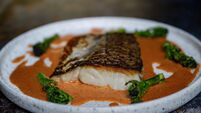
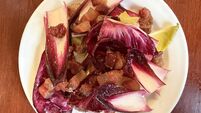
Darina Allen: My travels throughout Asia have tantalised my palate for diverse cuisines
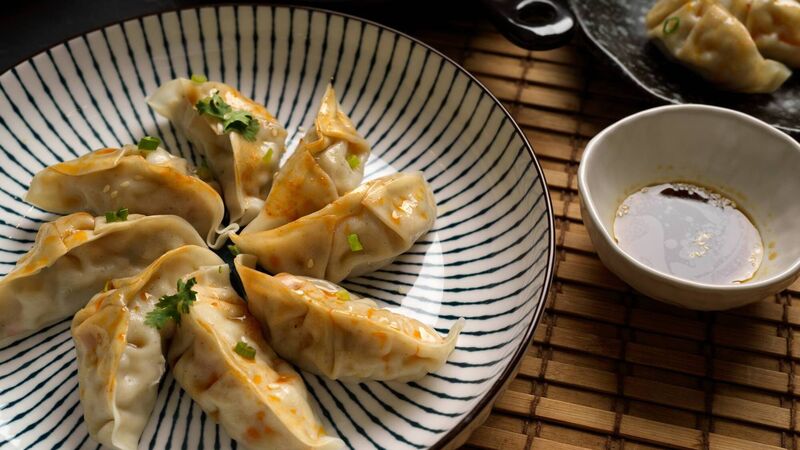
Darina Allen: "Deh-ta Hsiung, one of my heroes, was the first Chinese chef to teach at the Ballymaloe Cookery School."
Time was, when apart from a couple of Chinese and Indian restaurants there was little Asian food to be had in Ireland, how things have changed.
As we travel more and more and become increasingly adventurous, our national craving for Asian flavours has escalated and the options continue to grow.
The Asian Restaurant Awards created in 2023 has helped to raise awareness even further of the many choices open to all of us.
The awards shone a light on the growing number of super talented, passionate Asian cooks and chefs, not just in our cities but also around the country.
Restaurants showcasing the food of China, Japan, Thailand, India, Pakistan, Nepal, Bangladesh, Laos, Cambodia, Korea, Vietnam…how exciting is that?
My travels throughout Asia for many years have tantalised my palate and whetted my appetite for all those exciting flavours and diverse cuisines.
From the food-obsessed city of Singapore, I yearn for chilli crab, roti prata, fish head curry and comforting, nourishing Hainanese chicken rice, the very best cure for jet lag.
How could I ever forget the feast of curries and sambals in Sri Lanka, one more delicious than the next.
Dim sum, Peking duck, noodle soups and irresistible dumplings in China.
Irresistible beef rendang, suckling pig and satay in Indonesia
A myriad of sushi, ramen noodles and yakitori in Japan.
Summer Spring rolls, Banh Mi, and Pho, the quintessential noodle broth in Vietnam to mention just a few.
Pad Thai, Tom yum soup, Massaman curry in Thailand but so much more to choose from.
In Cambodia, amok, a steamed fish curry in banana leaves, nom banh choi, Khmer rice noodles in curry and papaya salad – put Cambodia on your bucket list too.
Masala chai, thalis, butter chicken, biryani and all the myriad of flatbreads in India and Pakistan
We also loved the food in Laos, khao niaw, sticky rice, larb moo salad, or lam, a spicy, buffalo meat stew with lots of herbs unique to Laos.
Laksa, the spicy coconut noodle soup from Malaysia – one of my perennial favourites – as is nasi lemak, coconut rice and kaya toast for breakfast.
I long to taste the many bulgogi, bibigo fermented kimchi in Korea and on and on.
All over Asia, piled up on market stalls, there are durians, a stinky, prickly fruit with an overpoweringly pungent smell. It rewards the brave, just hold your nose and pick up courage to taste the divine, sweet, creamy deliciousness inside.
Asian cuisines have a rich and diverse history dating back thousands of years. It’s been shaped by a myriad of cultural influences, trade routes and regional ingredients.
Asian traditions reflect the heritage and traditions of each country, making it a fascinating adventure for travellers and food lovers alike.
Asian dishes are renowned for bold flavours, a unique combination of spices and a wide variety of ingredients.
The balance of sweet, sour, salty, bitter and umami flavours create a harmonious and unforgettable taste experience.
Much of the cooking is done over fire, stir-fried in a wok, steamed or cooked in a tandoor oven.
Many dishes are of course best enjoyed in the midst of the hustle and bustle of an Asian street market but having said that, countless others are quick and easy to reproduce in our own kitchens, particularly nowadays when we have easy access to Asian ingredients in a growing number of specialty shops and even in supermarkets.
Edamame beans, (immature soybeans in their pods) are available frozen in many supermarkets, a really easy place to start, just boil or steam, sprinkle them with a little flaky sea salt and enjoy. A delicious nibble, on their own or with drinks, they're super nutritious and can also be added to stir-fry and salads.
Rosemary Kearney's Chicken and Coconut Laksa
Everyone loves this soup – be sure to taste and add lots of freshly squeezed lime juice and maybe a dash more fish sauce.
Servings
8Preparation Time
10 minsCooking Time
20 minsTotal Time
30 minsCourse
MainIngredients
150g fine rice noodles
2 red chillies, chopped with seeds
4 cloves of garlic, finely chopped
2.5cm piece of ginger, peeled and finely chopped
150g fresh coriander, leaves and stalks coarsely chopped
Juice of 1-2 limes
1 chicken breast, free range (cut into very thin shreds) (250g)
50ml toasted sesame oil
2 x 400ml tins coconut milk
Generous 700ml homemade chicken stock
1 tbsp nam pla (fish sauce)
Salt and freshly ground black pepper
8 spring onions, finely sliced at an angle
Coriander leaves
Method
Pour boiling water over the bowl of rice noodles and allow to soak until soft – 10 minutes approximately.
Drain and cut into 5cm lengths. Put the chilli, garlic, ginger, coriander and juice of one lime into a food processor and pulse to a coarse paste.
Thinly slice the chicken breast at an angle and set aside.
Heat the sesame oil in a large saucepan and fry the chilli paste for 3 minutes. Add the whisked coconut milk and chicken stock.
Bring to the boil, reduce heat and simmer for 5 minutes. Add the thinly shredded chicken, bring back to the boil and barely simmer for a further 3-4 minutes or until the chicken is cooked through.
Add the fish sauce and taste and add more lime juice, salt and pepper if necessary.
Divide the noodles into serving bowls, ladle in the hot soup and garnish with spring onion and coriander leaves.
Note: Do not allow the soup to boil once the chicken is added, otherwise the meat will be tough.
Chineese Dumplings
Deh-ta Hsiung, one of my heroes, was the first Chinese chef to teach at the Ballymaloe Cookery School. This is one of his many dumpling recipes, they can be served poached in broth or transformed into pot stickers. Deh-ta showed us how to make the dumpl
Servings
150Preparation Time
53 minsCooking Time
41 minsTotal Time
1 hours 34 minsCourse
MainIngredients
For the dough:
Use 9g per portion of dough per dumpling
450g plain white flour
About 225ml water
Flour for dusting
For the filling:
675g Chinese cabbage
450g minced fat streaky heritage pork
2 tbsp finely chopped spring onions
2 tsp grated or finely chopped fresh ginger (peeled)
1 tsp salt
1 tsp sugar
2 tbsp light soy sauce
1 tbsp rice wine
1 tbsp Chinese sesame oil
Method
Sieve the flour into a bowl, slowly pour in the water and mix to a firm dough.
Knead until soft and smooth. Cover with a damp cloth and let stand for 25-30 minutes.
Separate the Chinese leaves and blanch in a pan of boiling salted water for 2-3 minutes or until soft.
Drain well, finely chop, cool and mix with the rest of the ingredients to make the filling.
Lightly dust a work surface with dry flour. Knead the dough, roll into a long sausage about 2.5cm in diameter. Cut off 10g pieces.
Flatten each piece with the palm of your hand, then use a rolling pin to roll each piece into a thin circle about 6-7cm in diameter.
Put about 1 teaspoon of the filling in the centre of each circle.
Fold into a semi-circle and pinch the edges firmly so that the dumpling is tightly sealed.
Place the dumplings on a floured tray and cover with a damp cloth until ready for cooking. (Any uncooked dumplings should be frozen immediately rather than refrigerated).
To cook, bring 1 litre of water to a fast rolling boil. Drop about 20 dumplings, one-by-one into the water.
Stir gently with chopsticks or a wooden spoon to prevent them sticking together.
Cover and bring back to the boil. Uncover and add about 50ml cold water, then bring back to the boil once more (uncovered).
Repeat this process twice more. Remove and drain the dumplings and serve hot with a dipping sauce. Any leftovers should be reheated, not by poaching, but by shallow frying them, then they become pot stickers.
Grilled Dumplings (Pot-Stickers)
Grilled dumplings, also known as pot stickers, are actually shallow-fried on one side, then steamed under cover so you end up with jiaozi that are crispy on the base, soft on the top and juicy inside.
Servings
150Preparation Time
25 minsCooking Time
15 minsTotal Time
40 minsCourse
MainIngredients
- Make the dumplings as in the previous recipe.
Method
Heat about 1 tablespoon of vegetable oil in a frying pan, tilting the pan so that the entire surface is evenly coated with oil.
Arrange 8-10 dumplings neatly in rows and fry over a medium heat for 3-4 minutes, or until the base of each dumpling is browned.
Pour about 50ml hot water down the side of the pan. Cover and increase the heat to high. Cook until almost all of the water has evaporated.
Uncover and continue cooking until all the water has evaporated. Turn off the heat and use a spatula to loosen the dumplings from the bottom of the pan.
Cover the pan with a serving plate and quickly turn the pan over, so that the browned side of the dumplings is uppermost. Serve hot with a dipping sauce.
Steaming Option
Besides poaching and grilling jiaozi, you can also steam them.
Place the dumplings on a bed of Chinese cabbage on the rack of a bamboo steamer and steam for 10-12 minutes over a high heat.
Serve hot with a dipping sauce.
To make a dipping sauce
2 tbsp of light soy sauce
3 tbsp rice vinegar
2 tbsp ginger, finely shredded OR 1 tbsp spring onions, finely chopped
3 tbsp garlic, finely chopped garlic
Blend all the ingredients together
Edamame with Sea Salt
These fresh soya beans in their pods are one of our favourite nibbles - they are not widely available fresh but can be found frozen and then cooked in minutes.
Servings
8Preparation Time
5 minsCooking Time
10 minsTotal Time
15 minsCourse
MainIngredients
1.2 litre water
450g edamame
3 tsp sea salt
Method
Bring the water to the boil, add salt and the edamame beans. Bring back to the boil, cook for 3-4 minutes.
Taste, if cooked enough (they should have a slight bite), drain and sprinkle with sea salt. Serve cold.instructions (one per line)
Join us for a series of half-day courses in the Apple Orchards here at Ballymaloe Cookery School, Organic Farm & Gardens as we tend the trees during the winter season. Head Gardener at Future Orchard, Chris Troy, will lead this Hands-on series covering the following topics:
- How to confidently prune apple trees
- Benefits of pruning and shaping trees
- Pruning for the longevity of the orchard
- Understanding the different rootstocks and how they affect tree growth
- And so much more.
Whether you have your own orchard, are considering obtaining an orchard, or just want to spend some afternoons outdoors learning a new skill, this course is for you. This series is scheduled for every Monday afternoon from January 12t until February 16. Sign up for all, some or one of them!
ballymaloecookeryschool.ie/farm-school
One of our new year’s resolutions this year is to bring lots more exciting recipes to our students.
Join us for this afternoon demonstration class of New Flavours, where we will be cooking some of the most exciting new dishes we have discovered.
- A selection of delicious new recipes and how to make them.
- A variety of essential techniques you’ll use again and again
- Tips for forward planning and saving time