Bernard O’Shea: Five things I’ve learned about celebrity pet cloning
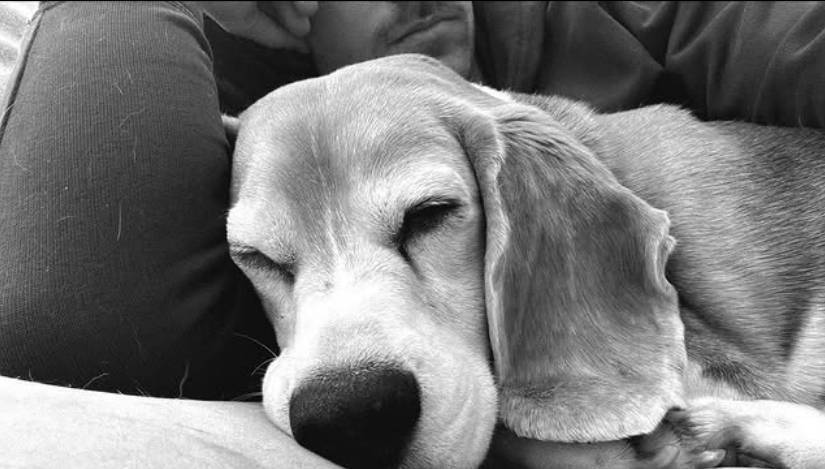
It’s only a matter of time before some Hollywood A-lister introduces their new dog with the line: 'You might remember her from such past lives as… herself'
Bernard O’Shea: Five things I’ve learned about celebrity pet cloning

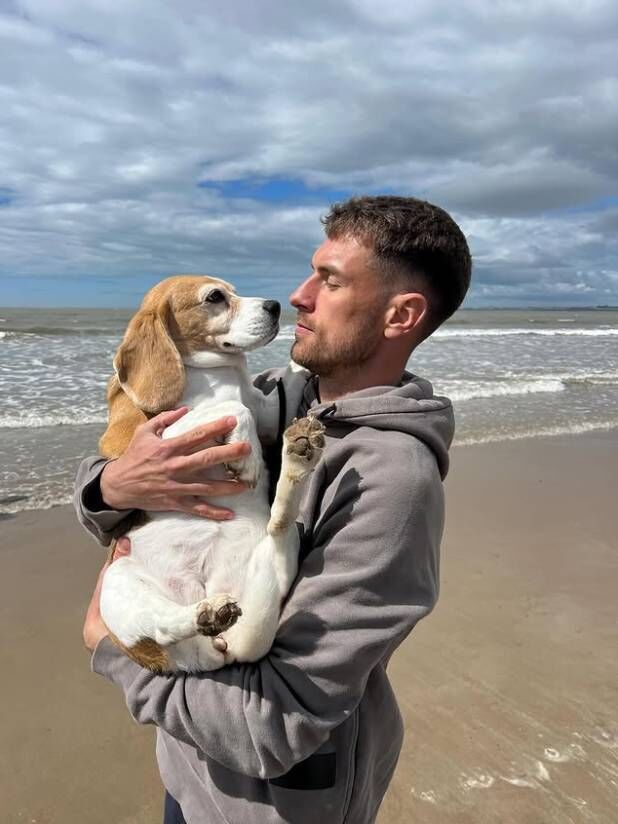
Aaron Ramsey: 'What I’d do to hold you one last time Halo.' Photo via Aaron Ramsey's Instagram

1. I don’t know whether to be impressed or deeply afraid

For years, the strangest celebrity pet story was Mariah Carey flying her dogs first-class.

I’ve often wondered did they drink the champagne out of bowls and press the call button for chew toys. But that era is over. We’re now in the ‘Tom Brady cloned his dog’ phase of society.

In late 2025, The Guardian and People magazine reported that Brady’s current dog, Junie, is a clone of his late family dog, Lua — created from cells taken before Lua died. The work was handled by Viagen Pets, a Texan company that specialises in cloning cats, dogs and horses for around $50,000 to $85,000 a go.

He’s not the only one. Famously, Barbra Streisand had two dogs cloned from her dog, Samantha. Paris Hilton reportedly did it as well. It’s become an emotional concierge service for the famous: ‘Grief, but make it premium’.

Animal scientist Jacqueline Boyd, writing in The Conversation and The Independent, notes that cloning has become big business since Dolly the sheep — and that celebrity demand is shaping public understanding of what cloning can actually do.

2. The science is extraordinary — but you’re not getting your old dog back

Cloning sounds simple: copy dog, paste dog. But the reality is more complicated — and a lot less magical. 

The method used is called somatic cell nuclear transfer (SCNT). You take DNA from the original animal, insert it into a donor egg cell (after removing that egg’s nucleus), coax the cell to begin dividing, then implant the embryo into a surrogate mother. (If only I could have answered my Junior Cert Science paper with such precision)

Even with decades of progress since Dolly, success rates remain very low. A study from Nottingham Trent University highlights that cloning success across species remains at around 16% — meaning most attempts fail long before a healthy animal is born.

But the key thing is this: You’re not recreating a personality. You’re recreating a genome.

Behaviour, temperament and even appearance depend heavily on the environment. The first cloned cat, nicknamed ‘CC’, didn’t look anything like the original calico donor — her coat pattern was totally different because of how genes express themselves during development. So yes, you get a dog with the same DNA. But your relationship with it starts at Day One — not where the old one left off.

3. Behind every cloned celebrity pet is a small army of unseen animals

To produce a single clone, labs need:

  • Egg donors, who undergo hormone treatment and surgical egg retrieval,
  • Surrogate mothers
  • A large number of embryos.

PETA has called commercial pet cloning “a horror show,” while the RSPCA argues there’s “no justification” for cloning companion animals when millions of pets in shelters need homes.

Even if everything goes perfectly, genetic illness passes straight into the clone, so if your original pet had hereditary problems, the clone inherits them too.

4. But the very same cloning tech is helping save endangered species — and that’s the maddening bit

Here’s the twist: the technology that gives Tom Brady a new dog was also used to help save the black-footed ferret, a species once considered extinct.

In 2020, scientists working with the US Fish & Wildlife Service created Elizabeth Ann, the first cloned black-footed ferret, using cells from a ferret named Willa that died in the 1980s.

This reintroduced genetic diversity that had been lost in the surviving population.

The same thing happened with the Przewalski’s horse, the last true wild horse species.

Using decades-old DNA from the San Diego Zoo’s Frozen Zoo, scientists produced cloned foals such as Kurt and Ollie to strengthen the gene pool of a dangerously inbred species.

5. Why I still wouldn’t clone my pet

If you want to understand the emotional power behind pet cloning, look at the recent Aaron Ramsey story.

In late 2025, the Welsh international football player’s beagle, Halo, went missing in Mexico. The family offered rewards, combed the area, posted pleas — and Ramsey even missed a match during the search. Some pundits criticised him for it, saying it was unprofessional.

But Wales manager Craig Bellamy defended him completely, saying the loss of a family pet is “heart-wrenching” and that anyone criticising Ramsey had clearly never bonded with an animal.

Honestly? I’m with Bellamy. If we lost our family pet, I’d be devastated. I completely understand Ramsey’s reaction.

Aaron Ramsey: 'Any news about our Halo please contact us. BIG REWARD for finding her. we are all praying she’s ok and can be back with us soon.' Photo via Aaron Ramsey's Instagram

And that’s exactly why cloning is so tempting. It whispers to you: “You don’t have to say goodbye. Not really.”

But here’s the reality. The clone won’t have the same personality. The process is hard on donor and surrogate animals. The genetics (good or bad) carry over, and the price could feed, treat, and re-home an entire shelter full of real, living animals.

Celebrities can clone their dogs if they want. I’ll stick to the old-fashioned ways — love them like mad while they’re here, mourn them like eejits when they go, and then open our home to the next creature who needs us.

More in this section

Lifestyle

Newsletter

The best food, health, entertainment and lifestyle content from the Irish Examiner, direct to your inbox.

Cookie Policy Privacy Policy Brand Safety FAQ Help Contact Us Terms and Conditions

© Examiner Echo Group Limited