Professor Tim Spector: How nutrition influences mood, energy and long-term brain health
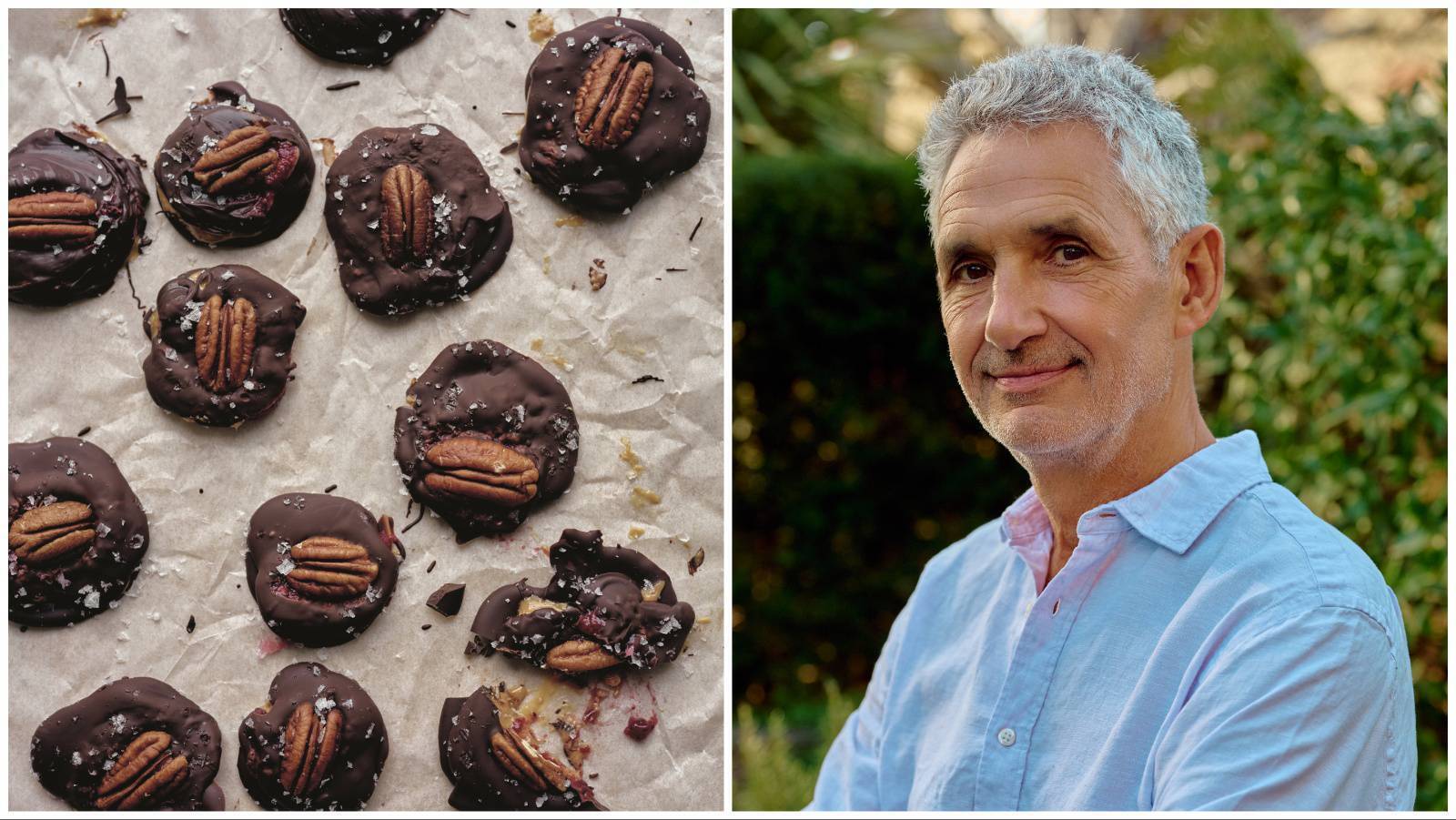
Good Mood Food by Tim Spector
What we eat doesn’t just affect our physical health, it can also play an important role in how we feel, think and behave.
According to Tim Spector, a medical doctor, gut health expert, scientific co-founder of health science company ZOE and professor of epidemiology at King’s College London, the connection between our gut and brain is much more powerful than many people realise.
In his new cookbook, written with Dr Federica Amati and featuring recipes by Kathryn Bruton, Spector explores how the food we eat can influence our mood, energy levels and long-term brain health.
The book aims to make improving gut health accessible, affordable and enjoyable, with everything from comforting family favourites to quick and easy snacks.
“There’s a lot of recent science particularly linking the gut and the brain that most people don’t know about,” Spector says.
“There’s also big advances in the gut microbiome and neuroscience – so I wanted to write a book that showed people that the brain is not totally in charge of us – a lot of the orders of how we behave come from our gut.”
So, how exactly does the gut-brain connection work, and what foods should we be incorporating into our diets?
Our gut is home to trillions of microbes, which Spector describes as “little mini pharmacies” working together to produce chemicals that can influence different functions throughout the body.
He explains that what we eat can change how these microbes behave, with certain foods potentially contributing to inflammation.
“If you eat junk food such as high-fat, ultra-processed ready meals or fast foods, they change your microbes and they stop producing some of the good chemicals like short-chain fatty acids and that has an effect on your immune system,” he says.
“They produce what we call pro-inflammatory signals – signalling to your immune system, which is also lining your gut, that the body’s under threat.
“That might cause this low-level inflammation which is like in a state of fight or flight all the time.”
While inflammation is an important part of the body’s response to infection or injury, Spector explains that persistent inflammation can have a negative impact on wellbeing.
“Inflammation is wonderful when you have a trauma or infection and it goes up and down but what’s happening with bad food is it’s never going down,” he says.
“It stays at this level, which is like a minor alert for the body and it sends signals to the brain.”
“The brain thinks it’s got an infection or it’s unwell and reacts in a way that’s normal for the brain.
“It means you stay in bed, you won’t want to meet friends, you’re not interested in food or sex – you’re basically in recovery mode.”
Spector adds: “The opposite then occurs if you have a healthy meal full of fibre. This engages your gut microbes who’ve now got lots to eat.
“They break down the fibre into these short-chain fatty acids. These are the ones that tell your immune system to calm down.”
Read More
When we’re tired, stressed or feeling anxious, it can be tempting to reach for sugary snacks, takeaway meals or other convenient comfort foods.
However, Spector explains that these cravings can sometimes work against what our bodies need.
“If you understand what your body is trying to do – you’ve got to try and overcome that and the book has lots of healthy snacks in there that should fill you up and do the job,” he says.
Rather than focusing on eating less, he encourages people to choose foods that are satisfying and provide longer-lasting energy.
“It’s made me understand that you need to fill up. If you just have things like a sugary snack or drink, it just makes you hungry and increases the inflammation, making it worse.”
Eating well doesn’t necessarily mean buying expensive ingredients or completely overhauling your weekly food shop.
For Spector, a few simple kitchen staples can make it easier to prepare nutritious meals and snacks throughout the week.
“I always have a mixed bag of nuts for a snack,” he says.
“I would probably always have full-fat Greek yogurt as it fills you up and it’s a fermented food and it’s got protein.” He also recommends keeping frozen berries in the freezer and tins of mixed beans in the cupboard.
Beyond its potential impact on our day-to-day mood and energy levels, Spector believes diet also has an important role to play in protecting our brains as we get older.
“We all need to be thinking of ways to improve our risk of dementia,” he says, emphasising the importance of dietary quality.
“A really good diet – if you include reducing things like diabetes – will approximately half your rate of getting dementia,” claims Spector.
“It doesn’t take it to zero, but it will significantly reduce it.” He explains that the immune system is also linked to dementia, and highlights foods such as oily fish and nuts as potentially beneficial additions to a balanced diet.
“There’s also evidence from Japanese studies, that eating mushrooms twice a week reduces your risk as well,” he says.
“It is quite hard to do everything – that’s why changing recipes and thinking about variety is really important.”
Despite the emphasis on nutrition and gut health, Spector is keen to stress that eating well doesn’t mean giving up the foods we love.
The book includes several familiar comfort dishes, reworked with ingredients designed to support gut health – think chocolate pecan bites or cheese and kimchi toastie.
“In the book, we’ve got half a dozen classic comfort foods that we’ve revised with a gut-friendly twist on them that when you make, they still give you that buzz and that nice feeling inside,” he explains.
“We’ve got a mac and cheese in there – a healthy one rather than one that’s going to leave you feeling unwell.
“We’ve got fish and chips, lasagne, spaghetti bolognese and a green curry.”
For Spector, these are the kinds of dishes he would naturally gravitate towards when feeling down or in need of something comforting.
“All things that I associate with, when I’m a bit down, will pick me up,” he says.
“It’s just a reminder that you can have something that’s really tasty and helpful for you and make you feel better.
“You can have these rich flavours – it’s not about eating salads or reducing what you eat. This isn’t a diet book – it’s about giving people actually more on their plate.”
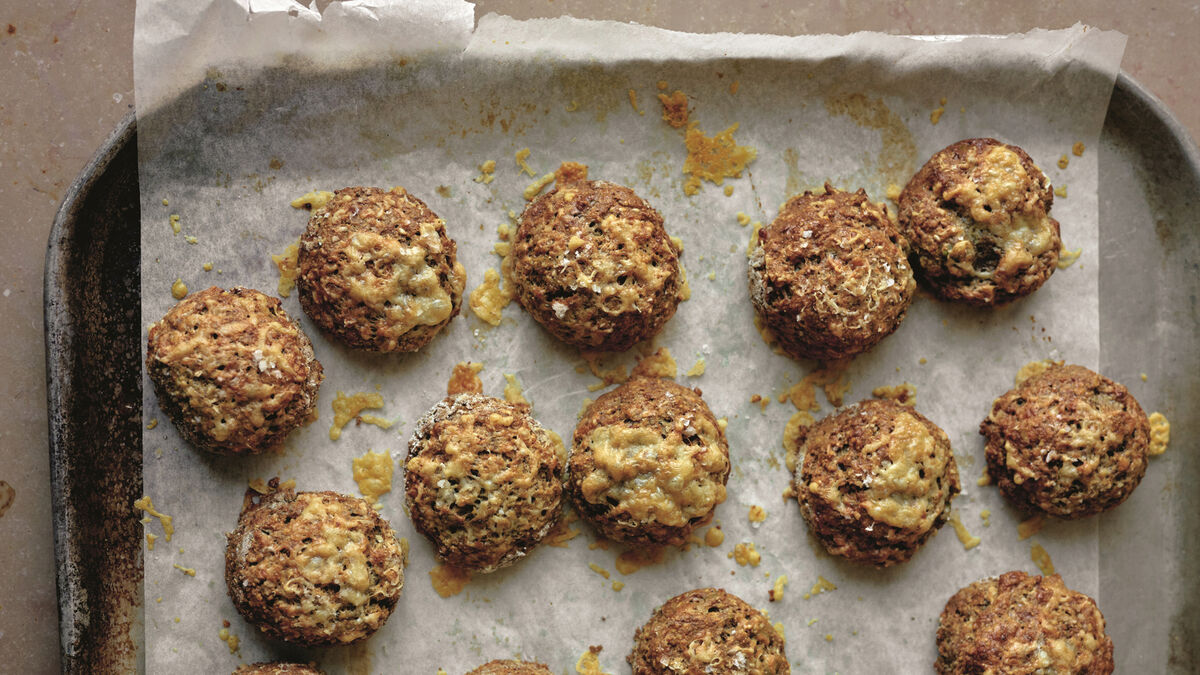
Tim Spector’s cheesy seeded scones
Perfect served warm with a cup of tea.
Servings
12Preparation Time
15 minsCooking Time
15 minsTotal Time
30 minsCourse
BakingIngredients
185g mix of hazelnuts, pecan nuts, walnuts
210g wholemeal rye flour, plus extra for dusting
80g mixed seeds
¾tbsp bicarbonate of soda
1tsp salt
100g Cheddar cheese
250ml kefir
2 eggs
2tbsp milk
Top-up
A handful of roughly chopped nuts for added texture
Swaps:
Wholemeal or buckwheat flour for rye flour
Greek yoghurt for kefir
Method
Preheat the oven to 200°C/180°C fan/400°F/gas 6 and line a large baking tray with baking parchment.
Put the nuts into a food processor and blitz until very fine. Transfer to a large bowl with the rye flour, mixed seeds, bicarbonate of soda, salt and three-quarters of the Cheddar cheese.
Whisk the kefir with one of the eggs and add to the dry ingredients. Gently mix everything together using a wooden spoon or spatula – be gentle with the mixture as overworking it will result in a tough dough.
Tip out onto a floured surface, knead gently to bring the dough together (flour your hands if necessary) and roll out to a thickness of 2.5cm. It will be slightly sticky – this is normal.
Use a 5cm round cutter to cut out 12 scones and transfer them to the prepared baking tray. Whisk the remaining egg with the milk and use a pastry brush to brush the tops of the scones with the egg wash. Then scatter the remaining Cheddar cheese over the tops.
Bake for 15 minutes, then cool on a wire rack. Keep a few to eat over the next couple of days and freeze the rest in batches.
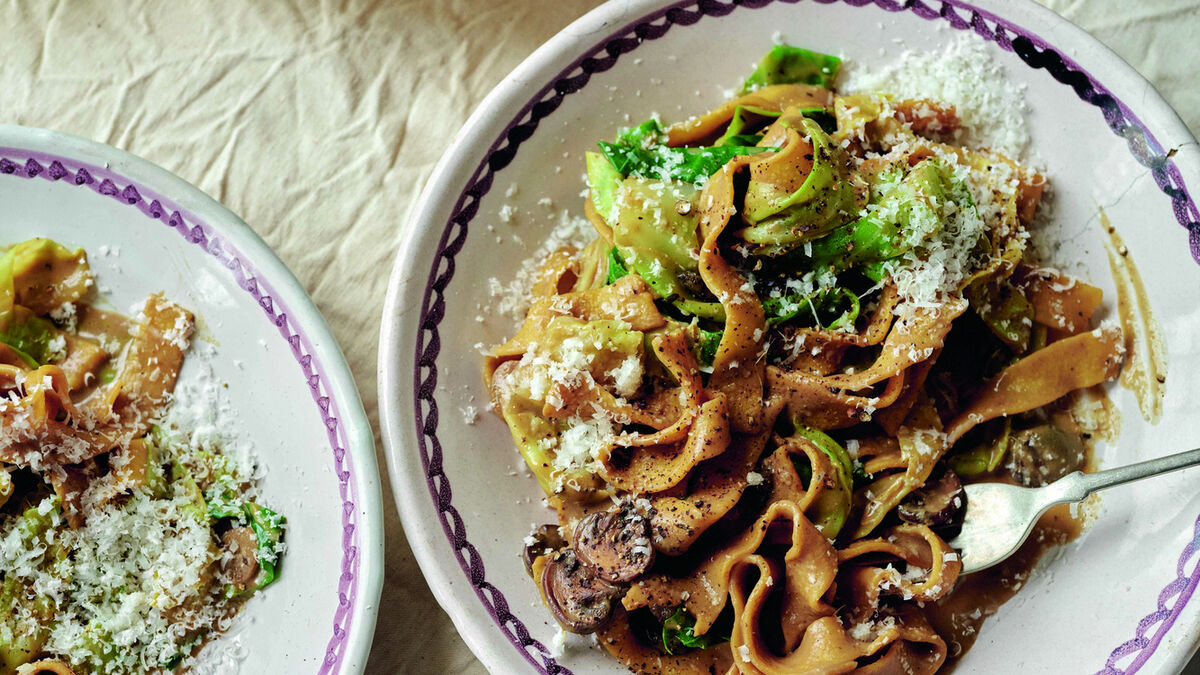
Tim Spector’s mushroom and hispi cabbage pappardelle
Delicious, filling and packed with nutrients.
Servings
4Preparation Time
8 minsCooking Time
15 minsTotal Time
23 minsCourse
MainIngredients
20g dried mushrooms
3tbsp extra virgin olive oil
600g portobello or chestnut mushrooms
4 sprigs of thyme, leaves picked
3 garlic cloves, finely chopped
100g silken tofu
1tbsp miso
130g pappardelle pasta
1 hispi cabbage, leaves picked and shredded to resemble pappardelle
Salt and black pepper
Top-ups
Chopped nuts or seeds
Chopped parsley
Parmesan cheese, to serve
Swaps
Any pasta for pappardelle
Savoy cabbage for hispi
Method
Cover the dried mushrooms with 120ml of boiling water and set aside to rehydrate.
Heat the olive oil in a large non-stick frying pan over a high heat and sauté the fresh mushrooms and thyme for 10–12 minutes. They will release a lot of liquid while cooking – keep cooking until the liquid has evaporated and the mushrooms are soft and starting to turn golden. Add the garlic and cook for 1 minute longer.
Place the tofu and miso into a bowl and add the rehydrated mushrooms, then gently pour in the soaking liquid, taking care to leave behind any grit from the mushrooms. Use a hand-held blender to blitz until smooth. Season with salt and pepper, and stir into the mushrooms. Then remove from the heat.
Bring a large saucepan of salted water to the boil and cook the pasta for 7 minutes. Add the hispi cabbage, bring the water back to the boil and simmer for 1 minute longer. Drain, reserving the cooking liquid.
Put the mushrooms back over a low heat and add the pasta and hispi cabbage along with 8–10 tablespoons of the cooking liquid. Stir until everything is heated through and the sauce is creamy and coating the pappardelle. Serve immediately.
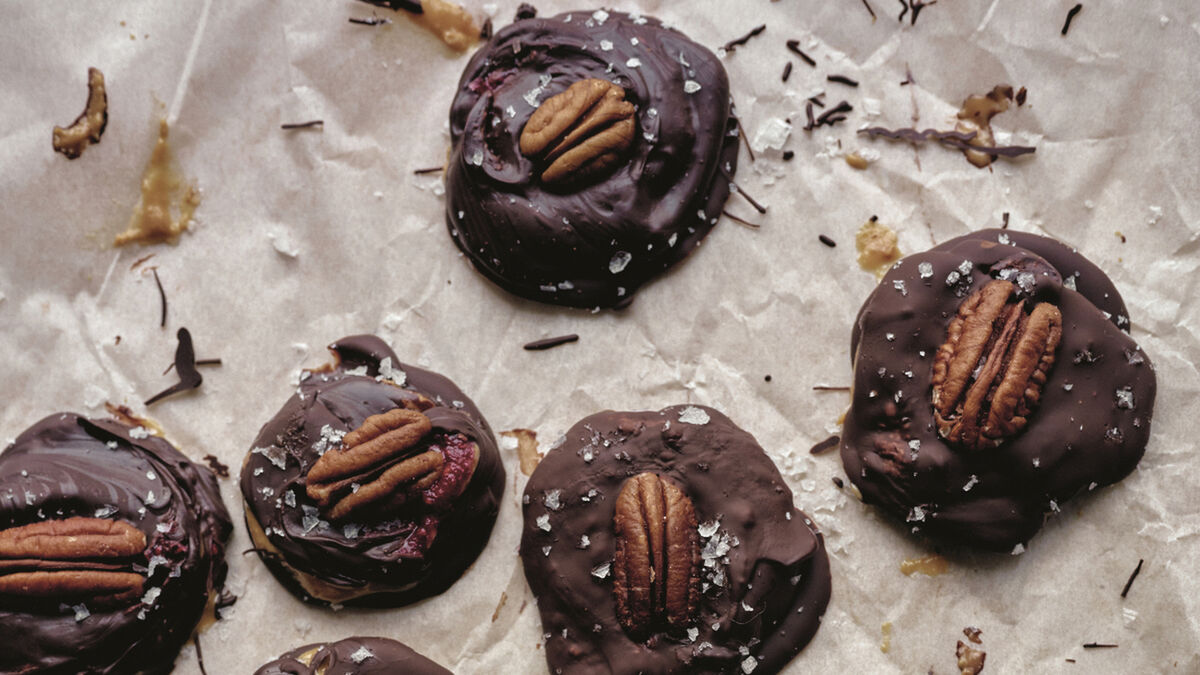
Tim Spector’s chocolate pecan bites
The perfect sweet treat, these can be whipped up in no time.
Servings
12Preparation Time
10 minsTotal Time
10 minsCourse
DessertIngredients
80g dark chocolate (70% cocoa solids)
70g crunchy (100%) peanut butter
70g berry chia jam – use fresh raspberries, mashed with a fork instead
12 pecan nuts
Pinch of sea salt
Top-up
Mixed seeds
Swaps
Any nut butter for peanut butter
Walnuts for pecan nuts
Method
Line a baking tray with baking parchment. Break the chocolate into small pieces and add to a heatproof bowl set over a saucepan of barely simmering water, making sure the base of the bowl doesn’t touch the water. Stir until melted. (Alternatively, microwave in 30-second bursts, stirring as it melts.)
When ready, spoon 12 circles, each about 3cm in diameter, onto the lined baking tray, making sure you leave enough space between each one.
Place a teaspoon of peanut butter on top of each, followed by a teaspoon of jam. Cover each one with the remaining melted chocolate. Place a pecan nut on the centre and press down gently. Sprinkle some sea salt over the top, then freeze on the tray for 1–2 hours until set. Gently peel the bites off the baking parchment and store in a container in the freezer.
- Good Mood Food by Tim Spector, with Dr Federica Amati and recipes by Kathryn Bruton, is published in hardback by Jonathan Cape. All photography by Issy Croker. Available October 22.