Four chefs share their native dishes to add multicultural flavour to an Irish Christmas feast

Some of Ireland's multicultural chefs - bringing a worldly flair to Christmas fare
While Christmas is a religious festival celebrated by Christians all around the world on December 25, it has also become a secular event.
In Ireland, the number of people identifying as Catholic is falling as documented by each census, from 79% in 2016 to 69% in 2022.
Religions on the increase include Islam and Hinduism; there was also a marked rise in people reporting themselves as having no religion. A total of 20% of people usually resident in Ireland were born outside the country.

Cafe Izz' Maamoul (Palestinian date-filled cookies)
These traditional date-filled Palestinian treats are wonderful to share with friends and family

Servings
24Preparation Time
60 minsCooking Time
12 minsTotal Time
1 hours 12 minsCourse
BakingIngredients
250g unsalted butter, at room temperature
500g plain flour
2 tbsp rose water
4-5 tbsp milk 3
200g date paste
1 tsp ground fennel
icing sugar, to decorate
Method
Rub butter and flour together until well combined. Add the rose water and enough milk to bring the mixture together into a dough. Allow to rest, covered in the fridge, for 30 minutes.
Preheat your oven to 180°C fan. Line a couple of baking sheets with baking paper.
Mix the date paste and ground fennel together.
Take a small portion of dough - approximately 40g - hollow it into a cup shape and drop in a teaspoon of the date paste. Seal the dough to completely enclose the filling.
Using a maamoul mould, or a small, sharp knife, make a pattern on the top of the cookie. Repeat to use all the filling and dough.
Place on a baking sheet, leaving space for expansion, and bake for 10-12 minutes or until a very light golden brown.
Cool the maamoul on the sheet for 5 minutes before transferring to a wire rack to finish cooling.
Dust your maamoul with sifted icing sugar before serving.

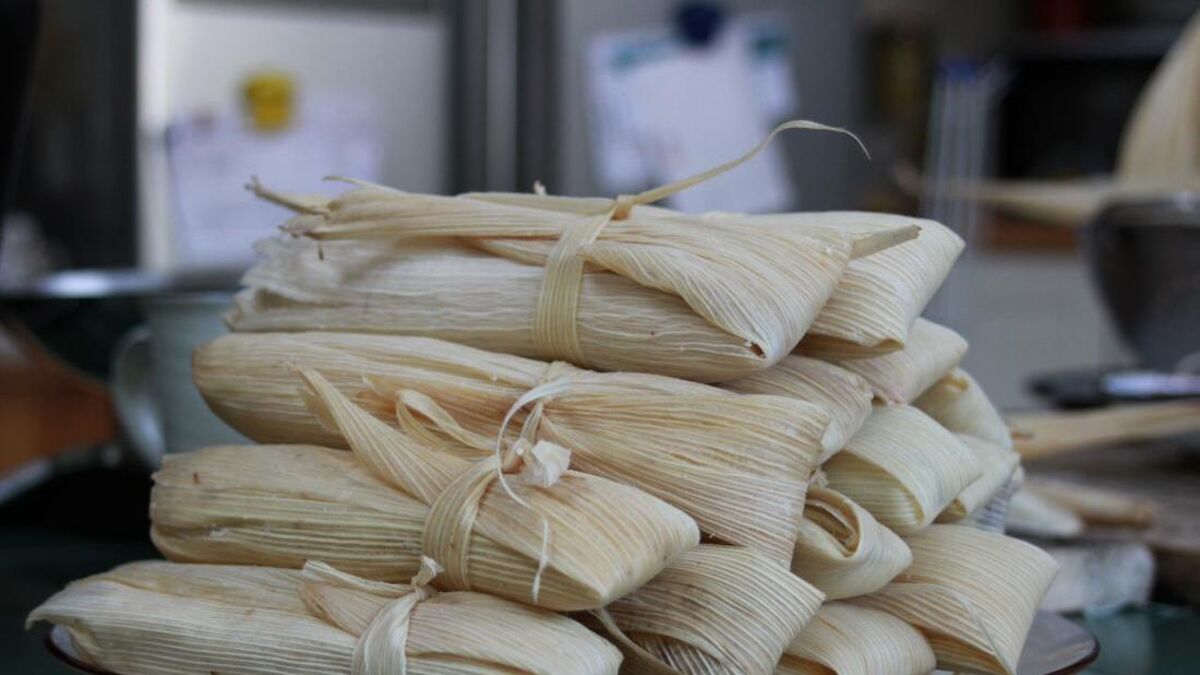
A fan of using Irish ingredients in her cooking, she likes to incorporate St Tola goat cheese in her celebratory spicy bean and cheese tamales: “It compliments the spiciness of the beans to perfection,” she says.
“When the tamales are done, they are fluffy and airy. The cheese has an almost mousse-like consistency and a delicious tanginess that enhances the beans.”
Picado's Spicy Bean & Goat Cheese Tamales
A lot of families in Mexico celebrate December festivities with ridiculously large amounts of tamales, with both savoury and sweet fillings, but ever since I was a small kid, my all-time favourite has been spicy beans and cheese.
Servings
4Preparation Time
2 hours 0 minsCooking Time
50 minsTotal Time
2 hours 50 minsCourse
MainIngredients
For the Tamale Dough:
500g tamales masa harina
1 teaspoon table salt
1/8 teaspoon ground cumin
1/8 teaspoon garlic powder
250g pork lard. You can also use duck or goose fat for this.
400ml warm water
For the Filling:
450g refried beans with chipotle (tinned)
3 chipotles in adobo sauce (or more if you want the beans spicier)
120g St Tola goat cheese (original)
For the Tamales:
25-30 dried corn husks
Boiling water from the kettle
Method
Start by prepping your corn husks. Put the stopper in your kitchen sink (you can also use a big container for this). Place the dry corn husks at the bottom of the sink making sure to separate them beforehand. The husks most likely are going to be all different sizes. Don't worry about this, just put them all in the sink. Cover the husks with boiling hot water from the kettle, you might have to boil the kettle a few times for this, but soaking the husks in hot water is essential for the success of your tamales. If you find they are floating on top of the water, use a plate to weigh them down. Leave them soaking while you get on with the rest of the recipe.
For the filling, loosen the refried beans with a couple of spoons of water in a bowl and add the extra chipotles in adobo. Mix well, making sure the chillies are broken and well combined into the beans. Set aside. The beans don't need to be heated, cold is fine.
Shape the cheese into slices about 1/4 inch thick. You want enough cheese to flavour but not to dominate the taste of the tamal. Lay the filling ingredients on the worktop or table where you are working and proceed with making your tamal dough.
In a large bowl, put together the tamales masa harina, salt, cumin and garlic powder. Mix well until all the dry ingredients are well incorporated. Add lard and the warm water and, using a spoon, mix everything to the point where you can use your hands to knead the ingredients. Knead for about 5 minutes until you have a dough that is soft and a little sticky.
When the dough is ready, drain the husks and shake them a little before putting them on a colander sitting on a plate to catch any dribbles of water left. Place the husks on the table with the dough, beans and cheese and get ready to assemble the tamales!
The next part is probably the most annoying bit of the whole process, which is to choose a corn husk that is wide enough to be able to use for a tamal. The husks are triangular in shape and you need them to be at least 10cm wide on the base of the triangle to make it work. It's all about getting the right husk every time! When you have enough practice, you'll learn that two smaller or narrower husks can be overlapped to make a big one and a huge husk can be split into two, but at the beginning, while you nail down the technique of tamal making, be picky and only choose wide husks.
Please note that husks have a smooth and a rigged side, so you will always use the smooth side of the husk (naturally curves into it) to put the dough on and for the purpose of this recipe, you also need to be aware of the narrow and the wide ends of the husk. Keep this in mind for the next step!
Husk chosen, put it on your hand with the narrow end pointing away from you. Take a generous amount of dough, enough to cover two-thirds of the husk, and using your thumbs, spread the dough, thinning it out to about 1/4 inch in thickness. Don't spread the dough as far as any of the sides. Leave a quarter of an inch dough-free at the wide end and the sides of the husk (this will allow for the dough to expand without leaking out of the husk. Spread as far as the husk starts narrowing down (this will allow you to fold the tamal properly).
Take a generous spoonful of spiced refried beans and spread them vertically on the dough: I go a little off centre to the right to be able to comfortably fold the tamal. Follow by adding a couple of slices of goat cheese on top of the beans.
Now we need to fold the tamal. Take the right hand side of the husk and fold it to the centre of the tamal. Follow by folding the left hand side of the husk into the centre of tamal, folding it over the right hand side one you just did. Then take the narrow end of the husk, the one pointing away from you, and fold it upwards towards you; This will cover the seam of the initial folds you made. Use some discarded bits of husk to make a tie to secure all folds in the husk. Set it aside on a plate. Repeat the steps until you have used all your dough and filling.
Put some water in your steamer and turn the heat to medium high. Place all the tamales in the steamer basket standing up (opened side facing the lid of the steamer) and put the steamer lid on. Placing the tamales standing is super important as it helps them keep their shape and not leak out into the steamer! Bring the water to a boil and steam your tamales at medium heat for about 45-50 minutes, or until they are cooked. You can carefully take one out using kitchen togs and attempt to unwrap the husk. If the husk doesn’t come clean off the dough, your tamales are ready! Return the tamal to the steamer and steam for another 10 minutes before checking again. It shouldn't be more than 1 hour.
Tamales are a gift of the gods, so serve them warmed on a plate, unwrapping the husks just as you are about to eat. Drizzle with your favourite salsa, grab a fork and enjoy the festive season!
Ahmet Dede's Rice and Nut-Stuffed Turkey
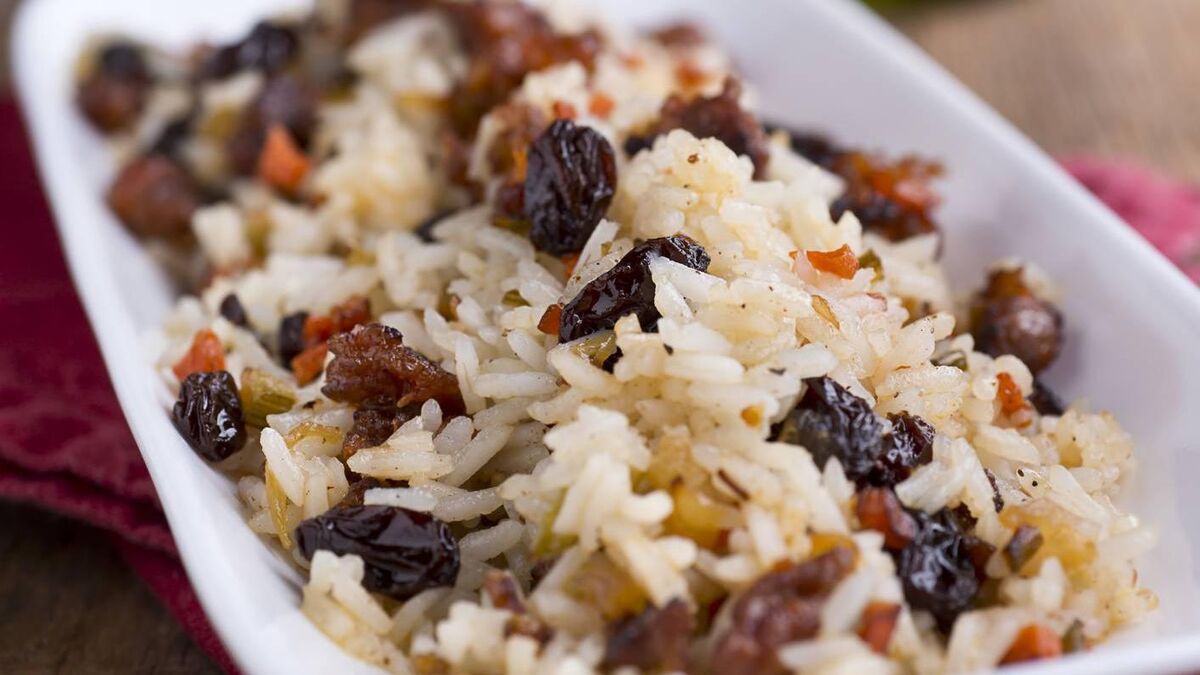
This is a dish I love making because it brings a very different perspective to Christmas, using the flavours of Turkish cooking.
Servings
10Cooking Time
4 minsTotal Time
4 minsCourse
MainIngredients
100g Turkish baldo rice
100g butter
30g oil
2 onions, diced
4 cloves garlic, sliced
1 carrot, finely diced
1 red pepper, finely diced
1 tsp ground cumin
1 tsp ground black pepper
1 tsp ground allspice
1 tsp dried thyme
1 litre chicken stock, heated
50g each of dried apricots, dried plums and dried dates, all diced
30g pistachios, roasted and chopped
50g almonds, roasted and chopped
10g fresh parsley, chopped
Salt to taste 4-5kg turkey
Garlic butter, melted
Method
Soak the rice in a bowl with lukewarm water for 10 minutes to get rid of some of the starch then drain the excess water.
In a large saucepan over medium heat, melt the butter with the oil. Add onion, garlic, carrot and pepper, season with a pinch of salt and cook for about 5 minutes until soft.
Lower the heat, add the spices and dried thyme and cook for 3 minutes.
Tip the rice into the saucepan and cook for a further 2 minutes. Pour in the hot chicken stock and cook for 12 minutes on low heat with the lid on. Remove from the heat and let the rice rest for 30 minutes with a cloth between the lid and the saucepan.
Add the dried fruit, chopped nuts and parsley to the rice mixture and check the seasoning. It should be quite tasty at this stage. Allow to cool.
Preheat the oven to 180°C.
Put the cooled stuffing inside the turkey and tie the legs with butcher twine. Weigh the stuffed turkey to calculate the cooking time: it will need 20 minutes per 1/2 kg.
Rub with melted garlic butter and roast for the appropriate time or until a meat thermometer reaches 70°C when inserted into the thickest part of the thigh.
Cover the turkey and let it rest in a warm place for at least 45 minutes before you carve and serve it.

With a Filipino father and mother who was born in Jordan and grew up in the Middle East to Irish parents, Richie Castillo’s family is quite a multicultural mixture.
In Masarap, the book he wrote with his partner Alex O’Neill, he describes himself as halo-halo, meaning ‘mix-mix’ in the Filipino language Tagalog.
Castillo was born and reared in Dublin, travelling to the Philippines every couple of years to visit family and eating his father’s Filipino food alongside the Irish cooking of his grandparents.
“Growing up, I never had turkey at Christmas. It was always something different: roasted goose, roast duck, Asian greens, garlic rice,” he remembers.”
But we always cooked ham, because there’s nothing better than Irish ham.”
Last year he, O’Neill and his family went to his grandmother’s house in Manila for Christmas and, he says, “it was the best Christmas I’ve ever had.”
Despite a rocky start to the trip, arriving in the Philippines on Christmas Eve morning, after 42 hours of travel meant that the feasting could start.
“My grandmother is an amazing cook and Christmas is a huge deal in the Phillipines.
From morning to evening, we would be having stuff like lechon (whole roast pig), pancit (noodles), Filipino spaghetti (it’s good!) and lots more.”
That experience knocked his love for Irish ham into second place: “A full roasted lechon/suckling pig was the ham last year, and I think it’s going to be hard to go back to anything else.”
Spending Christmas in Ireland doesn't mean that he will miss out on the flavours of the Philippines, however: ”I'll be cooking Lechon Manok, a Filipino-style roast chicken, for Alex's family this Christmas! ”
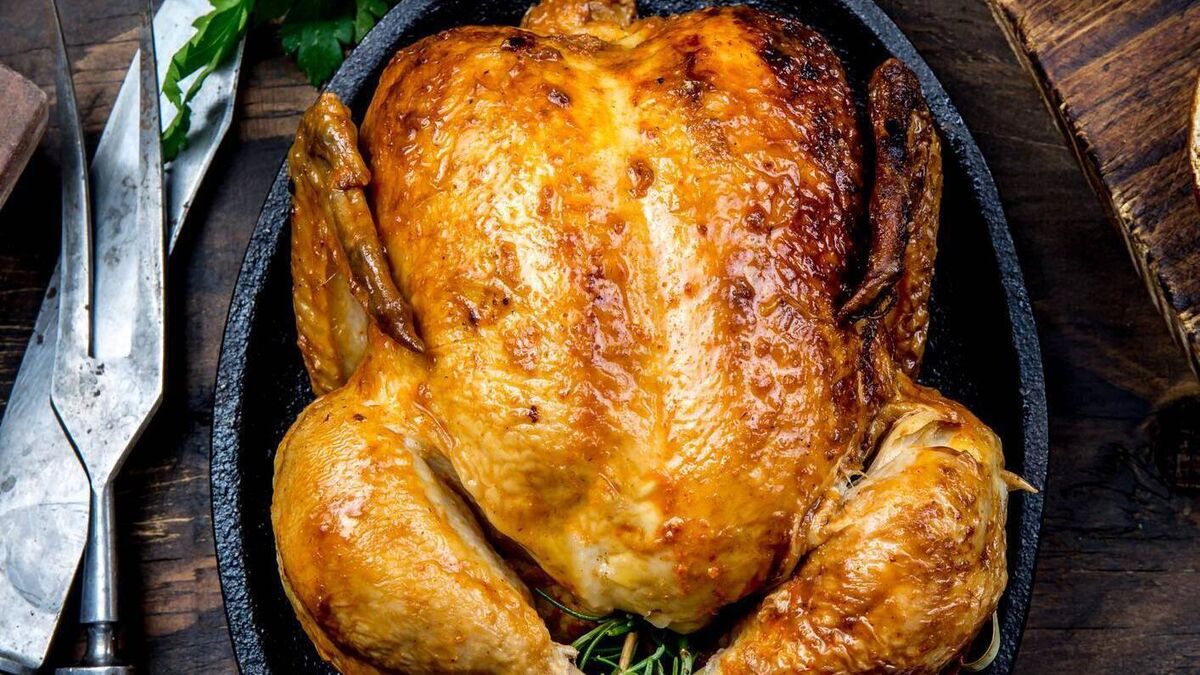
Richie Castillo's Lechon Manok - Filipino-style roast chicken
A Christmas bird with a difference, Lechon Manok is a Filipino-style roast chicken known for its flavorful and crispy skin.
Preparation Time
7 hours 0 minsCooking Time
2 hours 0 minsTotal Time
9 hours 0 minsCourse
MainIngredients
1 whole chicken
240ml soy sauce
120ml calamansi juice (or substitute a mixture of lemon juice and mandarin juice in the ratio 1:2)
60ml fish sauce
60ml oyster sauce
60g brown sugar
1 head garlic, minced
15g peppercorns, mostly crushed but some left whole 2 bay leaves, crushed
For the stuffing:
2 stalks lemongrass, crushed 2 stalks pandan leaves (or use bay leaves as a substitute)
4 cloves garlic, crushed
Basting:
120g melted butter
60ml soy sauce
60ml honey
30ml calamansi juice
Method
Clean the chicken thoroughly, removing innards and excess fat. Pat the chicken dry with kitchen roll.
In a bowl, mix together all the marinade ingredients. Rub the marinade all over the chicken, including inside the cavity. Place the chicken in a large resealable plastic bag or a covered container.
Marinate in the refrigerator for at least 6 hours, or overnight for best results.
Preheat the oven to 190°C Remove the chicken from the refrigerator and stuff with lemongrass, pandan leaves, and crushed garlic.
Truss the chicken with kitchen twine to help it cook evenly. Place the chicken on a roasting rack in a roasting pan.
Cook for 1.5 to 2 hours or until the internal temperature reaches 74°C. Rotate the chicken occasionally for even cooking.
In a small bowl, mix together melted butter, soy sauce, honey, and calamansi juice to baste the chicken.
For the last 30 minutes of cooking, baste the chicken with this sauce every 10 minutes. This will give the chicken a flavorful and crispy skin.
When the chicken has reached the safe internal temperature of 74°C, allow it to rest in a warm place for about 10 minutes before carving.