How to cook the perfect roast lamb and the common mistakes to avoid
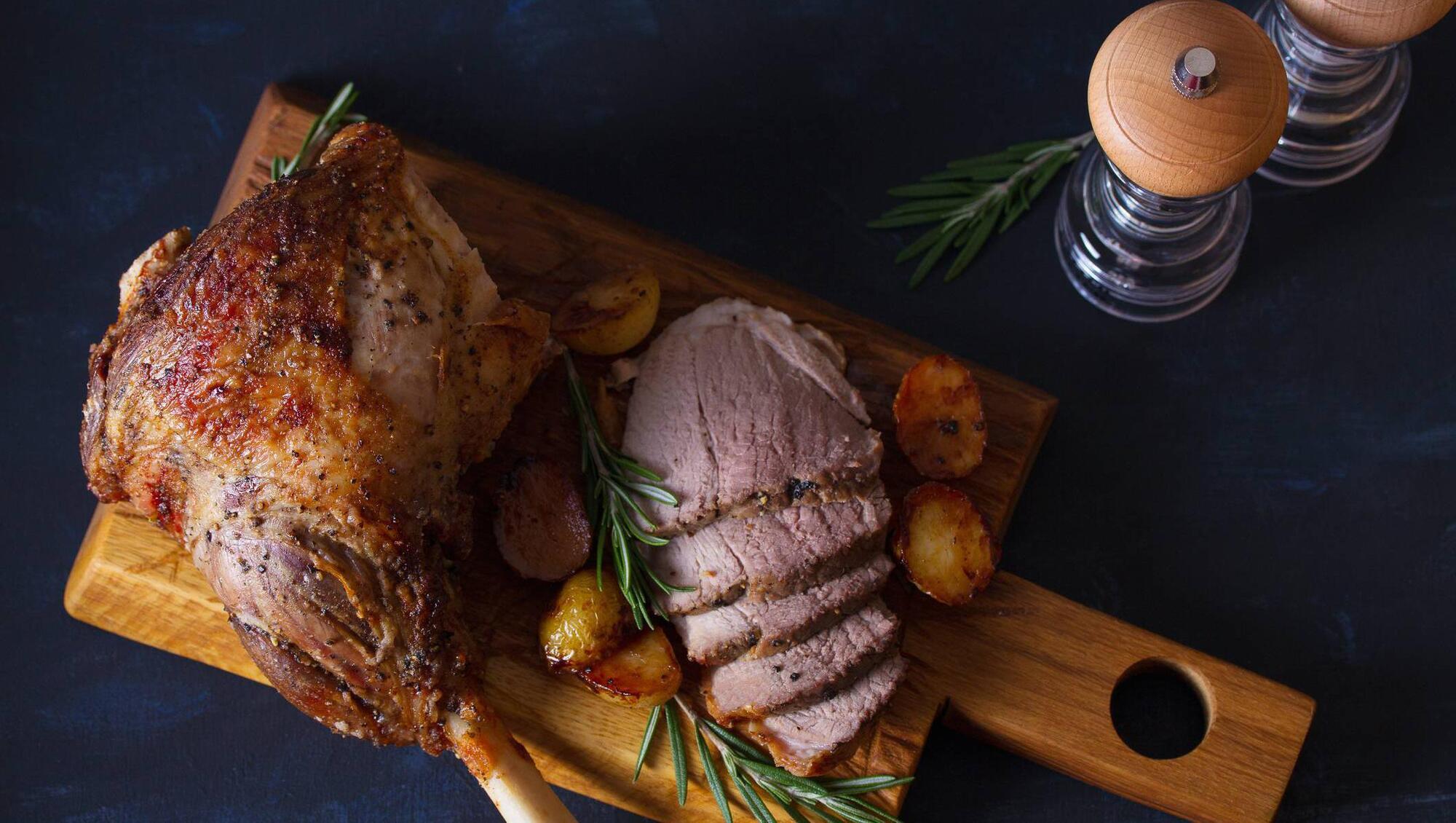
Foolproof roast lamb, made easy.
As with most cuts of meat, cooking lamb on the bone is the most foolproof way to ensure that your meat is perfectly cooked and not dry and leathery. The bone imparts more flavour, and also acts as an internal oven - once the bone heats up it will cook the meat from the inside out while the oven cooks it from the outside in - perfecto!
For spring lamb, it's always worth visiting your butcher and ordering your lamb with them. Tell them your budget, how many people that you are cooking for and they will be able to advise you about the best cut for your needs. Butchers are a wealth of knowledge - they are the experts after all - so ask for their help.
As with all meat, it's best to bring it to room temperature before you cook it. Putting cold meat straight into the oven shocks the fibres, making it tough and hard to chew. The best course of action is to prepare your joint in the morning, dot it with whatever aromatics you are flavouring it with (garlic and rosemary are always a hit), tent it with foil and leave it on the counter for an hour or two before you begin to cook.
Lamb, particularly spring lamb, has a delicate gamey flavour that is easily overwhelmed. Choose flavour combinations that complement but do not overpower the meat. Garlic and rosemary, cumin and coriander and ras el hanout are all excellent pairings, when used sparingly.
It's difficult to know when a leg of lamb is perfectly cooked, so the best way to be positive of a perfect result is to use a temperature probe. For rare meat, it should be between 48–54˚C, medium-rare will be between 55–59 °C, medium 60–66˚C and well done 67–74˚C.
After all that cooking, it is essential to let your lamb rest before serving. During the resting time, the fibres in the meat relax and absorb the juices, resulting in juicy meat that is easy to carve. For a lamb leg, I would advise resting it for at least 30 minutes before serving, if not more.
Gratin potatoestarget="_blank" rel="noopener noreferrer"> are a classic accompaniment to roast lamb, and for good reason. A homemade mint sauce is always welcome and a steamed green vegetable will round things off nicely.
Roast leg of lamb
It is important to find meat that you can be sure is of top quality and where welfare and the environment are of top priority
Servings
8Preparation Time
15 minsCooking Time
1 hours 30 minsTotal Time
1 hours 45 minsCourse
MainIngredients
2kg leg of lamb
8 anchovy fillets
8 sprigs of rosemary
a bunch of thyme
sea salt
olive oil
Method
Preheat the oven to 180°C.
Place the lamb on a large board and stab it all over around 16 times, quite deeply.
In eight of the holes stick a fillet of anchovy, and in the other eight stick a sprig of rosemary.
Season all over with sea salt and then cover with olive oil.
Scatter a bunch of thyme stalks all over and tuck some under the leg as well.
Transfer to a large baking tray and place in the oven for around 1 ½ hours so that it is a little past the pink stage. Reduce the time by 10 minutes if you like your leg of lamb very pink. Baste the leg a few times during the cooking with any juices that are in the tray.
Take out of the oven, cover in foil and leave to rest for around 15 minutes before carving.
Pour a little boiling water into the baking tray and heat over the hob, scraping the bottom of the pan to release all of the flavour. Strain into a jug and season for a simple gravy.
Serve your lamb with simple spring vegetables such as green greens, peas and tender-stem broccoli, along with the mint sauce and galette.