Top 8: cooking and salad oils
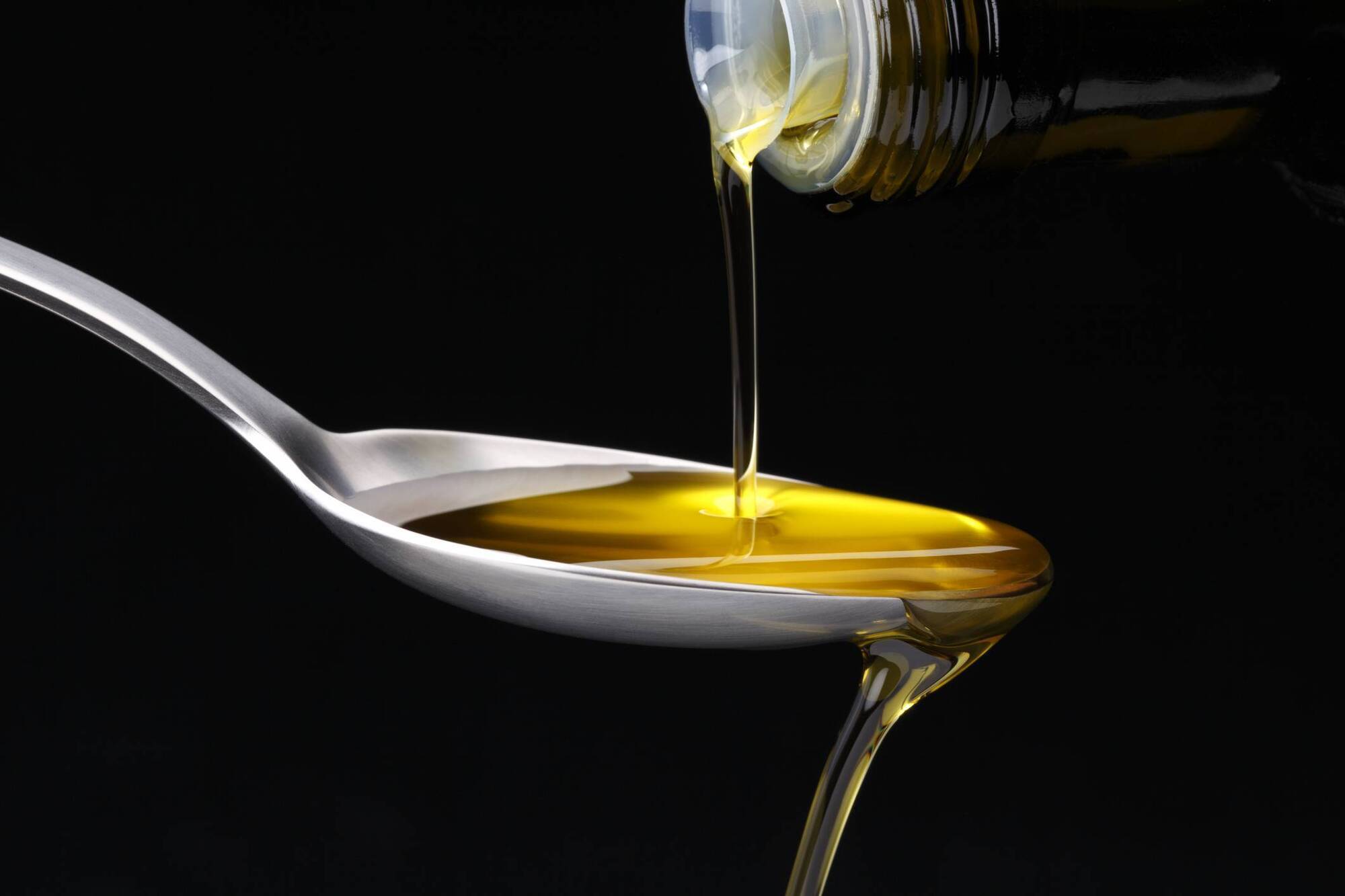
Olive Oil Poured from a bottle to a spoon isolated on black
In Spain, home cooks often use extra virgin olive oil when frying food. They use the same oil in salads, frequently choosing one from an early olive harvest for added flavour.Â
This oil is usually more expensive. The less expensive oil from high yield, later harvested olives is best for frying.
Many oils made from olives, seeds and nuts are refined (sometimes labelled pure). Their longer shelf life means they are cheaper and appeal to some cooks as the refining process diminishes flavour and avoids foods being overwhelmed by the taste of the oil. The catch is that the refining which filters out impurities also removes many of the nutrients. This matters most when it can be a source of nutrition in salads.
Oils are best consumed when natural, unrefined and cold filtered and used in salads to enjoy the terrific nutritional benefits of monounsaturated fats, omega 9 fatty acids for heart, blood, and digestive health. We need oils in the diet to absorb fat-soluble vitamins A (for good vision), D (for healthy bones), E (a powerful antioxidant and considered to be protective or heart health, to prevent arthritis), K (for healthy blood).
If re-using oils after cooking, first strain through a coffee filter/fine sieve/muslin to remove burnt bits and impurities. Marks were given for suitability for salads as well as cooking.

Rich in vitamin E, a powerful antioxidant, and omega 9 that is easily absorbed by the body, works against heart disease, arthritis and more. It’s important to watch out for cold pressed, like this oil, as heat destroys nutrients. Use on salads, in pestos, as a dip for chunks of sourdough instead of butter on picnics. Fry with it at 180C, the ideal temperature for frying with most oils, without burning.
Score: 9.5

First press organic oil from a farm in Co Kilkenny, this doesn’t have the heaviness of other rapeseed oils tested, with a light nuttiness for salad dressings. Can be used for low-temperature cooking. Choose organic to avoid the pesticides often used when growing this crop. Also known as canola oil, often refined, it can be labelled vegetable oil and is not so tasty for salads.
Score: 8

High in polyunsaturated fats, sunflower oil can be a good all-rounder and a relatively cheap one. Refined versions don’t have much flavour so are useful to dilute stronger flavoured oils. If oils don’t boast being cold pressed or organic, they probably are not, delivering less nutrients, but good for frying fish, eggs, chips.
Score: 8

Refined hazelnut oil and virgin hazelnut oil here gives some nutritional value from the virgin oil. Refining it reduces some of the strong flavours of nuts but also the nutritional value. Rub onto chicken before slow roasting, drizzle on hot broccoli and cauliflower, but not suitable for frying. On pared goat’s cheese and lettuce, it adds an extra dimension to salads. Unrefined coconut oil can be good for frying, but it travels many air miles.
Score: 7.5

Â
Also known as groundnut, this oil has monounsaturated (62%), saturated (14%), and polyunsaturated (16%) fats, unlike the other oils that have mainly (desirable) polyunsaturated fats. Though refined, it’s pleasant to taste. Best to use sparingly, added to another oil for flavour when frying or as a salad dressing.
Score: 6.5

Pure or refined olive oil tends to be so refined that both flavour and nutritional value are removed. Refining adds to shelf life, but makes for a dull salad dressing. This one, a blend of refined and extra virgin olive oil, doesn’t show the proportions of each, but the refined oil comes first on the list of ingredients. Good for cooking at a moderate temperature.
Score: 7

High in polyunsaturated fats which, if unrefined, contain vitamins A,D,E,K, but the website of this brand states it is refined. Grapeseed oil is the most neutral oil I use at home. It is particularly good added to melted chocolate as a sauce for dipping biscuits and cakes, and will dry beautifully shiny – allow one tenth of the weight of oil to chocolate. Useful in a dressing for spicy Asian style foods. The label states it’s good for sealing in flavours of meat.
Score: 7

This is one to use sparingly as too much omega 6 can raise blood pressure. But its full-on flavour makes it unlikely we will over-use it. Best to add sparingly into a stir fry or fried rice at the last minute for flavour, and in bean salads. Lakeshore is part of the Boyne Valley Group, Co Meath.
Score: 6.5