How to make the perfect apple tart and the common mistakes to avoid
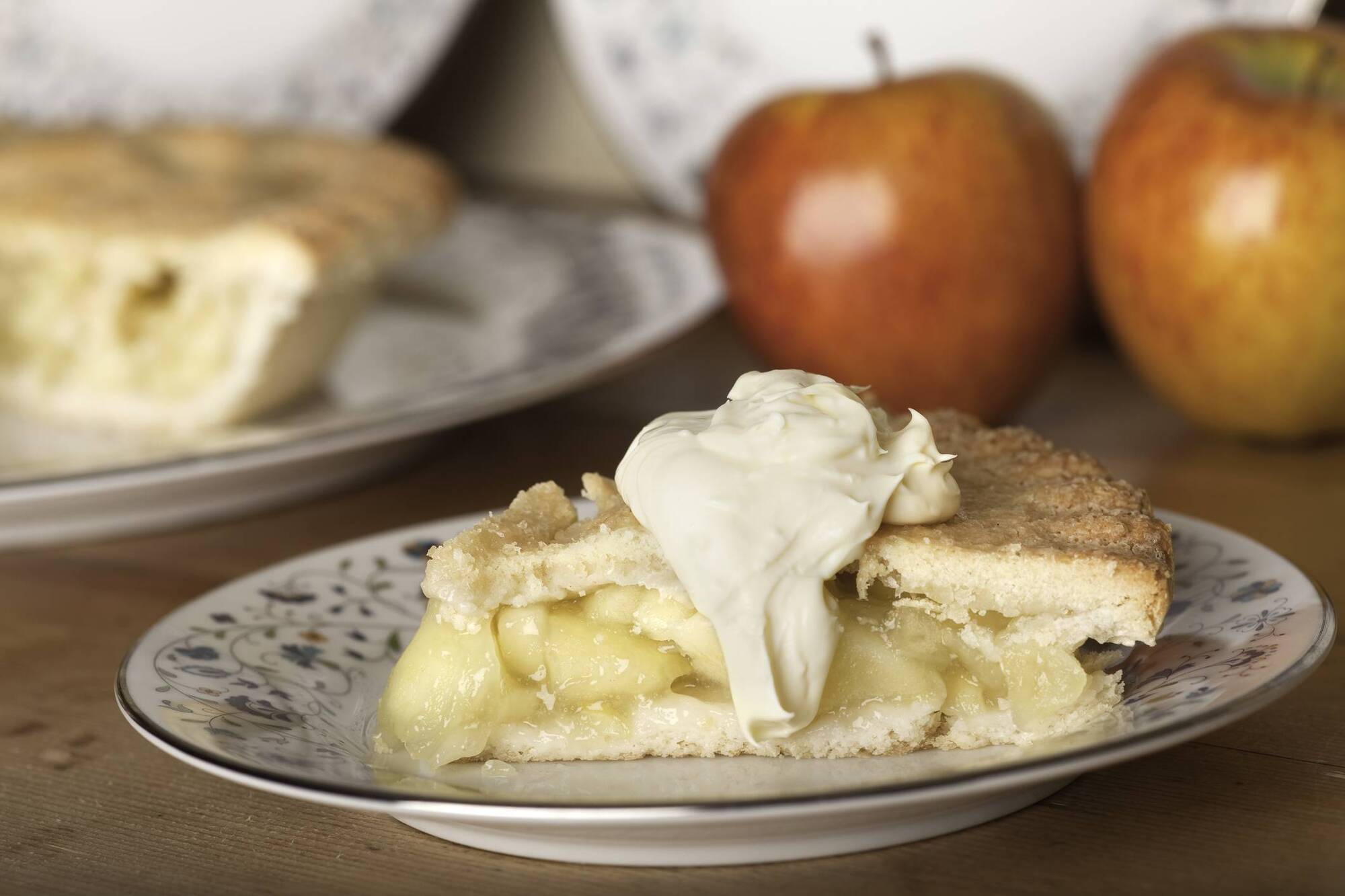
An Irish apple tart is hard to beat
Pastry is reliant on two things: cold ingredients and a hot oven. Before you begin to assemble your pastry, preheat your oven, and keep your butter and water in the fridge until the last minute.
It could be a humid day, or your flour might be extra thirsty, but a tart will require a slightly different amount of liquid every time. The solution here is to add your water gradually, little by little, stirring together with a knife (it's colder than a spatula or wooden spoon). The rule goes, you can't take it out once you put it in.
Put a small amount of flour on the rolling pin - the last thing you want to do is interfere with the balance of fat and flour in your pastry. After every two light rolls of the pin, lift the pastry and rotate, letting it fall back in its own time, to avoid any stretching. Light even rolls are essential, because if you are beating it too hard with your pin, then it will be stretched and tough to eat.
When you place your bottom layer of pastry on the plate or tin you will be baking it on, put it in the freezer while you are peeling and preparing your apples.
Whether you choose to use eating or cooking apples (always use whatever your mother or grandmother used - they know best), it is important to work quickly. Slice thinly, so that they cook quickly. By placing them on your chilled pastry base, you are giving your tart the best chance at avoiding a soggy bottom.
Ground cloves are a common addition to an Irish apple tart. Be sparing, as it is a very strong flavour - a small pinch will do.
Before adding the top layer of pastry, brush the bottom layer with water. This will stop the juices from spilling onto the bottom of your oven. Ease the top layer of pastry out to the edge and using your fingertips, press the edges gently down. Then take a knife and trim the edges of the plate or tin, before using the blunt edge of your knife and finger to press the sides together and form a crust that comes slightly up and away from the plate.
It is essential to cut a hole in the top of your tart, which will allow the steam to escape and ensure crispy pastry and warm, delicious apples.

This is my most requested apple pie recipe, made with this brilliant break-all-the-rules pastry. It’s made by the creaming method so people who are convinced that they suffer from 'hot hands' don't have to worry about rubbing in the butter. Although a simple apple pie is a top comfort food for most of us, one can, of course, add a few plums or blackberries from the freezer — or how about adding a little leftover mincemeat.
Serves 8-12
For the pastry
- 225g butter
- 40g caster sugar
- 2 eggs, preferably free-range
- 350g white flour, preferably unbleached
For the filling
- 675g Bramley Seedling cooking apples
- 150g sugar
- 2-3 cloves (optional)
- egg wash — made with one beaten egg and a dash of milk
- caster sugar for sprinkling
To serve
- Softly whipped cream
- Caster sugar
Equipment
- tin, 18cm (7 inches) x 30.5cm (12 inches x 2.5cm (1 inch) deep
- Preheat the oven to 180°C/350°F/Gas Mark 4.
First, make the pastry. Cream the butter and sugar together by hand or in a food mixer (no need to over cream). Add the eggs one by one and beat for several minutes. Reduce speed and mix in the flour slowly. Turn out onto a piece of floured greaseproof paper, flatten into a round wrap and chill. This pastry needs to be chilled for at least 2 hours otherwise it is difficult to handle.
To make the tart, roll out the pastry 3mm thick, and use about two-thirds of it to line a suitable tin. Peel, quarter and dice the apples into the tart, sprinkle with sugar and add the cloves. Cover with a lid of pastry, seal edges and decorate with pastry leaves, cutting a hole in the top.
Then egg wash and bake in the preheated oven until the apples are tender, approx. 45 minutes to 1 hour. When cooked cut into squares, sprinkle lightly with caster sugar and serve with softly whipped cream and sugar.