Aishling Moore: A great sauce can make or break a dish – here's my warm tartar sauce recipe
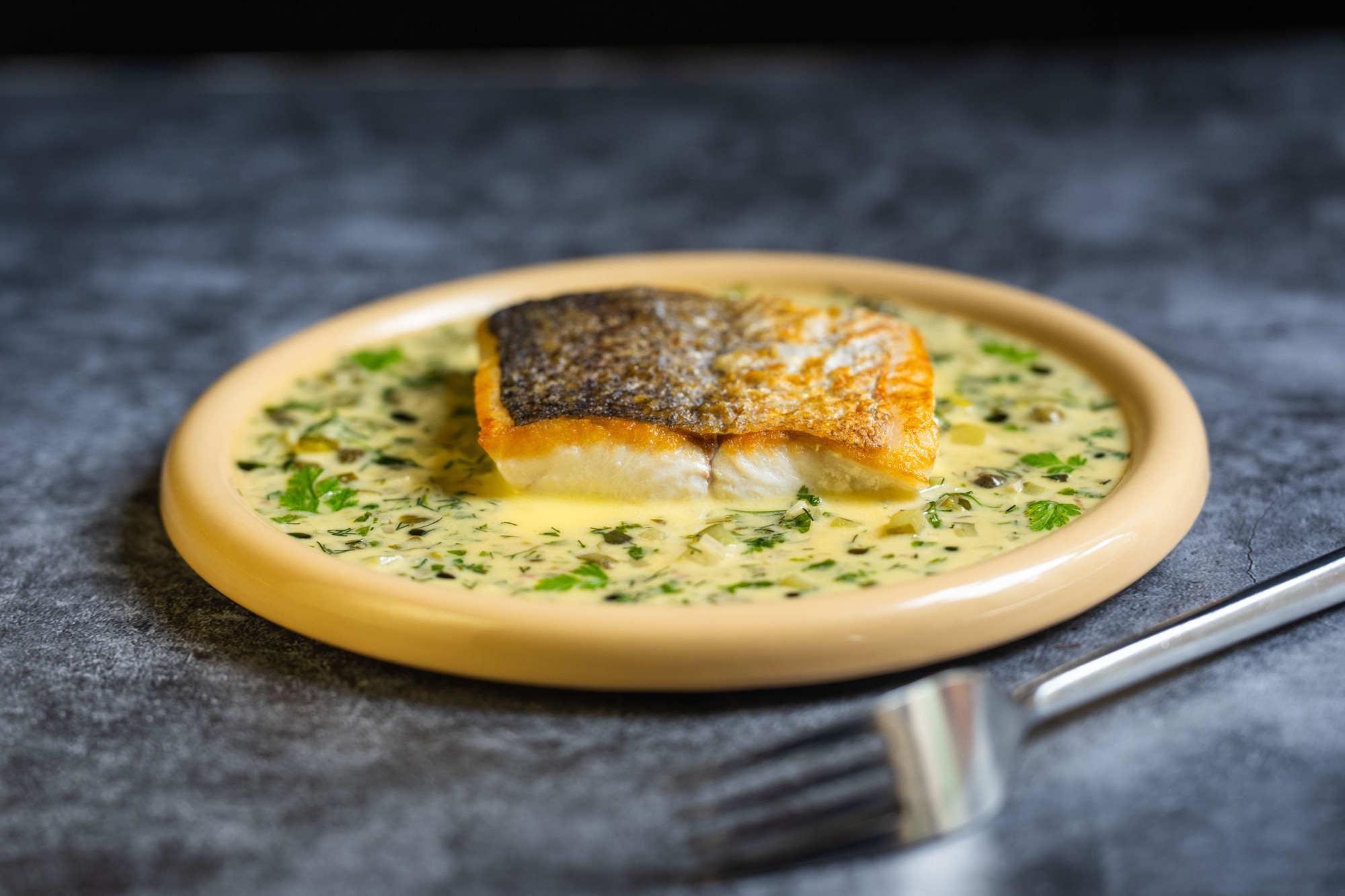
Aishling Moore's Hake with warm tartar sauce. Picture: Noel Sweeney

The sauce on any given plate of food can be what makes or breaks a dish. A great sauce can offer acidity and/or depth, a ‘taste of more’, and it is the principle component of what transforms multiple ingredients on a plate into a comprehensive dish.
Hake with warm tartar sauce
The butter must be cold to easily emulsify into the sauce. The reduced cream added prior to the butter will aid this emulsification.
Servings
4Preparation Time
20 minsCooking Time
25 minsTotal Time
45 minsCourse
MainIngredients
For the hake
4x 130g fillets of hake
(skin on and pin-boned)
3 tbsp rapeseed oil
Fine sea salt
For the tartar sauce
2 tbsp rapeseed oil
100g fish bones
1 onion, sliced
3 cloves of garlic, crushed
100ml white wine
100ml cream
150g cold butter, diced
1 shallot, finely diced
2 large gherkins, finely diced
1 tbsp capers, finely chopped
1 tbsp chopped chervil
1 tbsp chopped dill
1 lemon
Method
To make the tartar sauce, place a medium-sized pot on moderate heat. Warm the rapeseed oil and add the fish bones. Cook until lightly golden then add the onion and garlic.
Cook for three minutes then add the white wine.
Bring to the boil and reduce by half.
Add 500ml of cold water and bring to the boil, reduce to a simmer, and cook for 10 minutes.
Pass the stock through a fine sieve and place in a clean medium-sized pot.
Return to the heat and reduce by half (to about 200ml).
Add the cream and reduce by half. Drop the heat to low and begin to add the cubes of butter, swirling the pan to emulsify as you do.
Allow the sauce to emulsify each time before adding any more butter. Once all the butter is added and the sauce has emulsified, remove from the heat and add the gherkin, capers, herbs, the juice, and zest of a lemon.
Taste to adjust seasoning and keep warm while cooking the hake.
For the hake
Preheat your frying pan on a medium-high heat for two minutes. Season the fish with fine sea salt.
Add the rapeseed oil before placing the hake in the pan,laying the fillet skin side down and away from you.
Once in the pan, do not disturb. Allow the skin of the fillet to caramelise. Once the fish is cooked 60% of the way, confidently lift the fillet from the pan using a fish slice and place on a tray.
Place in a 200˚C preheated oven to finish cooking for between 4 to 5 minutes, depending on the size of the fish.
Remove the fish from the fridge 15 minutes before you begin cooking. This will allow for more even cooking.
Pat dry any excess moisture from the fish before seasoning with sea salt. This will help prevent the fish from sticking to the pan and also limit oil splatters.
Carbon steel frying pans are my preference for cooking fish. They are excellent conductors of heat and require very little upkeep.
Make sure you’re using a pan that’s large enough for the number of portions you’re cooking. Avoid overcrowding the pan, each addition to a cooking surface reduces the temperature of the pan. Work in batches if needs be.
This sauce would be fabulous served with pretty much any fish, so take a recommendation from your fishmonger.