Michelle Darmody: How to bake a classic pineapple upside-down cake
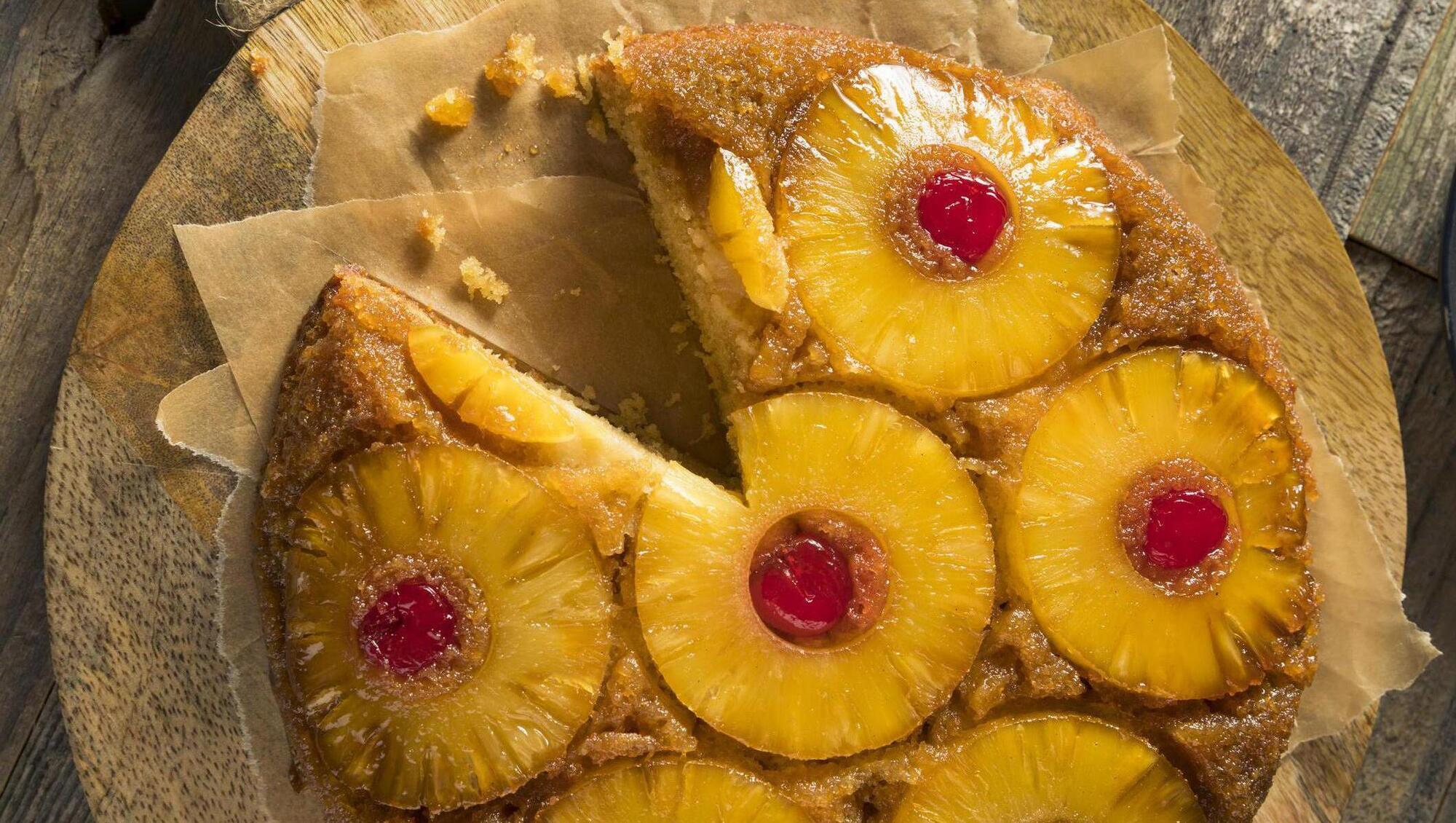
Sweet Homemade Pineapple Upside Down Cake with Cherries

Like most desserts, or food more widely, you can make an average tasting Pineapple upside-down cake, or a much more delicious version. In this case you use fresh pineapple which adds bite and texture and it caramelises far better than softer tinned versions.
A half a grapefruit with a glacé cherry on top was a popular starter in Ireland a few decades ago. At my aunt’s wedding as a child, I clandestinely ate one of the cherries from a half grapefruit at my table before other guests arrived. The logic followed that I should eat all of the cherries set out on the table so that no one would realise what I had done. My little belly was full of the sticky, sweet cherries and of course everyone noticed.
This was not enough to turn me off glacé cherries. I still enjoy cherries in almost any form. Glacé is often the most readily available version in Ireland and can be used to make this cake.
Maraschino cherries are also an option. These are the norm in America where this cake became popular. My preferred choice for this recipe is amarena cherries, which are darker in colour and are soaked in a rich syrup. They are not as cloyingly sweet as the other types mentioned.
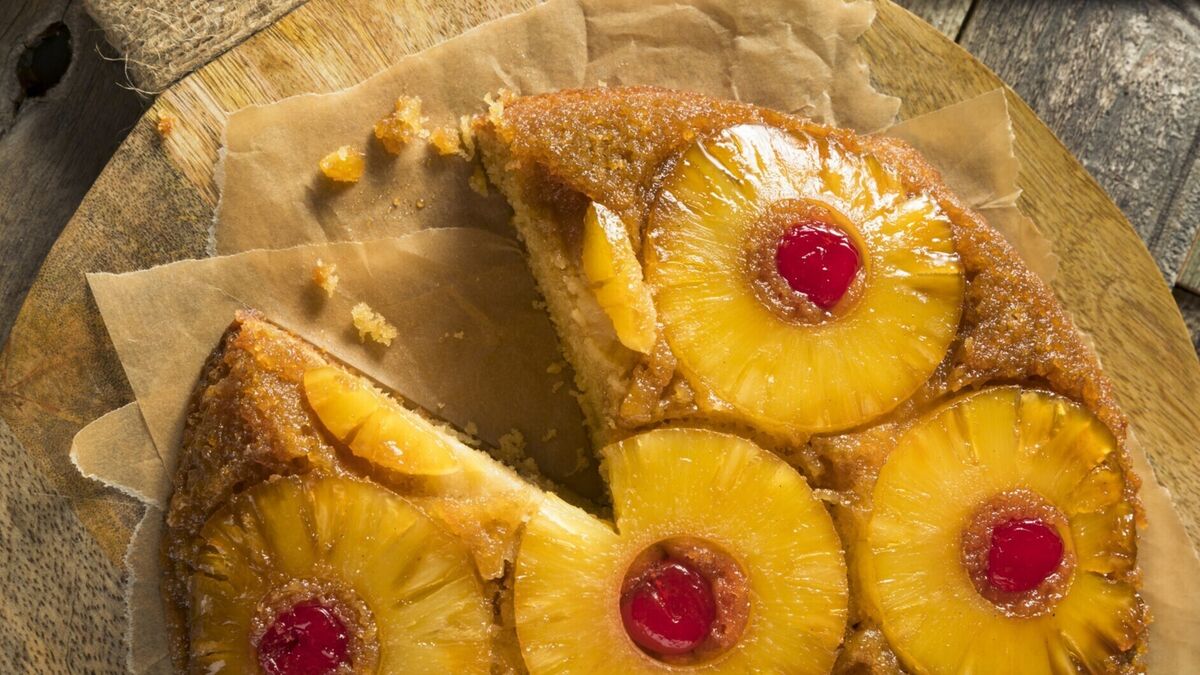
Pineapple Upside Down Cake with Cherries
This is kitsch, there is no getting away from the 1960s retro appeal of this dessert.
Servings
10Preparation Time
20 minsCooking Time
40 minsTotal Time
60 minsCourse
BakingIngredients
250g soft butter
250g light brown sugar
4 eggs, lightly beaten
200g self raising flour, sieved
1 small pineapple, peeled cored and sliced into 7 rings
7 cherries of your choosing
Method
Preheat your oven to 180ºC/gas mark 4.
Melt 50g of butter and 50g of sugar together.
Pour this liquid butter and sugar into a 9-inch round cake tin.
Lay the pineapple slices into the tin.
Place a cherry in the center of each pineapple ring.
Place your prepared tin into the fridge to allow the mixture to firm up while you make the batter.
Beat the remaining 200g of butter and sugar until light and fluffy.
Stir in the eggs.
Stir in the flour until everything is combined.
Gently scoop the batter on top of the pineapple slices in your tin.
Place the tin into the center of your oven and bake for about 40 minutes until a skewer comes out clear.
Allow to cool in the tin for just over ten minutes, then swiftly flip it over onto a plate.
To make nice neat pineapple rings, cut the top and base from your pineapple. Sit it on the base on a chopping board and remove the skin by cutting downwards. Slice the rings then use a cookie cutter to press a circle from the centre removing the tough inner part of the fruit.
If your pineapple rings are too wide to fit seven of them onto the base of the cake tin, place one in the centre and half the rest of the rings, placing a half ring radiating out from the centre ring. It might help to make a neater arrangement.
When your pineapple is juicy you can dab it with brown paper to dry it slightly before laying the slices in the tin. If there is too much liquid it will make the caramel runny and affect the sponge baking firm. You can do the same with the cherries if you are using a variety that has been in liquid.
It is best not to use a loose-based or spring-form tin for this recipe, as the caramel that is formed with the butter, sugar, and then pineapple juice will drip through the edges of these tins and onto your oven.
The brown sugar is important in this recipe as the molasses in the brown sugar helps to create the rich caramel.
Placing the tin into the fridge with butter, sugar and fruit allows it to firm together so it sits in place when you add the batter. If you do not do this step the fruit may get dislodged.
Allowing the cake to rest in the tin before flipping it over allows the caramel that has formed during baking to solidify slightly. This will stop it running off the cake once it has been turned over. If you wait until the cake has cooled completely you will have difficulty removing it as the caramel will harden and stick to the tin.
After you flip the cake, allow it to rest for a few minutes before removing the tin. It allows the syrup to soak into the sponge.
Sliced pears are soft and sweet and work very well in place of the pineapple and cherry. You will probably need two large pears, peeled, cored and sliced.
Coconut goes wonderfully with pineapple. You add 100g of desiccated coconut to the batter when adding the flour.
If you really like coconut flavour, the addition of a teaspoon of coconut extract also adds coconut goodness to the cake. Sprinkling coconut flakes onto the sugar and butter layer before adding the pineapple and cherries creates a lovely toasted layer.
A thinly sliced apple works well in place of the pineapple and cherries. It is a take on a tart tartine but not as rich and sticky. Peel, core and slice a large apple. Dot the slices onto the base of the cake tin before scooping the mixture on top.