Joe McNamee: I have long been obsessed with vinegar — here's why
Vinegar’s time in the spotlight is long overdue
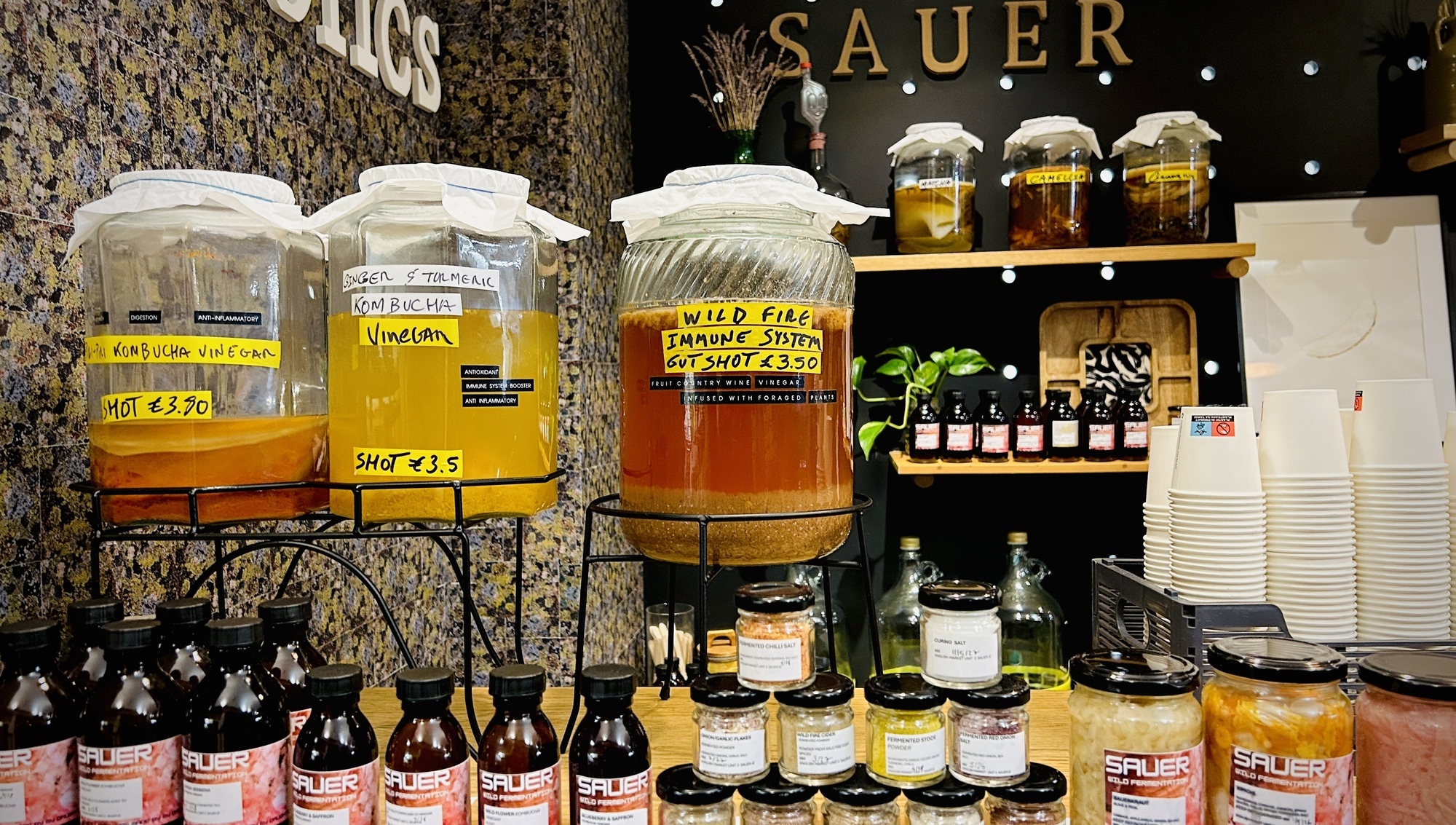
Some of the Vinegars at Sauer, Ivo Duarte’s cutting-edge wild fermentation food business

Some of the Vinegars at Sauer, Ivo Duarte’s cutting-edge wild fermentation food business

I am finalising my Grub Circus programme for Cork on a Fork food festival in August, when my own live food-themed stage will fetch up at St Peter’s event centre in Cork City. I have curated and hosted Grub Circus around the country, but this will be the first time in my hometown and I hope it will be as blissfully chaotic and wildly entertaining as ever while celebrating the superb food and producers of the Rebel County.

But I needed a finishing touch. It came to me in the English Market, specifically at Sauer, Ivo Duarte’s cutting-edge wild fermentation food business. To the bread, cheese, and wine already being celebrated, I would add vinegar, a product with which I have long been obsessed.


A healthy shower of malt vinegar has always been crucial to a deep-fried fish supper, especially for chips fried in beef dripping. In my youth, certain select homes had wine vinegar for “vinaigrette”, but that was for people with notions. The rest of us made do with Heinz Salad Cream and, to this day, most Irish home kitchens still have space for the iconic stubby-bottled Chef Malt Vinegar. It was only when I began cheffing in 1980s London that I kicked off my vinegar eduction proper.

A palate would rapidly tire of overwhelmingly rich hollandaise and bearnaise without white wine vinegar’s acidity searing through rich fats, drawing out depth of flavour. Deglazing a pan used to cook meat with red wine vinegar is the first step to a wonderful sauce to pair with that meat. Substituting white wine vinegar with red in a vinaigrette also employing Dijon mustard (made with white wine vinegar) adds a warmer, rounded flavour for robust salads, such as a combo of tomatoes, olives, and salty feta.

At the tail end of the ’80s, London was subsumed by the Mediterranean menu: Pesto, sundried tomatoes, and Modena balsamic vinegar drizzled over everything. Sweet enough to drink solo, I was mesmerised by balsamic vinegar, even adding it to ice cream, acidity cutting through fat and making vanilla sing. (It is now so ubiquitous, including multiple inferior imposters, that it has become a red flag for me if encountered lazily slathered over an Irish restaurant plate in 2026.)

The quintessential Irish vinegar is apple cider vinegar, understandable in light of our ancient heritage of apple growing and cider production, though its Irish rise in recent decades mirrors an international trend around perceived health benefits, especially for gut health and reducing inflammation. I make an apple cider vinegar tonic each week, with honey and spices, though I have yet to see any evidence of weight loss potential. I use it all the time in cooking, especially pork, and in an alternative hollandaise that goes very nicely with smoked mackerel. Kilkenny’s Highbank Orchards’ Balsamic Apple Vinegar is quite exquisite, an essential ingredient in many fine dining and Michelin-starred Irish kitchens.

When I discovered Fionntán Gogarty’s astonishing Wildwood Balsamic Vinegars, made from foraged Irish fruits and blossoms, fermented and barrel-aged to a syrupy, viscous nectar, my vinegar game took flight. I once passed an entire Dingle Food Festival with a bottle of Wildwood Wild Blackberry Balsamic in my bag, administering a tincture to every soul I met. Nary a one was less than utterly bowled over. In fact, I use Fionntán’s vinegars — a tradition inherited from his French mother — as much for sweet stuff as savoury, especially drinks.

I bought my first vinegar crock almost 20 years ago, throwing in leftover wine and creating a vinegar better than most supermarket offerings. I bought a second to make separate red and white wine vinegars, the latter an ideal base for infused vinegars. I now use vinegars as freely as I use salt to finish a dish; a glug stirred in before serving elevates most dishes, sending flavours soaring heavenwards.

Vinegars are just one aspect of Sauer’s wild fermentation business model, but Ivo’s wild and kombucha vinegars have to be tasted to be believed and his demo at Grub Circus will focus on how to use them to elevate your own cooking at home.

The New York Times has declared vinegar the food product of 2026 — to which I can only reply, “dang, gang, what kept you?!”

Table Talk

I always found Glover’s Alley, in Dublin’s Fitzwilliam hotel, to be an uninspiring space, even in its previous incarnation under Kevin Thornton, the only ever two-starred Irish chef. As Glover’s Alley, Andy McFadden also earned a star but it never seemed to capture popular imagination, so much will be expected of replacement Adam Nevin. The young Maynooth man boasts a glittering CV and earned a star for The Morrison Room, at Carton House, just over a year after returning from London, and certainly has the talent so he and a newly revamped room may finally make the difference.

If this stunning weather continues, the Leviathan Food popup (July 11&12) at Goleen Harbour Eco-Resort, should prove to be one of the dining events of the summer.

Food journalist/chef James Martin’s Leviathan also pops up at Saint Francis Provisions (July 14) and on a secret beach location near Skibb with Max Jones, of Up Here The Last, with plans for an alternative indoor location should weather fail to live up to its side of the bargain.

Today's Special

Wildflower tea vinegar from Sauer

Ivo Duarte spends an awful lot of his time first explaining his product range to potential customers, many intimidated by the idea of ‘wild fermentation’.

I find a sample taste speaks volumes. His range of vinegars are as wonderful as they are wild, and his Ginger & Turmeric Kombucha Vinegar (also popular as a standalone health drink) is stunning.

Added to Murgh Makhani (butter chicken curry) before serving, and it cuts through all that heavy cream, transforming decent into divine. It is the delicate floral notes, however, in a Tea of Wild Flowers Kombucha Vinegar (€7.50), that have me most intrigued, especially fine as a more nuanced substitute for lemon in a fennel butter sauce with poached whiting.

x

More in this section

Cookie Policy Privacy Policy Brand Safety FAQ Help Contact Us Terms and Conditions

© Examiner Echo Group Limited