Michelle Darmody: How to make the tasty Greek snack Spanakopita
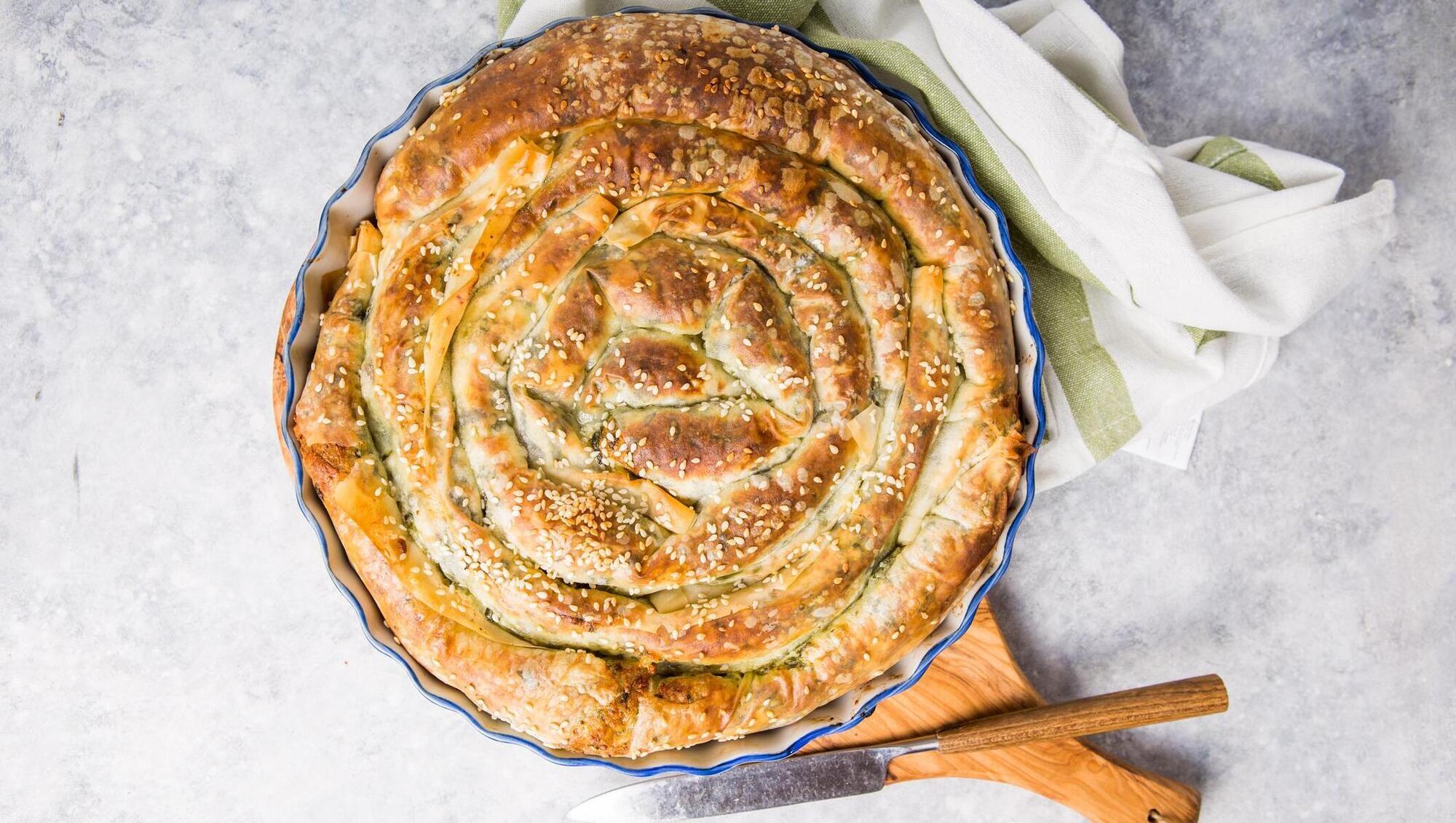
This bake is so tasty and versatile you will probably get another go, as you will most likely be making it again.

The tantalising glimpses of the sky are giving me a longing for warm summer holidays to come. I think the slivers of blue and the dappled sunlight have inspired me to think about Greek snacks, such as spanakopita.Â
This curled up pastry evokes holiday memories of coming off a hot sunny beach to grab a bite to eat in the dead of the afternoon heat, searching for a small bakery and then a cool section of shade to eat my spinach and feta encased in light, crisp filo pastry.
Filo refers to leaf in Greek and it so aptly describes the thin, almost translucent sheets of pastry used for this bake. The thinness can make it a little tricky to work with but as long as it is kept damp you should be ok.Â
It is when it dries out that it becomes too brittle to roll into the sausage shape you need. This unusual shape is easier to create than it looks. Do not worry too much if you do not get the rolled shape perfect the first time around.Â
This bake is so tasty and versatile you will probably get another go, as you will most likely be making it again.
Spanakopita
This curled up pastry evokes holiday memories of coming off a hot sunny beach to grab a bite to eat in the dead of the afternoon heat, searching for a small bakery and then a cool section of shade to eat my spinach and feta encased in light, crisp filo pa
Servings
8Preparation Time
25 minsCooking Time
40 minsTotal Time
1 hours 5 minsCourse
MainIngredients
100g butter
150g spinach, washed and roughly chopped
200g feta cheese, crumbled
1 tsp grated nutmeg
1 tsp cracked black pepper
50g parmesan cheese, finely grated
2 eggs, lightly beaten
Zest 1 lemon
7 sheets filo pastry
Sesame seeds, for sprinkling
Method
Add a quarter of the butter into a heavy-based saucepan and allow it to sizzle.
Add the chopped spinach until soft
Place the crumbled feta, nutmeg, pepper, and parmesan into a bowl. Stir in one of the eggs along with the lemon zest.
Add the chopped spinach into the bowl. Combine well and set aside.
Line a round oven-proof dish with parchment. About 8 or 9 inches in diameter.
Preheat your oven to 180ºC/gas mark 4. Melt the rest of your butter.
Lay your first sheet of filo onto a clean work surface. Bush it generously with melted butter.
Place another sheet beside it end to end so you have a long rectangle. Bush that with butter as well. Overlap by an inch. Do the same with the next sheet so that you have a really long rectangle.
Use the next four sheets to layer and strengthen the rectangle, brushing each with melted butter
Place a line of the spinach mixture along one of the long edges of the rectangle.
Roll the pastry into a long sausage.
Spiral the sausage from the inside out and gently place it into your prepared dish
Brush with the other egg and sprinkle with the sesame seeds as well as some black pepper and salt.
Bake for 40 minutes until golden on top.
It is a good idea to squeeze the moisture from the spinach before adding it to the feta mixture. It will prevent sogginess. Allowing the spinach filling to cool to room temperature will also help prevent sogginess.
It is best to ensure the filo dough is fully defrosted otherwise it is too brittle. You can defrost it in the fridge overnight if you wish.
You can use frozen spinach, but it is best to defrost it fully and squeeze out any liquid before using it.Â
I find that baby spinach does not hold up in this bake, it disintegrates and does not hold its shape as well as mature leaves.
You can taste your filling and decide if you want to add salt. Some feta cheeses are much saltier than others and you may not need to add salt at all. The lemon zest is a good counter to saltiness as it helps to balance the flavours.
You can use any ovenproof dish but I find metal gives the crispest results as it heats quickly and evenly.
If you need to leave the pastry on the counter for any length of time, cover it loosely with a damp tea towel to prevent the filo sheets drying out. Brushing the butter is also very important to prevent dryness, help it stick and add richness to the flavour. You will need to overlap the sheets so that the seams are all strengthened.
The spanakopita will last for about three days in an airtight container in the fridge. It does not freeze and defrost well after it has been baked. You can however freeze it after you prepare it and then bake it straight from frozen when you need it. You will need to add about ten minutes to the baking time.
Using a mixture of nettle and cavolo nero at this time of year is perfect. The nettles are still fresh and green and perfect for cooking. Cavolo nero, or as it is often known, black kale, is in its first bloom post-winter and will add bite to the softness of nettles. Use 75g or each in the recipe.
To add a bit of colour to your filling, use 150g of the stalks and leaves of rainbow chard. For this version, I add a mixture of half feta and half ricotta which creates a different texture. A tablespoon of breadcrumbs added to the filling mixture will provide some absorption and bulk to the ricotta.
To add flavour and bite to the filling, I like a mixture of olive and sun-dried tomato. They both mix well with spinach and feta. Add a handful of each, roughly chopped, to the filling mixture. Remember to remove the stones from the olives before adding them.