Darina Allen: Three classic recipes for supper in the Irish kitchen
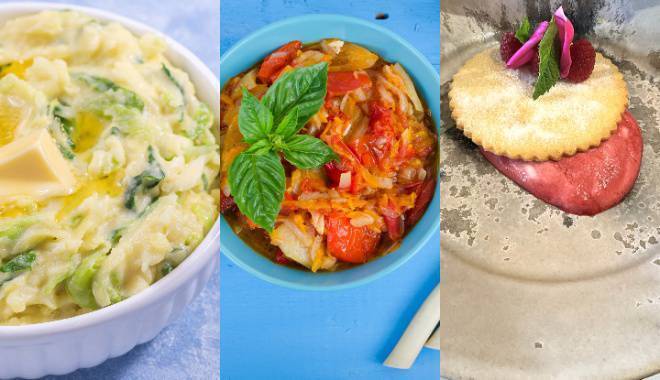
Three Darina-selected recipes.

Yesterday evening, just as I was about to tuck into supper, I had a moment. Suddenly I thought of the incredible amount of work that actually went into growing and rearing the produce on my plate, not to mention cooking it.
Silently, I gave thanks for my nephew, Darren, who had put so much work into rearing the free-range heritage pigs on his farm at Ballymaloe House.
For our local butcher, Frank Murphy and his son Brian in Midleton, who cured the bacon for the succulent slice of glazed bacon on my plate.
For the team of gardeners on the farm who had sown the seeds for the juicy roast tomatoes back in February, transplanted them at the end of March, tended and watered them for over four months for me to enjoy.
The deep red tomatoes were ripened fully on the vine for maximum flavour, packed with lycopene, lots of other minerals and vitamins and super tasty.
Remember, scientists now understand that flavour equates to nutrient intensity – nature’s way of tempting us to eat healthy wholesome food.
The tomatoes were halved, seasoned with flaky sea salt, freshly cracked pepper, a good sprinkling of sugar and a generous drizzle of extra virgin olive oil.
Fifteen minutes or so in a good hot oven and then a scattering of fresh herbs while still warm. You can’t imagine how delicious it was because the tomatoes were so good to start with.
The red and yellow peppers for the piperonata came from Caitriona Daunt at Organic Republic, but the new season’s onion, tomatoes and basil were also from here.
The colcannon made from freshly dug potatoes, new season onions and cabbage took close to five months to grow too, a blight-resistant variety called Kelly, cultivated organically without a speck of glyphosate, just rich fertile soil enriched with compost and seaweed from the local strand.
Once again, special thanks to the gardeners for those and for the flat pod French beans. This is a brilliant variety called Hilda, they crop and crop and when the beans swell in the pods at the end of the season, they can be dried for winter soups and stews.
I also need to thank Billy for looking after the cows who produce the rich Jersey milk, the basis for the simple parsley sauce, a favourite from my childhood, so unctuous and delicious.
Next, I thought of Maria, our Dairy Queen, or was it Tiffin, and gave thanks for the dollop of homemade butter melting over the beans and into my colcannon.
So much work and love went into producing the simple feast on my plate. Once again, in the Quaker tradition, I silently gave thanks to Mother Nature et al for every nourishing bite.
I don’t hanker after an expensive Prada handbag or a pair of Gucci shoes; For me to sit down to a plate of food where everything on the plate comes from the farm, gardens or local area is luxury indeed. How blessed am I.
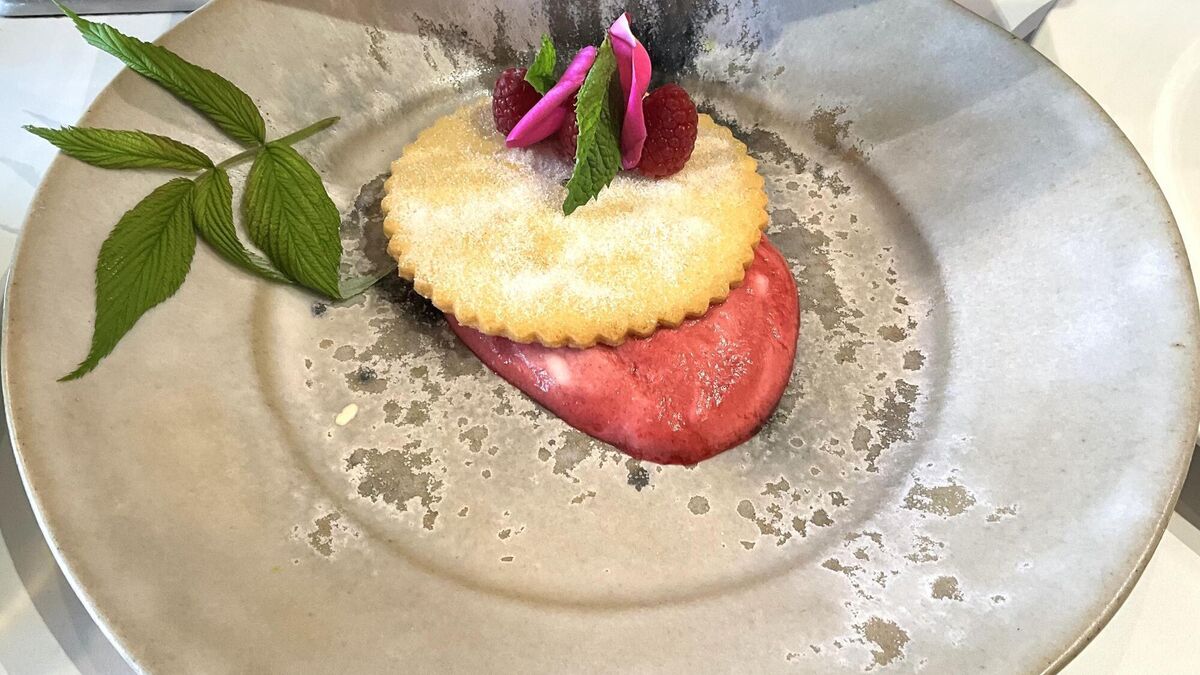
Afterwards, a bowl of loganberry fool, accompanied by a couple of Jane’s biscuits, the name that Myrtle Allen gave these delicious little shortbread biscuits that the children made over and over again on wet afternoons.
Every bite has a story, that’s what memories are made of.
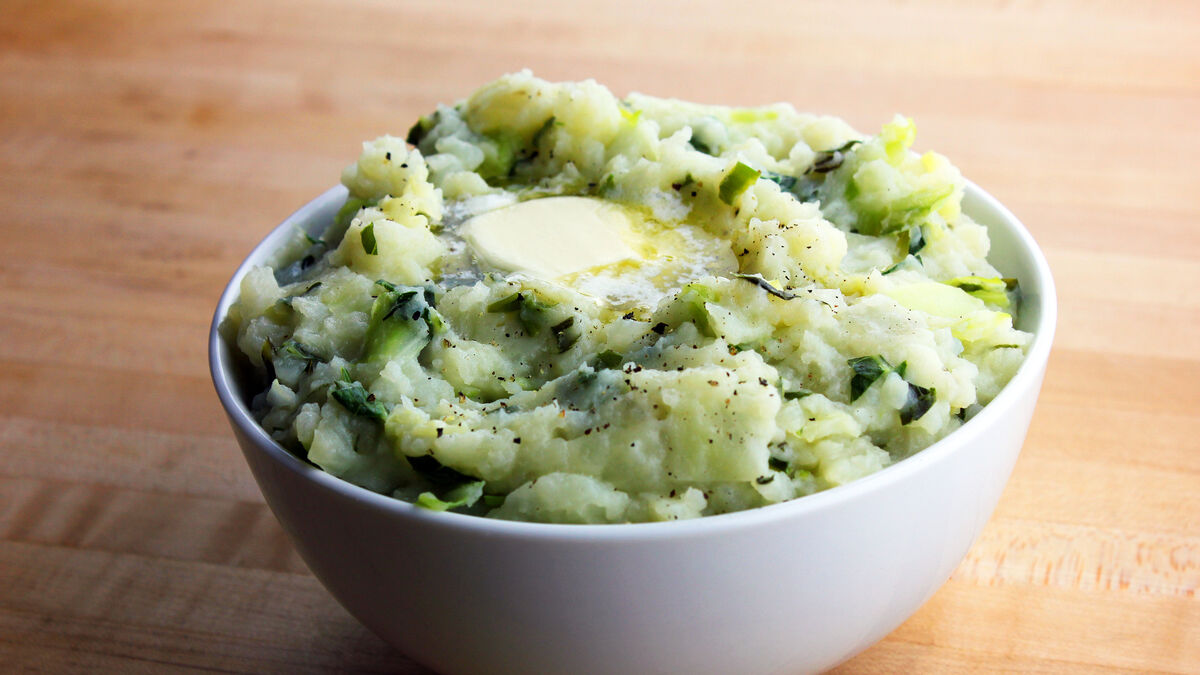
Colcannon
For the simplest of dishes, pair colcannon with a fried or poached egg
Servings
6Preparation Time
5 minsCooking Time
30 minsTotal Time
35 minsCourse
SideCuisine
IrishIngredients
450g kale or Savoy or spring cabbage
1.35kg ‘old’ potatoes, eg, Golden Wonders or Kerrs Pink
250ml boiling milk approx
30g scallion or spring onion, optional
salt
freshly ground pepper
55g butter
Method
Scrub the potatoes, put them in a saucepan of cold water, add a good pinch of salt and bring to the boil.
When the potatoes are about half-cooked — 15 minutes approx for ‘old’ potatoes — strain off two-thirds of the water, replace the lid on the saucepan, put onto a gentle heat and allow the potatoes to steam until they are cooked.
Remove the dark outer leaves from the cabbage. Wash the rest and cut into quarters, remove the core and cut finely across the grain.
Cook in a little boiling salted water or bacon-cooking water until soft.
Drain and season with salt, freshly ground pepper and a little butter.
If using kale, remove the central rib. Cook the kale in a large pot of boiling salted water until tender.
This may take 8-10 minutes, depending on the type and maturity of the kale.
Curly kale is sweetest after it has been mellowed by a few night frosts.
When the potatoes are just cooked, put the milk and the finely chopped scallions into a saucepan and bring to the boil.
Pull the peel off the potatoes and discard, mash quickly while they are still warm and beat in enough boiling milk to make a fluffy purée. (If you have a large quantity, put the potatoes in the bowl of a food mixer and beat with the spade.)
Then stir in the cooked cabbage and taste for seasoning. For perfection, serve immediately in a hot dish with a lump of butter melting in the centre. Colcannon may be prepared ahead up to this point and reheated later in a moderate oven 180°C, for 20-25 minutes.
Cover while reheating so it doesn’t get too crusty on top.
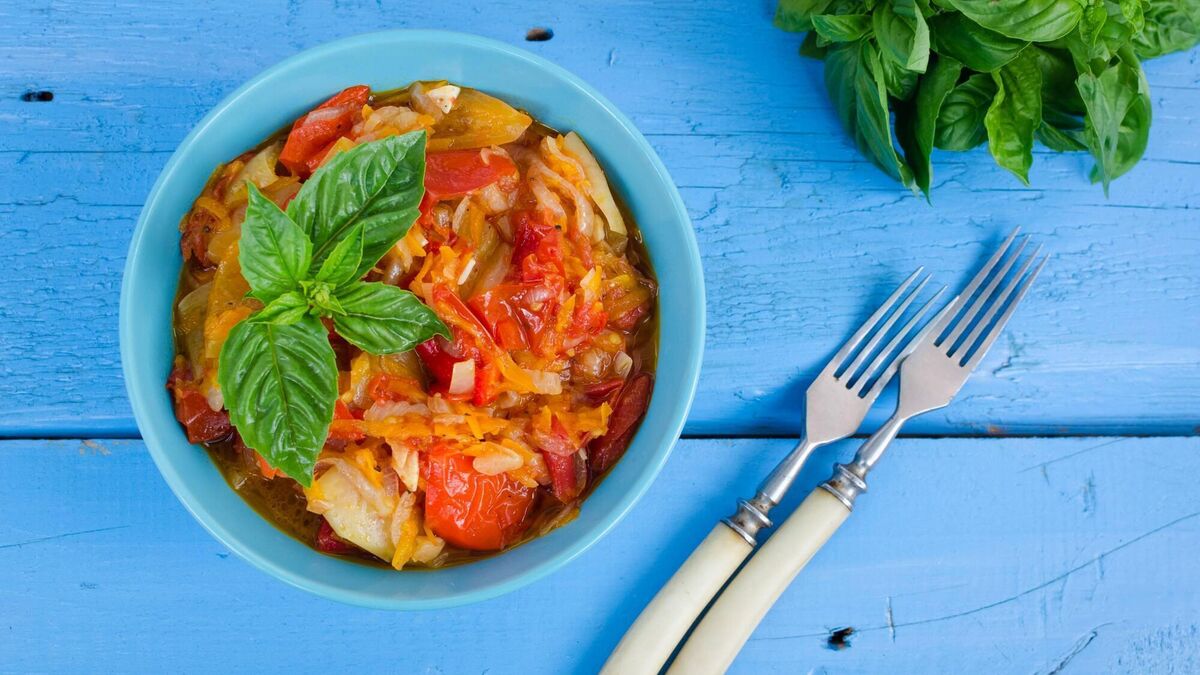
Piperonata
This is one of the indispensable trio of vegetable stews that we always reckon to have to hand. We use it not only as a vegetable but also as a topping for pizzas, as a sauce for pasta, grilled fish or meat and as a filling for omelettes and pancakes.
Servings
10Preparation Time
20 minsCooking Time
30 minsTotal Time
50 minsCourse
MainIngredients
2 tbsp olive oil
225g onion, sliced
a clove of garlic, crushed
2 organic red peppers
2 organic green peppers
6 large organic or chemical-free tomatoes (dark red and very ripe)
salt, freshly ground pepper and sugar
a few leaves of fresh basil
Method
Heat the olive oil in a casserole, add the onion and garlic, toss in the oil and allow to soften over a gentle heat in a covered casserole while the peppers are being prepared. Halve the peppers, remove the seeds carefully, cut into quarters and then cut the pepper flesh into 2-2½cm squares. Add to the onion and toss in the oil; replace the lid and continue to cook for 5 minutes.
Meanwhile, peel the tomatoes (scald in boiling water for 10 seconds, pour off the water and peel immediately). Slice the tomatoes and add to the casserole, season with salt, freshly ground pepper, sugar and a few leaves of fresh basil if available. Cook until the vegetables are just soft, 30 minutes approx.
Loganberry Fool
If you can’t lay your hands on loganberries, raspberries are pretty delicious too – so easy.
Servings
6Course
DessertIngredients
450g loganberries
175-225g caster sugar
425-600ml softly whipped cream
Method
If the loganberries are fresh, just whizz the berries in a blender with the sugar. Push the purée through a nylon sieve, fold in the softly whipped cream to taste. Serve with shortbread biscuits.
Should the fruit be frozen, just scatter the berries in a single layer on a plate. Sprinkle with the sugar and allow to come back to room temperature. When almost defrosted, liquidise and proceed as above.
Jane's shortbread biscuits
A delicious afternoon treat

Servings
24Preparation Time
15 minsCooking Time
15 minsTotal Time
30 minsCourse
BakingCuisine
IrishIngredients
170g (6 oz) plain flour
100g (4 oz) soft butter
50g (2 oz) sugar Icing (optional)
100g (4 oz) icing sugar
1 tbsp water
Food colouring (optional)
Sprinkles of your choice
Method
- If you have a food processor put all the ingredients for the biscuits in together and mix until they form a soft ball. If making these by hand rub the butter into flour and add sugar. Gather the mixture together and knead well.
On a floured surface roll out the mixture until it is about 5mm thick.
Cut shapes and place on a greased baking tray. Gather the remaining mixture, knead together again and roll out to cut more shapes. Repeat until all the mixture has been used up.
Bake in a moderate oven, 180°C or Gas mark 4 until biscuits are pale brown (about 15 minutes).
Remove and cool on a wire rack. We normally sprinkle the cooled biscuits with a little icing sugar and serve. However, if you want to be more festive they can be decorated with a topping of your choice.
For the icing, mix the sugar and water until the icing is free of lumps. Spread a thin layer of icing on each and sprinkle with a decoration of your choice. Allow the icing to set.
The purpose of this course is to equip the learner with the knowledge, skill and competence to autonomously perform and manage the dairy herd milking process integrating key milking techniques with required milk quality, food safety, dairy herd health and dairy cow welfare for commercial Irish dairy herds.
Accreditation Body/Award: QQI Award Level 6
- Coordinator: Attracta Dooley
- For more information, email adooley@frstraining.com
For one day only, farmers across the country are opening their gates to the public.
Come walk the fields, meet the animals, hear their stories, and discover how these inspiring farmers are protecting nature while feeding us all.
It’s free, just pick a farm near you and register – spots are limited.
- For more information and list of participating farms, see www.farmingfornature.ie
Hedgerows around the country are bursting with meadowsweet with its creamy white blossoms.
Use it to make meadowsweet tea, syrups, cordials, to flavour panna cotta, ice cream, custards, rice puddings, sorbet.
Apart from its delicious flavour, it has anti-inflammatory and pain-relieving properties – salicylic acid and similar compounds found in aspirin.