Michelle Darmody: How to bake a pistachio loaf and the mistakes to avoid
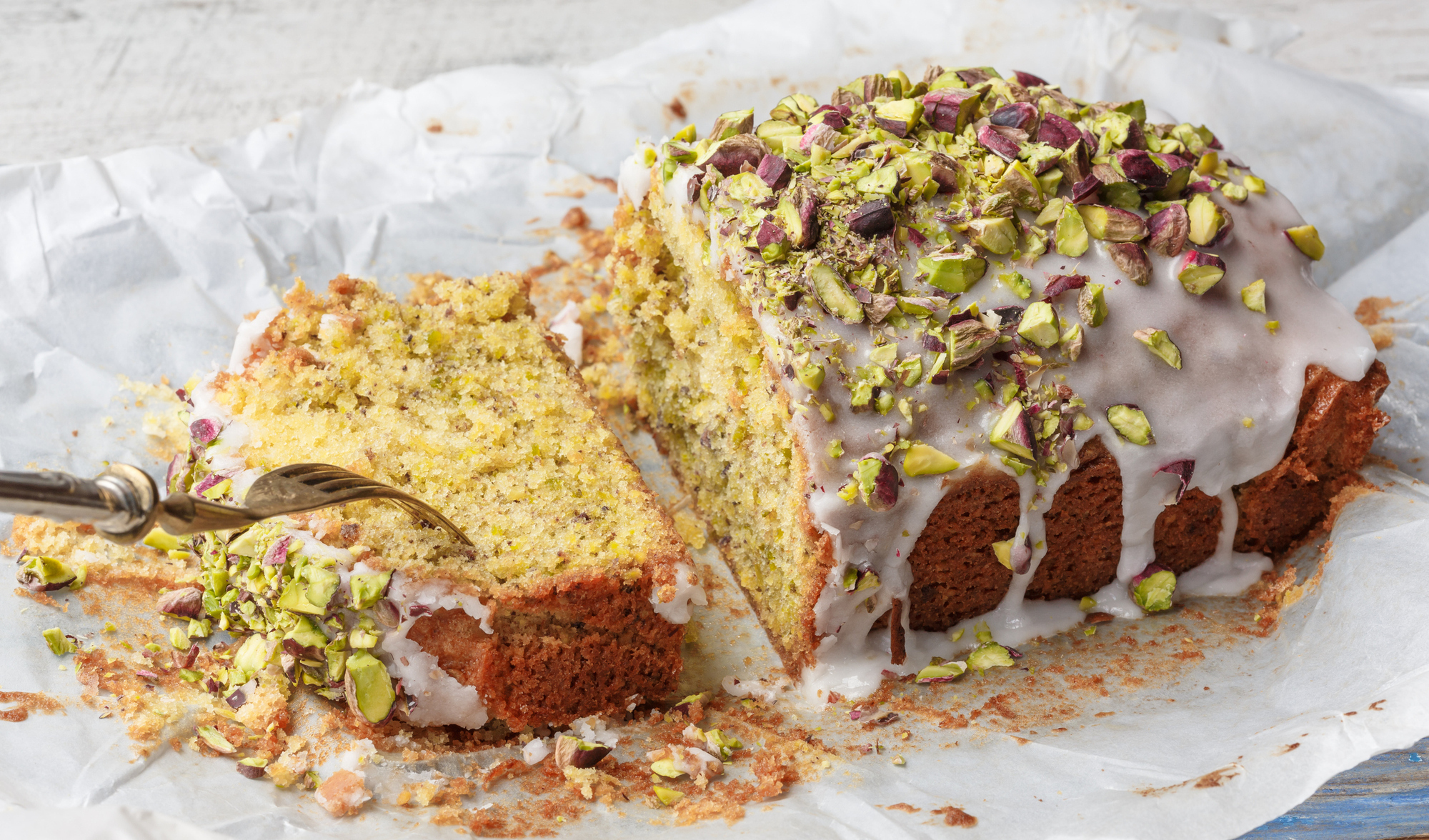
Pistacho seems to be eveywhere at the moment — here's how to enjoy it in cake form
Michelle Darmody: How to bake a pistachio loaf and the mistakes to avoid

This cake will last four days in the fridge, and it freezes well without the icing.

A big scoop of muted green pistachio gelato balancing on a cone, is an indication that my holiday is about to begin.


It is the flavour I go for first when travelling so holds the promise of sunny days ahead.

Pistachio nut trees grow along the hot Mediterranean coast and into Asia. I most associate them with Persian and Middle Eastern cooking but they are also prevalent in areas such as Greece and Sicily, where they grow by the slopes of Mount Etna.

In Sicily, pistachios are used in both sweet and savoury cooking; pistachio pesto is liberally stirred through orecchiette pasta to make a dish unique to that island. The orecchiette gets its name from its shape, which resembles a small ear, and the pistachios are of such importance they have been granted government protection.

Grinding the pistachio nuts freshly adds a wonderful green hue to this cake, as well as a richness and depth of flavour that is hard to match with pre-ground nuts.

You can use toasted or raw pistachios, but understandably they will give quite different results. The toasted ones will make for a much nuttier and deeper flavour.

Adding a sprinkle of edible rose petals to the top of the cake, in addition to the nuts, elevates it from a weekday staple to a cake worthy of a celebration.

Pistachio Loaf

recipe by:Michelle Darmody

Grinding the pistachio nuts freshly adds a wonderful green hue to this cake.

Pistachio Loaf

Servings

10

Preparation Time

30 mins

Cooking Time

40 mins

Total Time

1 hours 10 mins

Course

Baking

Ingredients

  • 200g plain flour

  • 1 ½ tsp baking powder

  • 1 ½ tsp bread soda

  • 195g unsalted pistachio nuts, without their shells

  • 130g butter

  • 255g golden caster sugar

  • 4 small egg whites

  • 90g natural yogurt

  • 180 ml milk

  • For the icing:

  • 110g icing sugar

  • 2 tsp lemon juice

  • 2 tsp water

  • Handful of roughly chopped pistachios to decorate

Method

  1. Line a 2lb loaf tin with parchment.

  2. Preheat your oven to 180ºC/gas mark 4.

  3. Sieve the flour, baking powder, and bread soda together and set aside.

  4. You will need a blender or grinder to turn your nuts into a rough powder. Add them to the mixer and pulse until it forms a powder.

  5. Stir the powdered pistachios into the flour mixture and set aside.

  6. Cream the butter and sugar until light and fluffy.

  7. Slowly beat in the egg whites until combined.

  8. Add the yogurt and milk and combine.

  9. Add in the flour and nuts and mix until a smooth batter is formed.

  10. Scoop or pour the cake batter into your lined tin.

  11. Place into the centre of your oven and bake for about 40 minutes or until a skewer comes out clean.

  12. Once cool enough to handle, place the cake onto a wire rack to cool completely.

  13. To make the icing, mix the icing sugar and juice until smooth. Slowly add the water until the icing is pourable but still a little stiff.

  14. 14. Drizzle the icing over the cooled cake.

  15. 15. Sprinkle chopped pistachios onto the icing while it is still soft.

Baker's tips

It is best to have your milk, yogurt and egg whites at room temperature. They will blend better, and you will get better volume from the egg whites. You may find if you use cold egg whites that the texture of your cake becomes unpleasantly grainy.

You want the baking powder and bread soda to be thoroughly mixed into the flour, so it is important to sieve them into the flour before mixing together. When making a cake, flour is generally added to the batter towards the end to avoid creating a tough cake. The flour does not need to be overmixed, just combined with the other ingredients.

Over-creaming the butter and sugar will cause the ingredients to separate, which will create a grainy, gritty texture. Keep an eye on the mixture and once it becomes light and fluffy switch off the mixer. This step adds structure and lightness to a cake by trapping air, so it is good to get it right. I tend to get my tin prepared, and the ingredients measured before I start so I can keep your eye on the batter as I go and avoid overmixing at each step.

To ensure all your ingredients are combined at each step, stop mixing sporadically and scrape a spatula around the bottom of the bowl. This is helpful not only when you are creaming the butter and sugar, but also when you are combining the egg white, yogurt and milk, and finally the nuts. This will help to get all the mixture from the base of the bowl incorporated.

You can add a teaspoon of vanilla to the batter if you wish for a slightly sweeter cake. Stir it into the milk before adding the milk to the batter.

Loaf cakes tend to crack down the centre as they rise and bake. This happens because the outside of a loaf begins to bake faster than the inside; the crack is formed by the inner batter rising and releasing steam through the semi-baked outer batter. You can help to form an even crack by running a knife down the centre of the cake mixture after it is poured into the tin.

This cake will last four days in the fridge, and it freezes well without the icing.

Three variations

Almond and pistachio

Using both almonds and pistachios in this cake delivers a more complex flavour. Grind equal amounts of both, and, if you wish, add a half a teaspoon of almond extract into the batter. I add it with the yogurt and milk.

Lemon zest and pistachio

Stir the zest of two lemons into the cake batter with the yogurt. When decorating, zest some lemon onto the icing with the sprinkling of nuts. You can get a small implement, which looks a little like a potato peeler, that allows you to create small curls of lemon zest.

Chocolate chips

To make a chocolate version I use dark chocolate as it goes better with the pistachio. You can stir 100g of chocolate chips into the batter before scooping it into the tin. There is also the added possibility of topping the loaf with ganache in place of the icing.

x

More in this section

Cookie Policy Privacy Policy Brand Safety FAQ Help Contact Us Terms and Conditions

© Examiner Echo Group Limited