Seafood Made Simple: Cooking en papillote has this hake and cannelini bean recipe wrapped up
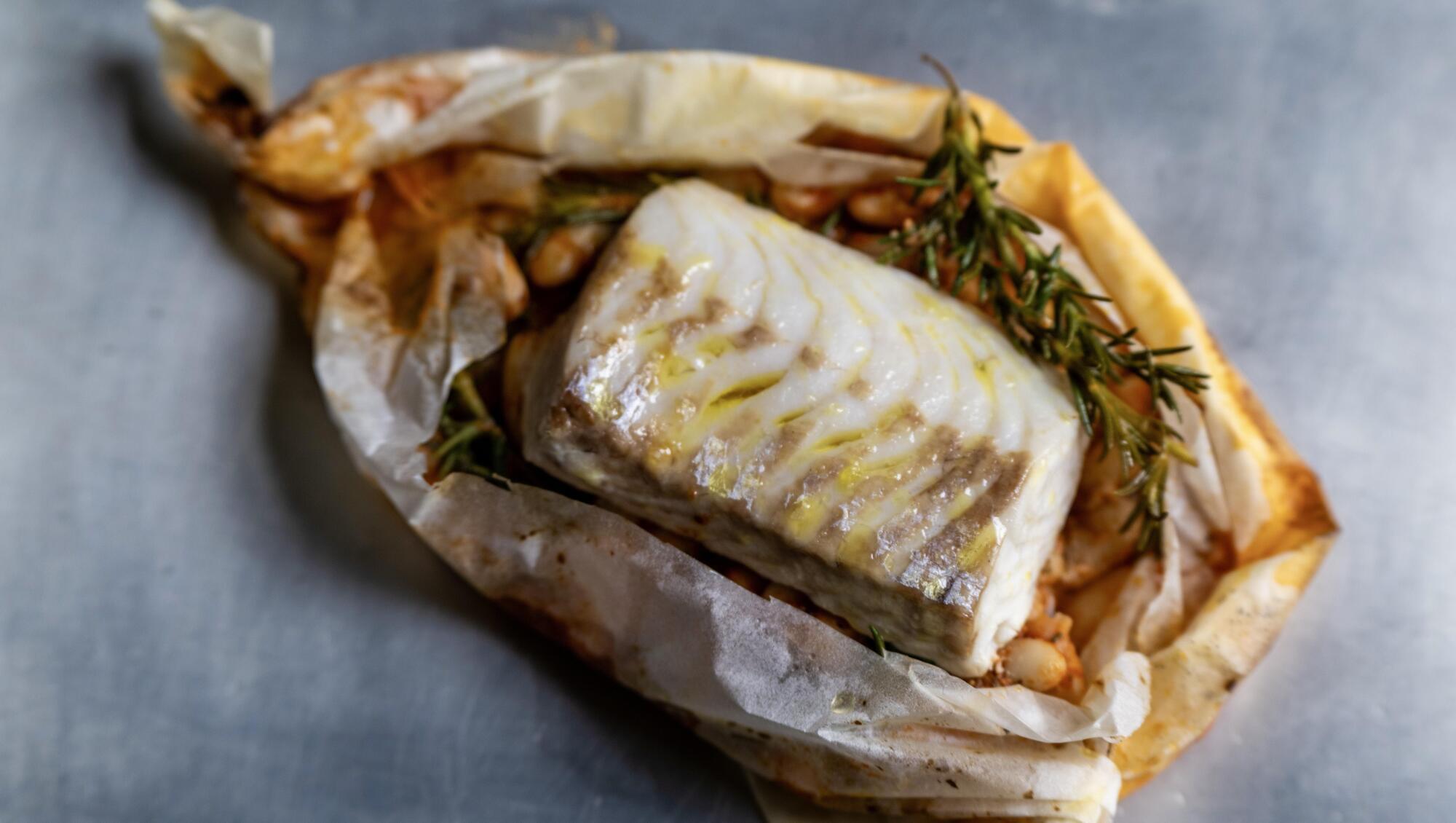
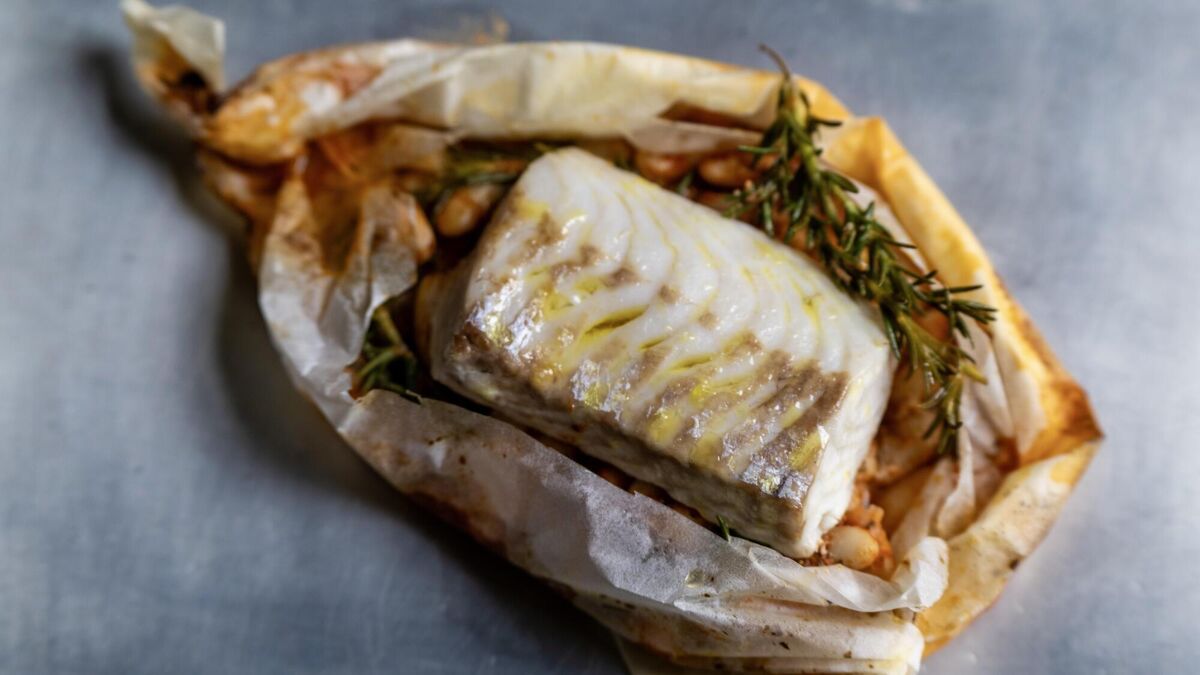
Hake & cannelini bean en papilotte. Picture Chani Anderson

En papillote is a classic French method of cookery whereby the ingredients are steamed while enveloped in a pouch of parchment or foil.
A fabulous way to cook fish, this process seals the moisture inside of the package and allows the released cooking juices to combine with the other components forming a delicious sauce during cooking.
This weekend’s recipe is as quick to cook and throw together as it is to clean which is always a big plus for midweek cooking.
A terrific option for those weary of cooking fish at home with none of the possibilities of fish fillets sticking to the pan.
These little parcels can be made well in advance and popped in a preheated oven if you’re tight on time.
This technique works with pretty much every fish so do keep an open mind when you’re at the fishmongers.
It’s as gorgeous with monkfish, pollock, ling, haddock, and cod as it is with the hake in this recipe.
It’s also great with flat fish like plaice, brill, lemon sole, and megrim.
A tip if you are using flat fish: roll the fish fillets up like little swiss rolls and this will create a more compact parcel.
I prefer to add the fish to the parchment with their skin off but you can leave the skin on whilst baking for a little more structural integrity if you prefer and peel the skin off once cooked.
Just make sure you leave the skin side facing up.
I love serving beans with fish but you can swap the cannellini beans out for tinned chickpeas or lentils and bulk the mix out with some diced onion, carrot, and pre-boiled spuds if you’d like.
If you’re feeling adventurous add a handful of mussels to each package for some real depth of marine flavour.
Hake & cannelini bean en papilotte
A terrific option for those weary of cooking fish at home with none of the possibilities of fish fillets sticking to the pan, these little parcels can be made well in advanced and popped in a preheated oven if your tight on time.
Servings
4Preparation Time
20 minsCooking Time
20 minsTotal Time
40 minsCourse
MainIngredients
4x 130g hake fillets (skin off)
2x 400g tinned cannellini beans drained and rinsed (480g)
3 cloves garlic minced
1.5 tsp tomato purée
1 lemon juice and zest
1 tsp smoked paprika
1 tsp died oregano
½ tsp brown sugar
¼ tsp black pepper
2 sprigs of rosemary chopped
2 tbsp rapeseed oil plus extra for drizzling
120ml dry white wine (2 tbsp per portion)
Sea salt
Method
Preheat an oven to 200°C.
In a small bowl add the drained and rinsed cannellini beans, garlic, tomato purée, lemon juice and zest, smoked paprika, oregano, brown sugar, black pepper, chopped rosemary and rapeseed oil. Mix well and season generously with sea salt.
Cut four squares of parchment that are 30cm on each side. Fold each sheet in half to make a crease, then reopen the parchment.
Place one quarter of the cannellini mixture in the centre of one half of each sheet. Spread the mixture a little to make sure it will cover the surface area of the fish fillets on each sheet.
Place the hake fillets on top of the beans, drizzle with a little rapeseed oil and season with sea salt.
Fold the top half of parchment over the bottom half where the hake and bean mixture are sitting. Fold the top right hand corner over twice. Continue this action around the exterior of the parcel crimping as you go to encase the fish inside the parchment. This will allow the fish to steam and create a barrier to retain all those flavourful juices.
Before the final crimp add two tablespoons of dry white wine to each parcel. Crimp and press to seal the parchment.
Place in the oven for 18-20 minutes. Remove and serve immediately. I like to place the parcels on top of plates and serve inside the parchment paper.
- Remove the fish from any packaging and pat the fish dry with kitchen paper before placing in the parcel.
- You can swap the dry white wine out for some dry cider or a vegetable or fish stock.
- If you are happy to remove the skin from the fish make sure you do so with a very sharp knife on a stable dry surface. Alternatively ask your fishmonger who’ll be more than happy to do this for you.
- Important to only put one portion of fish per parcel to ensure even cooking.