Darina Allen: New recipe discoveries from my latest New York excursion
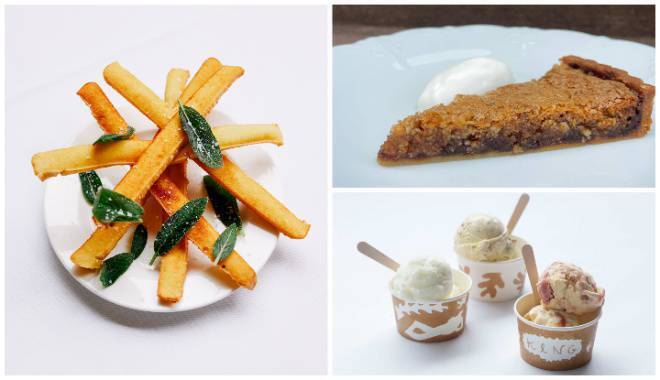
Some of Darina's recent culinary discoveries in New York

I love a few days in New York, my visits are usually business-related – I did several events to help promote Ireland and spread the news about the revolution on the Irish food scene.
But I’ve also got my antennae primed to pick up food trends and use every meal slot to try as many exciting new restaurants as I can manage.
I also have a few longtime favourites that I love to return to, including Buvette on 42 Grove Street, (Between Bedford & Bleecker St.) where I can’t resist returning for breakfast every time.
Fortunately, it’s still really good, delicious freshly squeezed orange juice, great coffee and several iconic brunch dishes – croque monsieur, croque madame… but this time I actually had cold tarte tatin for breakfast and it was superb.
All Buvette lacks at present is a friendly host, but the food and ambience are still wonderful.
Sadly, the same can’t be said for several others, particularly Daily Provisions which was one of my all-time favourites and where I got the inspiration for cruellers and gougères filled with scrambled eggs with lots of variations and riffs.
Claud’s on 90 E 10th Street was a new discovery this time, particularly loved the kampachi with kumquat and yuzu and chicken liver agnolotti.
Epistrophy, an Italian restaurant on 200 Mott Street was also a new find – shaved Brussels sprout salad with walnut slivers of Parmesan and pomegranate seeds with a honey and Dijon mustard vinaigrette was definitely a highlight.
So, I’ve been experimenting with that combination since my return. Lots of good pasta dishes including homemade cacio e pepe, one of my all-time favourites.
Cloudy Donut Co on 14 Columbia Place in Brooklyn are doing a range of puffy ‘hole-less’ vegan doughnuts with exciting icings and toppings – Balsamic fig, Grapefruit mimosa, Red velvet, Cotton candy, Maple butter and pecan…
Love the way Americans give funky names to their sandwiches. Court St. Grocers on 485 Court Street, Brooklyn had an enticing selection. Macho (Wo) Man, Catskill, Uncle Chucky, Uncle Grandpa, Ultimate Warrior, Cubano…
Foul Witch on 15th Avenue is another new discovery since my last trip, owned by the folk behind Robertas in Brooklyn, is super chic with many tempting items on the menu. This was definitely one of my favourite new discoveries.
Loved the grilled tripe with pecorino and mint, oxtail fazzolette with lovage and horseradish and roast goat shoulder with buttered turnips and alliums. The linguini with California sea urchins was another favourite.
New this visit was the number of offal dishes on cool restaurant menus – this is certainly a new development in a town where serving ‘variety meats’ was out of the question.
I hosted two luncheons while I was over, one media lunch at Sailor in Brooklyn. April Bloomfield was cooking, and she and her team did a super job reproducing Ballymaloe food, but we also returned to taste Sailor’s delicious menu a few nights later, essential to book. Tell her I sent you…
Another lunch to celebrate The New Ballymaloe Bread Book at King on King Street, super proud of Jess Shadbolt, a Ballymaloe Cookery School alumni – delicious, irresistible dishes, including this pain perdue ice cream which guests return for over and over again – don’t miss the panisse.
Also had a memorable lunch at sister restaurant, Jupiter in the Rockefeller Centre. Loved the zucchini fritte, how did they get them so crisp? The gnocchi with speck and nutmeg and crispy sage leaves is also calling me back and that salad of beautiful mini Romolo speckled Castlefranco with lentils.
I hate cannoli, the crisp mascarpone stuffed Sicilian pastries with a passion, but I was persuaded to taste one and had a conversion on the road to Damascus and I believe the homemade cassata is also sensational, but it wasn’t on the menu, a treat for my next trip…
While you are in the Rockefeller Centre, take a few moments to admire The Rink (ice rink). I also went back to Dominique’s Ansel Bakery on 189 Spring Street (between Sullivan and Thompson) to pick up a kouign amann. A super sweet crispy flaky pastry that I queued for hours for when it was first introduced in 2016 and I love it still – ask for a DKA!
All of this by way of research.
After another busy day, I returned to Cervos on 43 Canal Street which I am thrilled to report is still as brilliantly good as I remember.
I also love to go along to the Union Square Market, preferably on the day I’m returning to Ireland so I can buy a sprouted rye loaf from She Wolf Bakery – I know it sounds like coals to Newcastle, but it’s so good, that I’m prepared to schlep it all the way home!
I also popped into Bedford Cheese Shop on 67 Irving Place to pick up some US artisan cheese for my picnic for the plane.
Librae Bakery on 35 Cooper Square should also be on your New York list, exceptionally good breads and pastries – don’t miss the pistachio stuffed croissant – oh my! The pear, almond and coffee scone was also memorable.
Book lovers shouldn’t miss Archestratus Books and Food located on 160 Huron Street in Brooklyn – worth a detour.
Lots of good things out in Brooklyn – that could be another whole column…
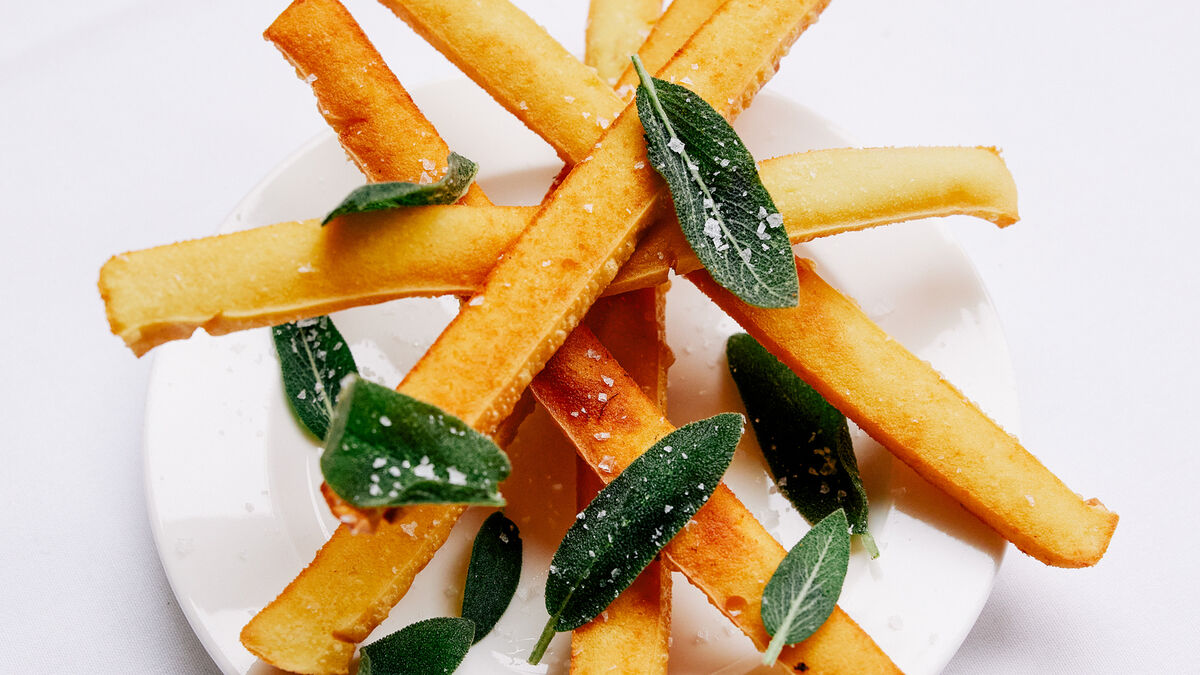
Panisse
Creamy and salty, they are impossible to tire of. But making them is not easy: the batter is temperamental, requiring both time (they need to be made aday ahead) and attention. But panisse rewards the committed and brave.
Servings
10Cooking Time
1 hours 30 minsTotal Time
1 hours 30 minsCourse
SideIngredients
For the batter
320g about, chickpea flour
olive oil
salt
For the fry
2-3 litres sunflower oil
a handful of sage, at least 10 sprigs, leaves picked
salt
Method
Bring a large, heavy pot filled with 1 litre of salted water and 50ml of olive oil to a boil over high heat.
Reduce the heat to a simmer and carefully stream in the chickpea flour while whisking continuously to prevent lumps. Once combined, reduce the heat to low, switch to a wooden spoon and give a good stir. Gently cook while stirring often so the pot’s bottom doesn’t catch (treat this as a polenta).
After an hour, the chickpea batter should have a deep nutty flavour and not taste at all like raw flour.No better way to check than taste…Despite your best intentions, the pot will look like a lumpy porridge at this first stage. Most mornings, it draws a crowd of cooks, a couple of dollops make a hearty breakfast. Use a stick blender or food processor and blitz the batter (in batches, if necessary) until the pot is completely smooth, a few minutes. Taste and add salt as needed.
Lightly oil a 23 x 32.5cm baking dish.
Pour in the batter, spreading it out evenly. Allow it to set at room temperature before transferring the trays to the fridge for an overnight rest. These need at least 8 hours of down time, and they hold for about 24 hours.
To fry: Pour enough sunflower oil into a deep, wide pot, adding enough so it rises at least 7.5cm up from the base. Place the pot over medium heat. As the oil warms, slice the panisse into long ribbons, about 1cm across.
Once the oil is 180˚C, fry the ribbons in batches so as not to overcrowd the pot. Upon contact, the panisse will sizzle; keep frying until they puff and crisp all around, about 5 minutes total. With a slotted spoon or tongs, move the panisse from the bubbling oil and to a tray lined with paper towels.
Once the first batch is fried and the pot is clear, drop a few sage leaves into the oil and fry them until crisp and sharp green, a few seconds.
Remove the sage from the oil and sprinkle them over the panisse. Season with salt and immediately serve this hot first batch while frying up another round.
Recipe from The King Cookbook by JessShadbolt, Clare de Boer and Annie Shi
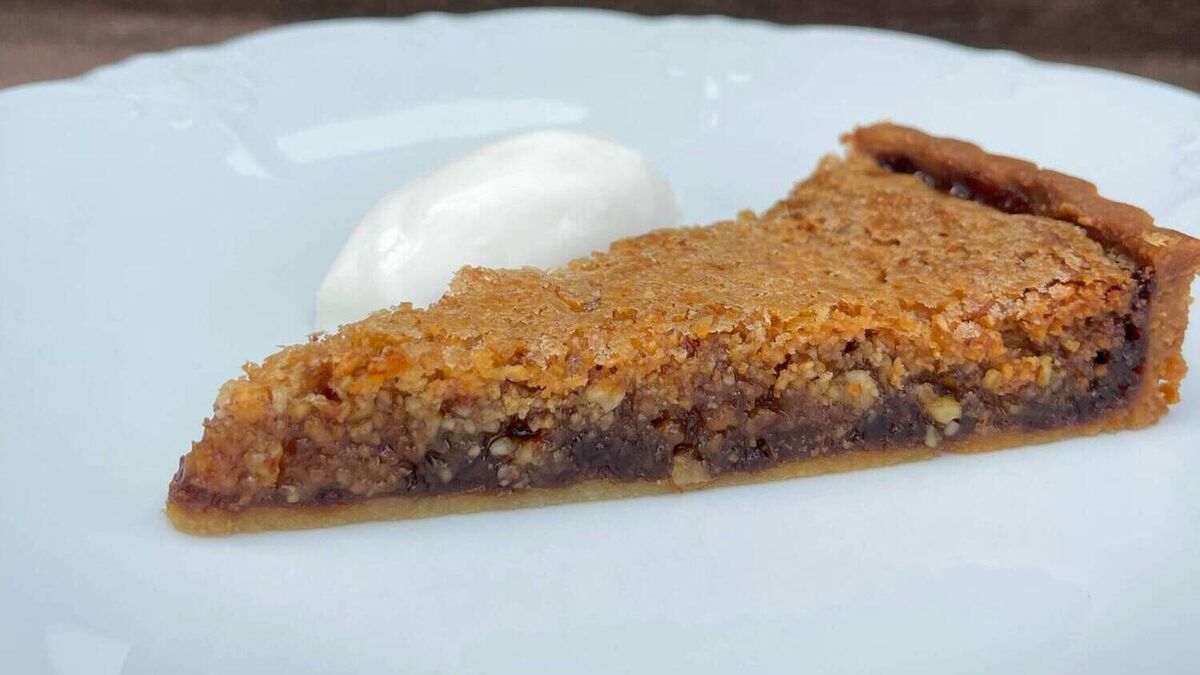
April Bloomfield’s Blood Orange Marmalade Tart
A tasty way to use up marmalade
Servings
12Preparation Time
45 minsCooking Time
1 hours 40 minsTotal Time
2 hours 25 minsCourse
BakingIngredients
30.5cm round fluted tart tin
Tart Base Pastry
155g butter (cold)
70g caster sugar
2 egg yolks
240g all-purpose flour (plain white flour)
Almond Frangipane
500g skin on almonds
500g butter
250g caster sugar
4 eggs
250g blood orange marmalade (see recipe)
5-6 tbsp slivered almonds (optional)
To Serve
softly whipped cream or crème fraîche
Method
To make the pastry: Put the butter and sugar in a food processor, blend together for a few seconds, add yolks and flour, blitz until it amalgamates.
Cover the pastry and refrigerate for 30 minutes.
Heat the oven to 180˚C/ gas mark 4.
Roll out the pastry and line the tart tin.
Line with baking parchment and fill with dried beans. Rest in the fridge for 15 minutes.
Bake the pastry case ‘blind’ for about 20-25 minutes. The base should be almost fully cooked. Remove the baking parchment and beans. Brush the base with a little beaten egg white and cook for 3–4 minutes. This will seal the base and avoid the ‘soggybottom’ effect.
Next, make the almond frangipane.
Pulse the almonds in a food processor until theybecome a fine crumb, remove the nuts and set aside in a big bowl.
Cream the butter and sugar in the bowl of a food processor, add the eggs slowly one by one, add this mixture to the finely ground almonds.
Fold gently together to combine.
You will need about 900g for the tart (save the bit leftover for another tart).
When the pastry case is parbaked. Cool, then spread about 250g of the blood orange marmalade over the base of the tart.
Cover evenly with frangipane.
Sprinkle the slivered almonds over the top of the tart if using.
Bake in the heated oven at 17˚C for about 50minutes until set and nicely golden.
Serve warm or at room temperature with lots of softly whipped cream or crème fraîche.
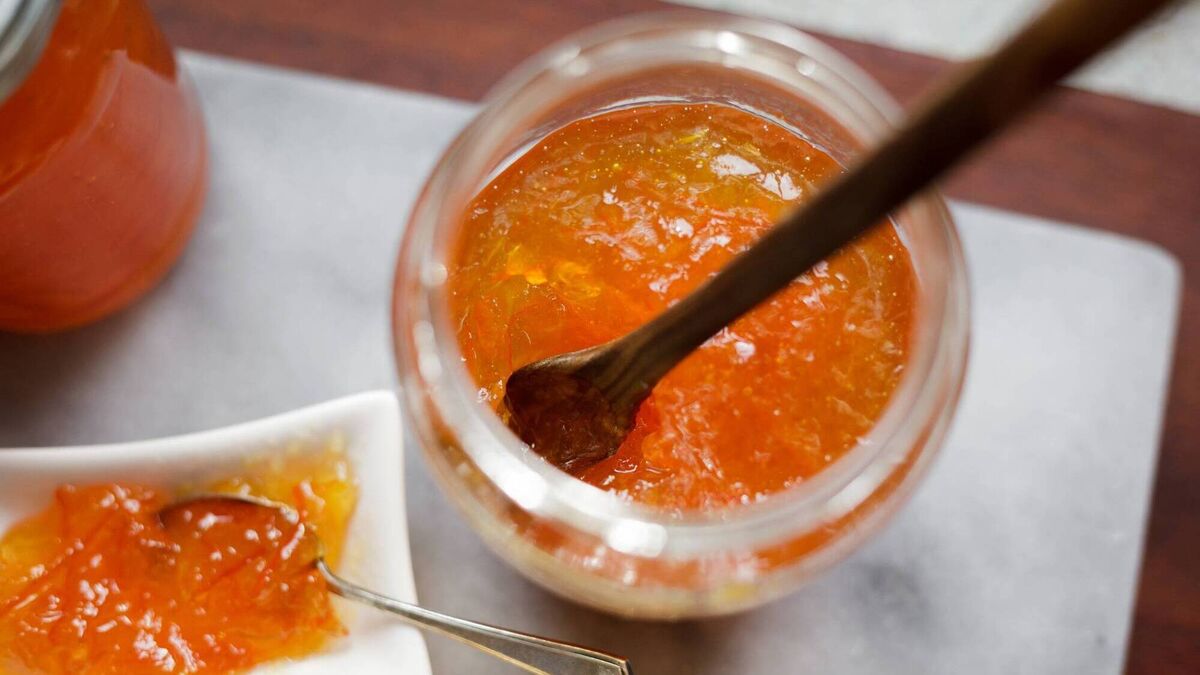
April Bloomfield’s Seville or Blood Orange Marmalade
A simple recipe for marmalade
Preparation Time
15 minsCooking Time
45 minsTotal Time
60 minsCourse
SideIngredients
6 Seville or blood oranges
2.5kg water
pinch of salt
1.6kg caster sugar
Method
Wash the oranges and wipe them dry. Cut each Seville orange in half, crosswise around the equator. Set a non-reactive mesh strainer over a bowl and squeeze the orange halves to remove the seeds,assisting with your fingers to remove any stubborn ones tucked deep within.
Tie the seeds up in cheesecloth or muslin very securely.
Cut each rind into 3 pieces and use a sharp chef’s knife to cut the rinds into slices or cubes as thin as possible. Each piece should not be too large (no more than 1cm, or 7mm in length.) Cut the navel orange into similar-sized pieces.
In a large saucepan, add the orange slices, seed pouch, water, and salt, as well as the juice from the Seville oranges from step #1. Bring to a boil, then reduce to a simmer, and cook until the peels are translucent, about 20 to 30 minutes. (At this point, sometimes I’ll remove it from the heat after cooking them and let the mixture stand overnight, to help the seeds release any additional pectin.)
Stir the sugar into the mixture and bring themixture to a full boil again, then reduce heat to a gentle boil. Stir occasionally while cooking to make sure it does not burn on the bottom. Midway during cooking, remove the seed pouch and discard.
Continue cooking until it has reached the setting point, about 10˚C, if using a sugar thermometer. I cook this slightly less than other jams and marmalades because the high amount of pectin helps the marmalade set up more stiffly.
To test the marmalade, turn off the heat and put a small amount on a plate that has been chilled in the freezer and briefly return it to the freezer.
Check it in a few minutes; it should be slightly jelled and will wrinkle just a bit when you slide your finger through it. If not, continue to cook until it is.
Bord Bia’s Bloom is just around the corner with uplifting and innovative horticulture, food, and drink experience with nature and sustainable living at its heart. The show has grown into something which not only makes for a great day out, but also offers a huge range of practical information on everything from gardening, to growing fruit and vegetables, cooking and culture.
- For more information, see www.bordbiabloom.com
Young stingy nettles are popping up everywhere, not just in the countryside but in towns and cities too.
Our grandparents knew their value and reminded us to eat ‘4 feeds of nettles during the month of May’.
They are a brilliant source of fibre, iron, calcium magnesium. Wear protective gloves to pick them and avoid popular dog walking paths!
When cooked they lose their sting, so toss them in butter or extra virgin olive oil, add to champ, risotto, pasta sauces, pesto, quiches and of course soup - chefs also love them now!