Darina Allen: Three recipes by my friend Mary Jo McMillin, including a comforting Persian stew
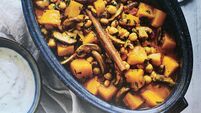
Koresh is a generic name for stews in Persian cuisine. There are many variations on the theme.

A lovely American friend from Chicago came to visit recently, bringing lots of new recipes to share with all of us.
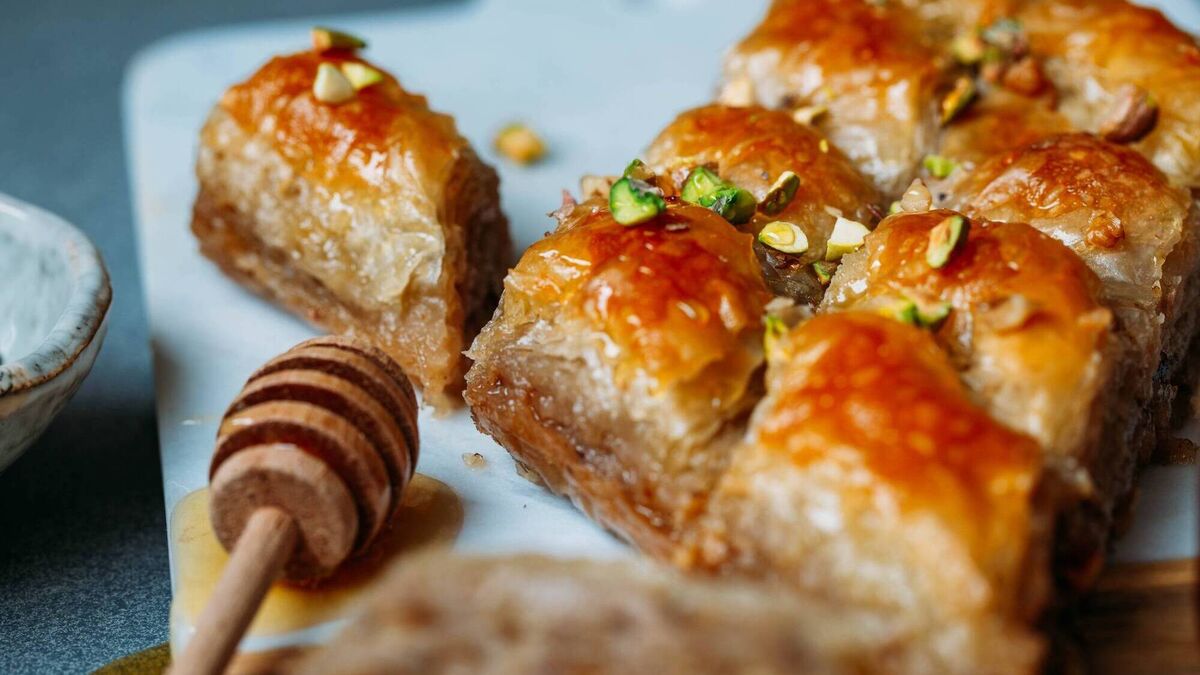
Mary Jo McMillin's Rolled Baklava
These delicious Greek pastry treats keep in a covered container for weeks on end, that’s if you can resist…
Preparation Time
20 minsCooking Time
20 minsTotal Time
40 minsCourse
BakingIngredients
175g walnuts finely ground (use a food processor)
3 tbsp caster sugar
½ tsp ground cinnamon
175g filo pastry sheets
(6-7 sheets about)
110g butter, melted
2 tbsp olive oil
For the syrup
175g granulated sugar
175ml water
1 tsp crushed cardamom pods (optional)
cinnamon stick
strip lemon rind
1 tbsp lemon juice
1 tbsp honey
1 tsp rosewater (optional)
1 x 20.5cm square tin
1 wooden dowel or long chopstick
Method
First prepare the syrup. Boil the sugar and water with the cardamom, cinnamon stick and lemon rind to form a thick syrup.
Add the lemon juice, honey and rosewater if using. Set aside to cool.
NOTE: for absorption, cool syrup must be poured over the hot pastry.
Mix the ground walnuts withthe caster sugar and the ground cinnamon. Melt the butter with the olive oil. Butter the tin.
Heat the oven to 200˚ C/Gas mark 6. On a clean counter or marble slab, brush one sheet of filo with melted butter. Place one-sixth of the walnut mixture in a row, 2.5cm from the buttered edge of the shorter end of the filo sheet. Place the dowel next to the nuts. Roll up the pastry like a Swiss roll keeping the dowel inside. When rolled, scrunch the pastry into a ruffled shape.
Remove the dowel and place the scrunched roll in the buttered tin. Repeat with the remaining filo. Once all the rolls are in the baking dish, brush with butter, cut through them at 2.5cm intervals.(It is important to cut the baklava before baking).
Bake in the heated oven for 10 minutes; reduce the heat to 180˚C/gas mark 4 and continue baking for 20 minutes or until golden on all sides. Remove from the oven, pour the cool syrup over the hot pastry, and listen to the syrup sing as it is absorbed.
Allow to cool and serve at room temperature.
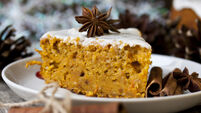
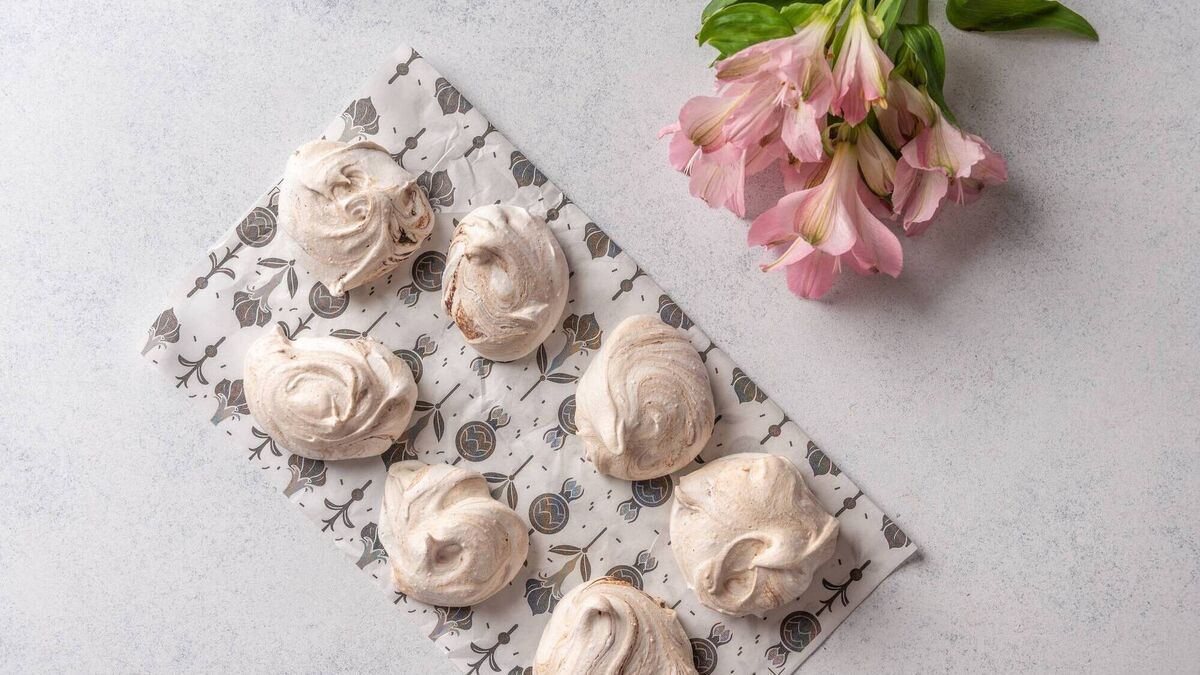
Mary Jo McMillin's Date & Walnut Meringues
These little dotes are super delicious with a dollop of softly-whipped cream.
Servings
50Preparation Time
15 minsCooking Time
30 minsTotal Time
45 minsCourse
BakingIngredients
110ml egg whites
¼ tsp white wine vinegar
200g caster sugar
½ tsp pure vanilla extract
50g chopped walnuts
50g chopped dates (deglet or medjool)
Method
In a food mixer, whisk the egg whites until they are foaming, add the vinegar. Whisk to a light froth and begin adding the sugar one heaped tablespoon at a time. Continue beating until stiff peaks form at the base of the whisk and the sugar has dissolved. Beat in thevanilla extract and fold in the dates and walnuts.
Heat the oven to 110˚ C/gas mark, a quarter.
Drop teaspoons of the meringue mixture on baking parchment lined trays and bake in the heated oven for about 30 minutes or until the meringues easily lift off the parchment. Turn off the oven and allow to cool.
Store in an airtight tin.
The meringues will develop a marshmallow-like centre.
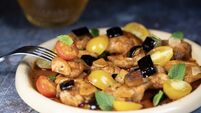
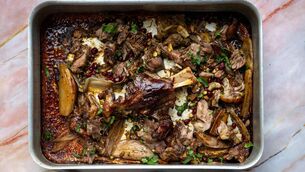
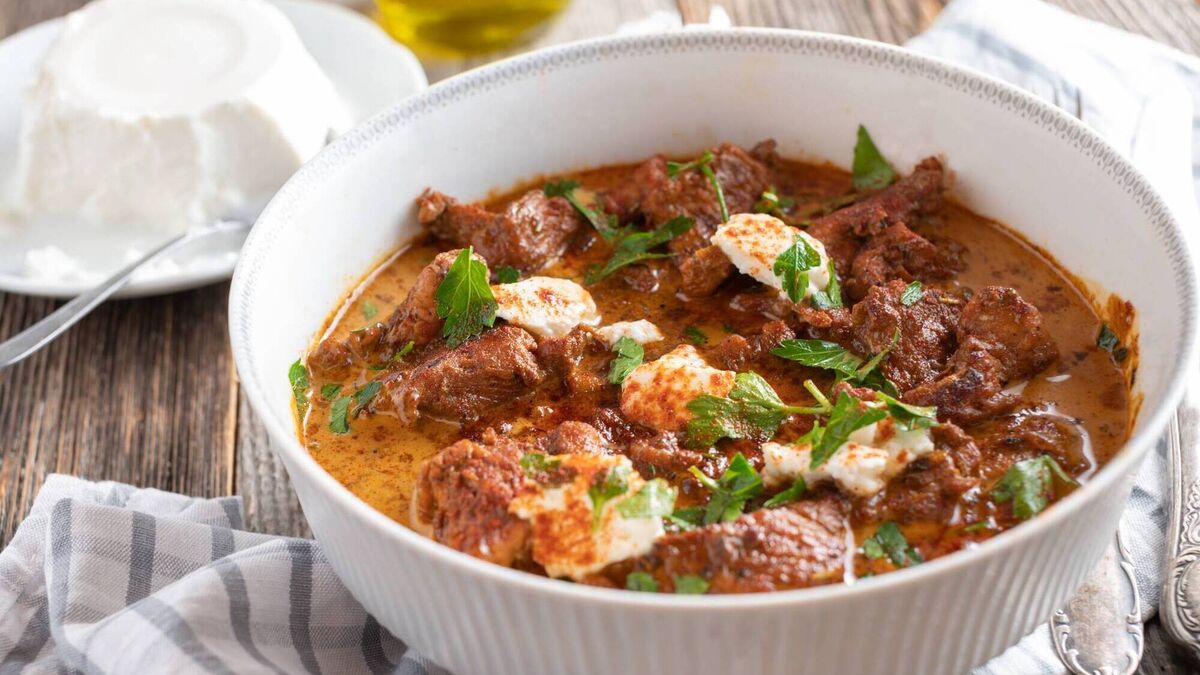
Mary Jo McMillin's Rhubarb & Lamb Koresh
I was intrigued by this delicious version with the addition of new season’s rhubarb – Mary Jo used lamb neck, a succulent and inexpensive cut of meat but you could substitute pork or beef.
Servings
3Preparation Time
15 minsCooking Time
2 hours 20 minsTotal Time
2 hours 35 minsCourse
MainIngredients
1 tbsp olive oil
450g lamb shoulder or lean neck slices
(pork shoulder or beef chuck may be
substituted for the lamb)
1 tbsp olive oil
225g onion, diced
2-3 cloves garlic, sliced
a few slices red chilli or a pinch
of chilli flakes
2 tsp grated fresh ginger (or ½ tsp
powdered ginger)
¼ tsp ground cinnamon
¼ tsp ground allspice
¼ tsp turmeric
1 tbsp chopped preserved lemon
handful of chopped mint (or parsley)
225ml water
salt and pepper to taste
225g rhubarb stalks, cut into 1cm dice
1-2 tsp brown sugar (optional)
To Serve
steamed basmati rice
natural yoghurt
chopped mint
Method
Trim the lamb of excess fat and cut into 2.5cm chunks (or cook on the bone andremove the bone when the meat is tender).
Heat the olive oil or rendered lamb fat in a heavy enamelled cast-iron braising pot and brown the lamb evenly.
Remove, pour out any browned fat, add another 1 tablespoon of olive oil and sweat the onion to soften.
Add the garlic, chili and ginger. Cook briefly and add the cinnamon, allspice,turmeric, preserved lemon and mint.
Return the lamb to the aromatic base, add about 225ml of water, season with salt and pepper.
Cover and simmer for 1.5 to 2 hours or until the meat is tender. Remove any bones or chunks of fat.
Add the rhubarb and continue to cook until the rhubarb pulps into the sauce. Taste and add a little brown sugar if the sauce seems too tart.
Simmer to combine the flavours, 15-20 minutes about.
Serve with steamed basmati rice, a dollop of plain yoghurt and some chopped fresh mint.
We are passionate about soil health and know that the nutritional quality of the food we produce is wholly dependent on the quality of the soil in which it grows. The degradation of soil across the globe is of serious concern and as a major contributor to our climate and health crises.
We need to take immediate action and improve soil fertility. Delivered by soil expert and renowned educator Klaus Laitenberger, Inspector for the Organic Trust Ltd. This course will outline the importance of soil fertility. Reasons for soil degradation worldwide; soil erosion/compaction and how every soil can be improved with compost and other bulky soil fertility inputs as well as green manures.
Learn a vital new skill, how to recognise foods in the wild and how to use them. This day could change your life!
Wild food never goes out of season. Our fields, woods, hedgerows and parks are rich with delicious wild food, hiding in plain sight to those who know what to look for, in both rural and urban areas. Foraged foods have been an important part of our menus at Ballymaloe for over 40 years. Take a walk with Darina and Pat, enthusiastic and experienced foragers, to search for wild food in the countryside and on the seashore.
Learn how to identify dozens of edible wild plants, flowers, seaweeds and shellfish in season, foraged from hedgerows, fields and the nearest beach. A walk in the countryside will never be the same again. Where you previously saw weeds, you’ll now see something delicious and nourishing to enjoy.