Darina Allen: Sleepwalking into a food security crisis
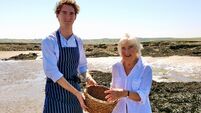
"Start a conversation with your family and friends about growing some of your own food. You would be astonished at just how much could be grown in a small space. Consider joining a community garden such as communityroots.ie."
Darina Allen: Sleepwalking into a food security crisis

Make these recipes with veg you can grow yourself, or find at your local markets

I know we’re all sick and tired of the rain, but I’ve just come back from a trip to Canada and a Climate Farm School at Spannocchia, a 2,000-acre estate in Tuscany. 

Ironically, everywhere I went, the predominant topic of conversation was also rain but actually the lack of it.

On a visit to Trails End Ranch near Nanton, less than an hour from Calgary in the province of Alberta and close to the Rocky Mountains, we met a trail-blazing couple, Tyler and Rachel Herbert, who are raising grass-fed cattle on the prairie lands they share with brown and grizzly bears, elk, bison, wolves, coyotes, whitetail, deer and the occasional cougar.

Their beef has loyal devotees, who are grateful for the sustainable, humane and environmentally friendly way they rear their red and black Angus cattle. They are lone voices in mostly huge feedlot territory where thousands of cattle are reared in pens. From the farm shop on the farm and online, they sell quarter-, half- and whole animals to restaurants and discerning customers all over Canada who crave the flavour of their grass-fed meat, but it’s not easy.

Prior to the snow, which now covers the prairies, they hadn’t had rain for over five months so didn’t manage to save any of their own hay this summer nor did their neighbours. 

Consequently, the price of a bale of pesticide-free hay is €230 this year as opposed to €120 last year. They need five bales a day to feed their 100 cattle in the winter, the difference between profit and loss.

Needless to say, they are fearful for the future, particularly of family farms and have no idea what is ahead. It’s even more alarming when we learn that Canada is warming at twice the global average.

In Ireland on the other hand, because of the constant rain, many farmers are struggling to harvest some of last year’s crops while others are unable to get seeds planted for future harvests. 

We are sleepwalking into a food security crisis and unlikely though it may seem, we will see food shortages sooner than we think. So, let’s get proactive in our own space.

Start a conversation with your family and friends about growing some of your own food. You would be astonished at just how much could be grown in a small space. Consider joining a community garden such as communityroots.ie.

Fresh herbs grow despite you and almost favour poor soil. (Forget basil, it’s out of season, hails from sunnier climes and hates the Irish winter). 

If you’ve never grown anything, a fun thing to do is to buy a bunch of scallions. 

Use some of the green tops, and plant the rest individually into soil, a raised bed, barrel or pot, they will continue to grow and you can go on snipping the juicy tops every time you need a little green onion for scrambled eggs or an omelette.

For Christmas, how about giving packets of seeds as a pressie, maybe a digging fork and trowel or even a wheelbarrow plus a how to get started, gardening book. 

For example, Klaus Laitenberger’s books The Self-Sufficient Garden, Vegetables for the Irish Garden and Fruit and Vegetables for the Polytunnel and Greenhouse are brilliant for Irish conditions as are the GIY Books, written by Mick Kelly and his passionate grow-it-yourselfers, maybe even Grow, Cook, Nourish… 

It’s hard to beat the feeling of joy one gets from harvesting some of your own homegrown produce.

You’ll want everyone to know you grew it and won’t want to waste a scrap. 

You’ll relish and appreciate every delicious morsel so much more than picking it off a supermarket shelf, plus you’re unlikely to spray it with toxic chemicals that you know will damage the precious soil and your family’s health. 

Share with your neighbours, and if you have a glut, have fun, making chutney and pickles or just freeze the surplus for another occasion. 

We’ve still got lots of root vegetables and kale in the garden to see us through the winter months. Check out your local shop and farmers’ market.

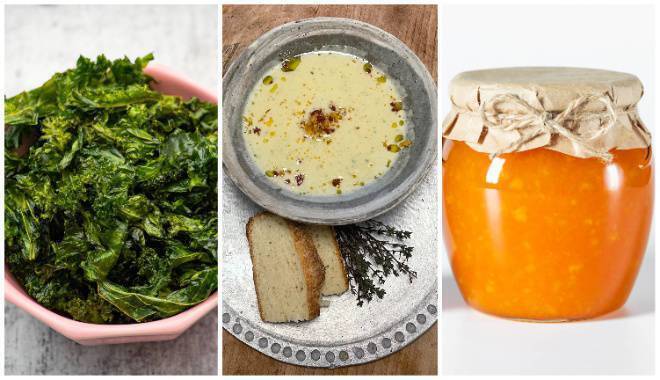
Sunchoke Soup

recipe by:Darina Allen

Sunchoke is the US name for Jerusalem artichokes, a sadly neglected winter vegetable. They look like knobbly potatoes and are a nuisance to peel, but if they are very fresh you can sometimes get away with just giving them a good scrub.

Sunchoke Soup

Servings

8

Preparation Time

10 mins

Cooking Time

30 mins

Total Time

40 mins

Course

Side

Ingredients

  • 50g butter

  • 560g onions, peeled and chopped

  • 1.15kg Jerusalem artichokes, scrubbed, peeled and chopped

  • salt and freshly ground pepper

  • 1.1 litres light chicken stock

  • 600ml creamy milk approx.

Method

  1. Melt the butter in a heavy bottomed saucepan, add the onions and artichokes. Season with salt and freshly ground pepper, cover and sweat gently for 10 minutes approx. Add the stock and cook until the vegetables are soft. Liquidise and return to the heat. Thin to the required flavour and consistency with creamy milk and adjust the seasoning.

  2. Serve in soup bowls or in a soup tureen.

Kale Crisps

recipe by:Darina Allen

Suddenly kale is the coolest thing, it’s all over the place, on restaurant menus, in Farmers' Markets, even on supermarket shelves – kale crisps are the snack of the moment. I’m not complaining.

Kale Crisps

Preparation Time

10 mins

Cooking Time

15 mins

Total Time

25 mins

Course

Side

Ingredients

  • 250g curly kale

  • 2 tbsp extra virgin olive oil

  • salt, a little sugar

  • Preheat the oven to 150°C/Gas Mark 2.

Method

  1. Strip the leaves off the kale stalks, tear in large bite sized bits, approximately 5 x 5cm and put in a bowl.

  2. Sprinkle with extra virgin olive oil, a little salt and sugar, toss and spread out in a single layer on two baking trays.

  3. Bake in the preheated oven for 10-15 minutes or so until crisp. Transfer to a wire rack to cool and crisp further. Enjoy.

Sophie Grigson's Angels' Hair (Carrot Jam)

An enchanting name for carrot jam. Sophie Grigson shared this recipe when she taught a course at the Ballymaloe Cookery School in 1993. I’m loving Sophie’s new book ‘A Curious Absence of Chickens: A journal of life, food and recipes from Puglia’.

Sophie Grigson's Angels' Hair (Carrot Jam)

Course

Side

Ingredients

  • 600g carrots

  • 500g caster sugar

  • zest of 2 large lemon, cut into strips

  • freshly squeezed juice of 2 large lemon

  • 6 cardamom pods, split

Method

  1. Trim and scrape the carrots. Grate on a medium sized grater. Put into a pan with the sugar, lemon zest and juice and the cardamom pods. Heat gently until the sugar dissolves, then boil hard until the mixture is very thick.

  2. Place into a warmed, sterilised jar and seal tightly.

  3. Serve on scones, wee buns or with goat’s cheese.

Seasonal Journal

Two exciting new food spots to add to your Cork list…

Proby’s Kitchen, close to the historic St Finbarr’s Cathedral in the medieval part of Cork city is causing quite a stir. 

Breakfast from 8am and lunch till 3pm. At the weekends, there’s a yummy brunch also cooked from scratch with fresh, seasonal produce, check it out…

  • @probyskitchen on Instagram

Also worth a detour is Church Lane in Midleton, already rocking with live music on Friday, Saturday and Sunday evening. 

A newly opened gastro bar just off the Main Street, open daily from 10am serving freshly made scones and coffee. 

Lunch is served from 12-4pm and dinner from 5.30pm – 9pm Thursday to Saturday.

Another great way to have a new adventure and support lovely Midleton as it valiantly recovers from recent catastrophic flooding.

  • @churchlanemidleton on Instagram

Traditional Ducks and Geese

I’m forever on the lookout for exciting and authentic artisan producers…

I was overjoyed to recently meet Tony and Mary Walsh from Kilkenny Free Range who rear free-range geese and Aylesbury ducks on their farm in Shellumsrath, Co. Kilkenny. 

It’s becoming increasingly difficult to source traditionally reared poultry and ever more important to support and spread the word when you find a really good product.

More in this section

Cookie Policy Privacy Policy Brand Safety FAQ Help Contact Us Terms and Conditions

© Examiner Echo Group Limited