Darina Allen: How to make authentic Portuguese custard tarts and coconut rolls
Such a lovely surprise to get a spontaneous invitation to join my two sisters for a relaxing week on the Algarve, a quick flight from drizzly Cork to Faro and seemingly eternal sunshine.
A week ago, the summer crowds had not yet descended so the restaurants and cafés were still eager and enthusiastic to welcome customers for the new season. We ate in several lovely cafés overlooking the white sandy beaches watching spectacular sunsets. As the light faded, little local fishing boats appeared along the horizon, close to the shore ‘lamping’ for squid and cuttlefish. Every menu features the beautiful fresh fish of the Algarve.
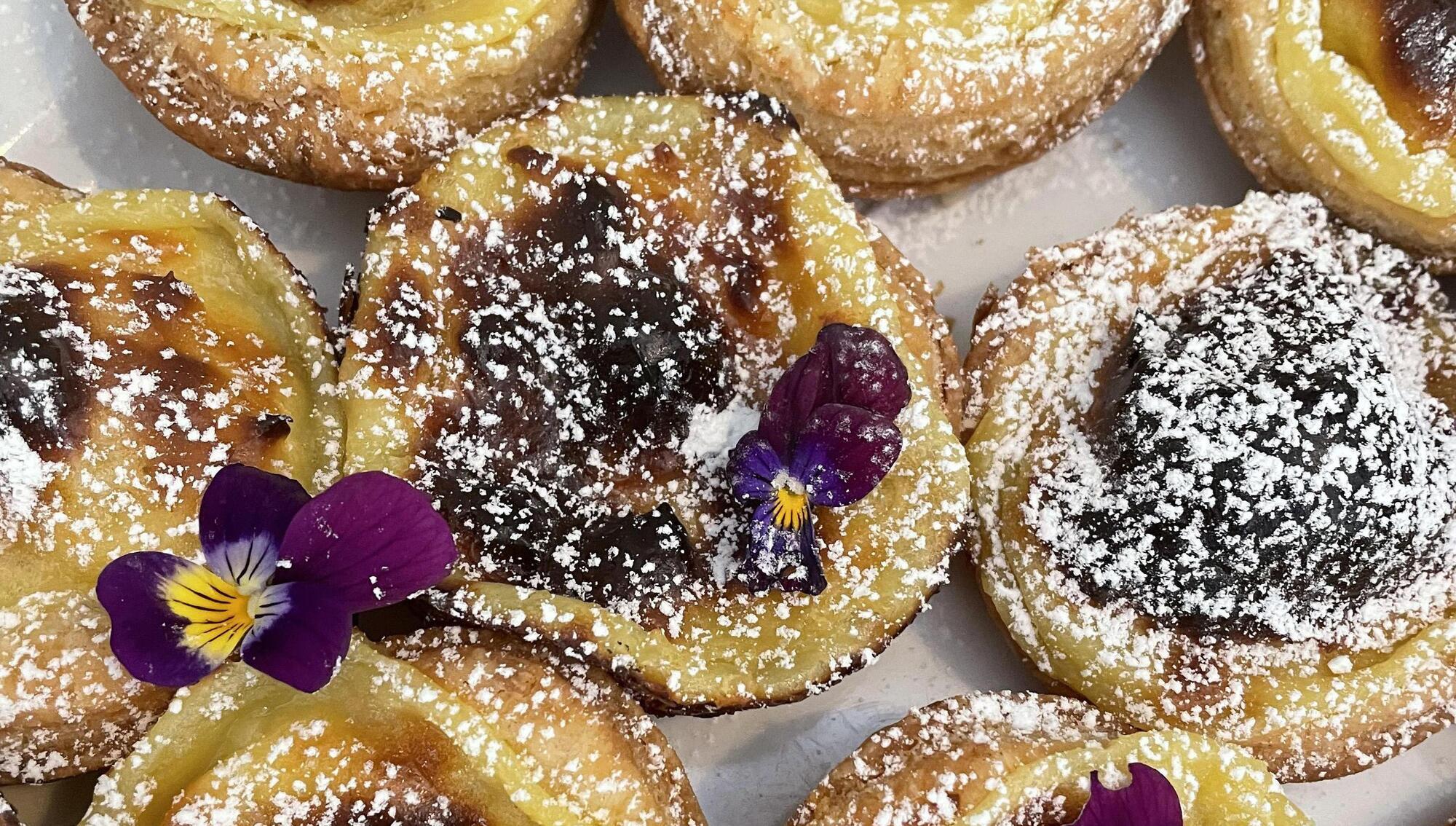
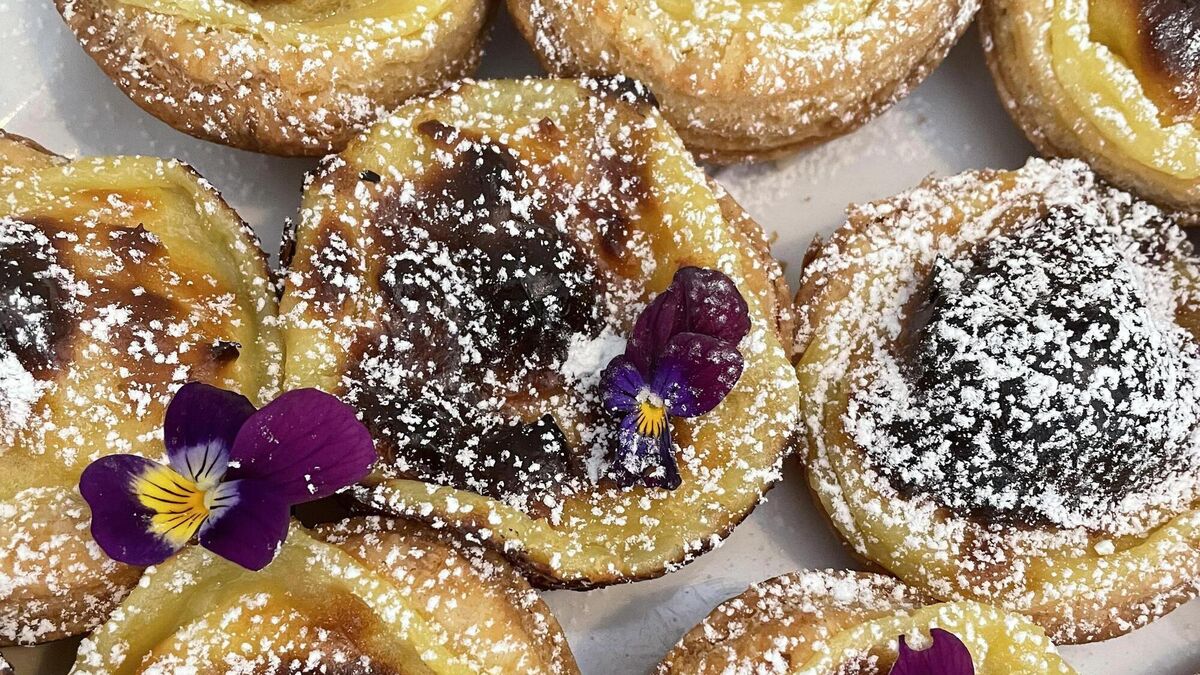
Pastéis de Nata (Portuguese Custard Tarts)
Portugal's famous custard tarts
Servings
24Preparation Time
20 minsCooking Time
25 minsTotal Time
45 minsCourse
BakingCuisine
PortugeseIngredients
1 large egg
2 egg yolks
115g golden caster sugar
2 tablespoons cornflour
400ml whole milk
2 teaspoon vanilla extract
a sprinkling of ground cinnamon (optional)
900g puff pastry
Lightly grease 2 x 12 muffin tins
Method
Preheat the oven to 230°C/450°F/Gas Mark 8.
Put the egg, yolk, sugar and cornflour in a saucepan and whisk, gradually add the milk and whisk until smooth.
Cook on a medium heat and stir constantly with a whisk until the mixture thickens and comes to the boil, continue to cook for 2 minutes. Remove the saucepan from the heat, stir in the vanilla extract and cinnamon if using.
Transfer to a Pyrex bowl, allow to cool. Cover with parchment paper to prevent a skin from forming – prick here and there to allow steam to escape.
Roll the chilled puff pastry into a 3mm thick sheet, stamp out 7.5cm discs. Press into the muffin tins.
Spoon a generous dessertspoon of the cool custard into each pastry case. Bake in the preheated oven for 16 – 20 minutes or golden on top and slightly charred. Allow to cool in the tins for 5 minutes then remove to a wire rack. Eat warm or at room temperature.
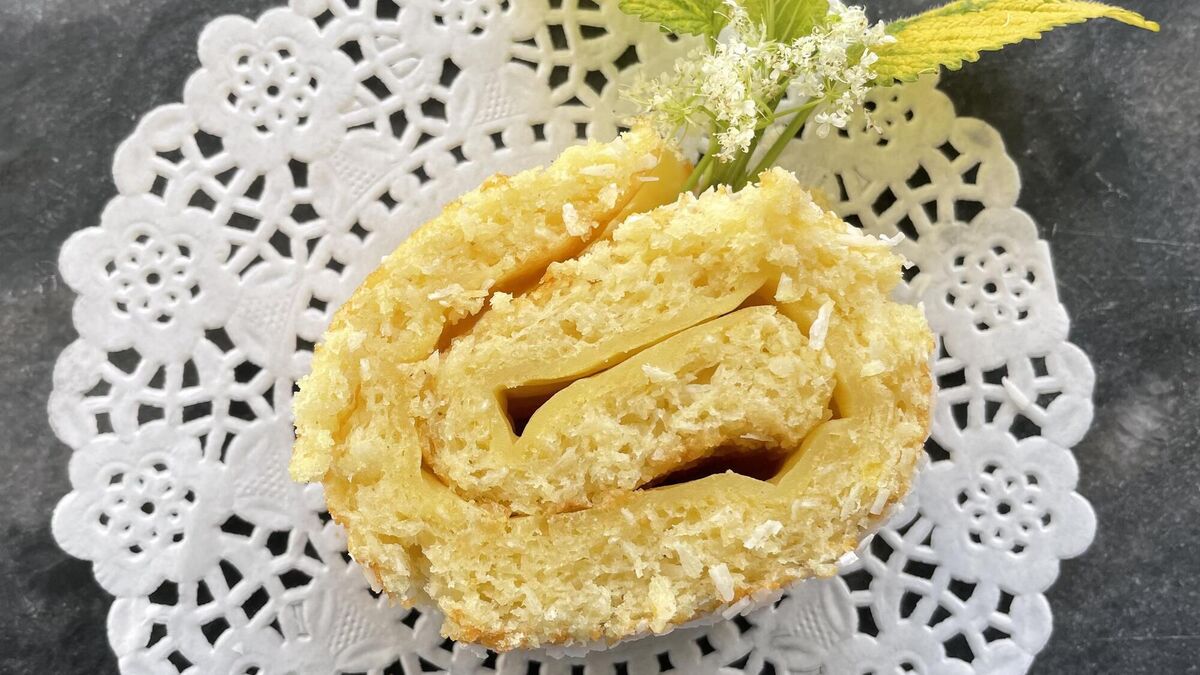
Portuguese Coconut Roll
The Portuguese make several riffs on this egg roll, orange, praline, caramel. Careful not to overcook or it will be dry.
Servings
24Preparation Time
25 minsCooking Time
15 minsTotal Time
40 minsCourse
BakingCuisine
PortugeseIngredients
4 eggs, separated
100g caster sugar
50g softened butter
100ml milk
50g grated coconut
1 teaspoon vanilla extract
1 tablespoon honey
1 teaspoon baking powder
75g plain white flour, sieved
caster sugar for dusting
2-3 tablespoons coconut
softly whipped cream to serve
Method
Preheat the oven to 180°C/350°F/Gas Mark 4
1 baking tray – 32.5 x 23cm (13 x 9 inch) lined with parchment paper and brushed with melted butter
Separate the egg yolks from the whites - save the whites until later. Whisk the egg yolks and 100g caster sugar in a food mixer at medium speed until the mixture is light and creamy.
Add the soft butter, milk, grated coconut, vanilla extract and honey. Mix for 2-3 or until evenly incorporated (it may curdle a little but don’t worry). Mix the baking powder with the sieved flour, stir into the wet ingredients and beat on a low speed until creamy. Whisk the egg whites until light and fluffy, fold gently into the mixture. Spread the dough evenly into the prepared tin. Bake in the preheated oven for 15 minutes approximately or until slightly golden.
Meanwhile, lay a tea towel on the worktop, cover with a sheet of parchment paper, sprinkle with a mixture of caster sugar and coconut. When the cake is cooked, remove from the oven and flip the tin onto the parchment paper. Remove the tin and carefully peel the parchment paper off the sides and base of the roll. Slather with lemon curd (optional). Then using the towel and parchment, start to roll gently from either the long or short end depending on how chunky you would like the roll. Transfer to a serving plate, sprinkle with a little more grated coconut and serve with softly whipped cream.
Taste of Dublin returns to the Iveagh Gardens from June 15 – 18. Over four days, visitors can enjoy Ireland’s hottest restaurants, mingle with homegrown chefs, indulge in gourmet produce, or simply relax and enjoy being outdoors in the city with friends.
- For more information, see tasteofdublin.ie
Join us and cheesemaker David Asher of The Black Sheep School of Cheesemaking for this comprehensive, five-day introduction to natural cheesemaking. David, a former farmer and goatherd from the west coast of Canada, is a natural cheesemaker and a leading advocate for raw milk cheesemaking. During this five-day course, he will cover many aspects of natural farmhouse cheesemaking, from culture propagation to rennet coagulation and affinage, the art of aging cheese.
Students can expect to learn how simple traditional methods can lead to safe, effective, and delicious cheesemaking, using raw or pasteurised milk. David will explore how the philosophies of fermentation of natural wine, beer, sourdough and dairy are all interrelated. The class explores five main categories of cheese and concepts of traditional starters, ripening ecologies, and natural rennet, offering a new understanding of cheesemaking even to those with many years of experience.
- For more information, see cookingisfun.ie