Darina Allen: Morocco delights all five senses - travel there right now with these recipes
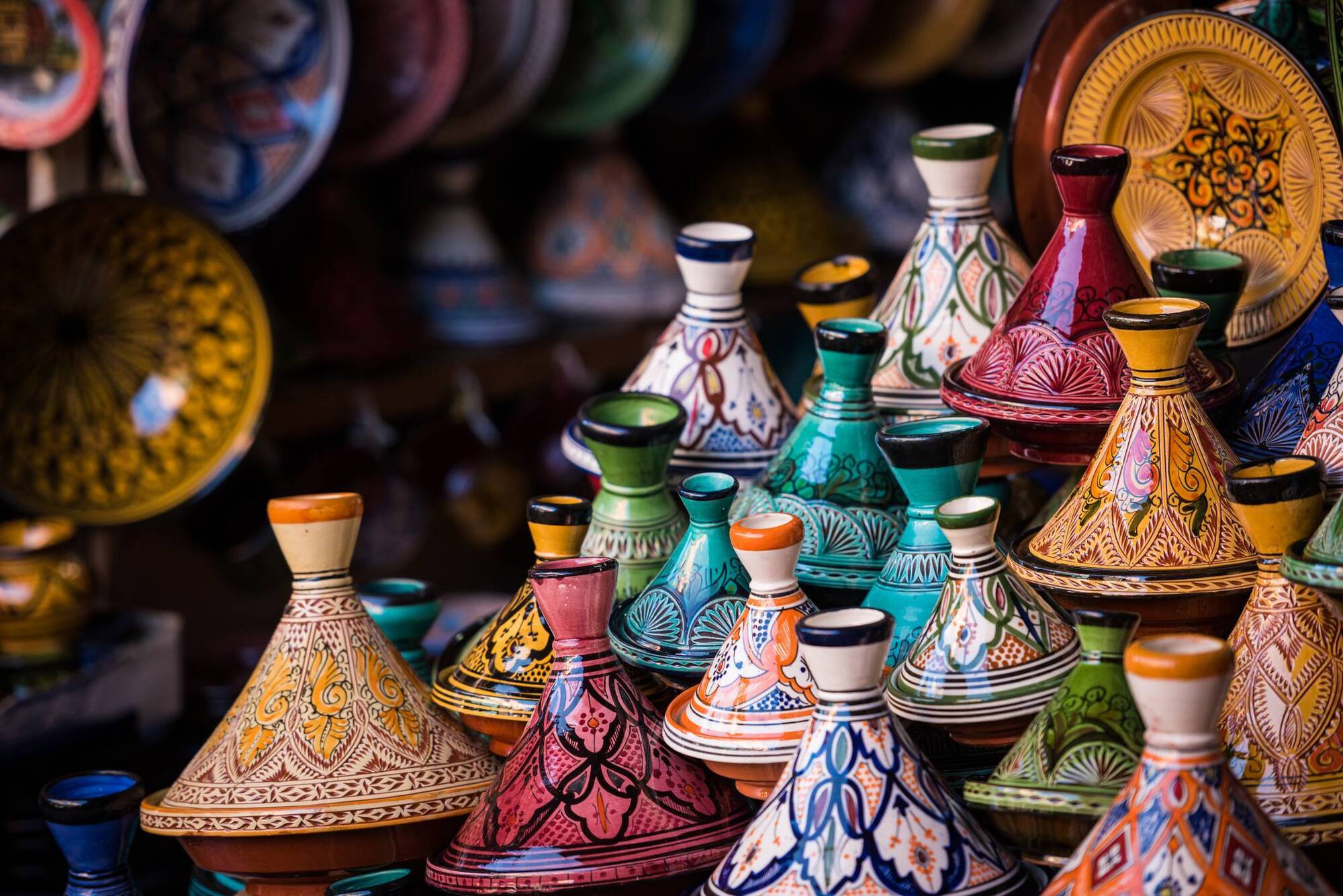
Morocco offers a wonderfully convivial experience and the food overall is above average

Morocco is mesmerising, the closest country where the culture is intriguingly different. So tempting for those craving a change after almost two years of isolation — it's barely 3 and a half hours by plane and one hour time change.
Where to go? Casablanca, Rabat, Fez, Essaouira, Tangiers
The latter, though charming, is still pretty nippy at this time of the year, so how about Marrakech with its date palms and cactus, souks and bazaars and the incomparable Jemaa el-Fnaa square in the heart of the medina, a magnet for both Moroccans and visitors flocking to be fed, watered and entertained. Drink freshly squeezed juices (no alcohol) and watch hypnotic musicians, whirling dervishes, swirling jugglers and snake charmers. Have a pic taken with a monkey on your shoulder or with colourful tea sellers who make more money from having photos taken than by selling tea. Donkeys weave in and out through the narrow lanes of the medina with carts full of oranges.
There are henna artists, soothsayers, a frenzy of merchants selling their wares from sparklers and balloons to little bowls of snails in broth — and a selection of false teeth should you need them. At night, local cooks and chefs set up long tables on the side of the square selling steaming bowls of harira with fresh dates, grilled fish, tagines, every conceivable type of offal. A wonderfully convivial experience and the food overall is above average.
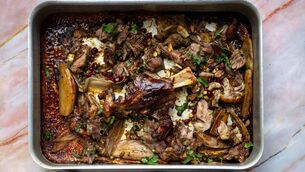
But my absolute favourite is mechoi, the meltingly tender milk-fed lamb, cooked slowly for hours in underground clay ovens until the succulent meat is virtually falling off the bones. You’ll find it from noon to about 4pm along Mechoi Alley — a little lane on the east side of the square. Look out for Haj Mustapha, he was the last Hassan’s (King's) private chef who now owns Chez Lamine and several stalls selling not just mechoi but also goat’s heads, and tangia, a lamb stew in a clay pot, traditionally cooked in the ashes of the fire that heats the water for the hammans. I even tasted karaein — cow’s hooves with chickpeas. Been there, done that, don’t need to do it again!
The medieval city of Marrakech with its 10 kilometres of ochre-coloured adobe, ramparts and seven awe-inspiring ornamental gates has many landmarks. The minaret of the Koutoubia Mosque dominates the city. Like most mosques in Morocco, it’s closed to non-muslims but is still a mightily impressive building.
Marrakech was the destination for merchants, camel traders and caravans who had crossed the desert and the snow-capped Atlas mountains with their wares. It’s steeped in history. And if you only eat in one restaurant, it has to be Al Fassia, the women’s restaurant in Gueliz. And how about Al Baraka, a petrol station on Rue de Fez, about 15 minutes outside Marrakech — inexpensive but delicious food.
The highlight of my trip was a morning food tour with Plan-It Morocco. And even though I’ve been to Marrakech many times, I discovered many new places with Bilal, my deeply knowledgeable guide. We started at the Kasbah, originally a posh neighbourhood close to the royal palace, now a commercial area with lots of little shops, bakeries and stalls.
First stop — a little stall selling sfeng, the famous deep-fried breakfast doughnuts eaten plain or sometimes with an egg in the centre and a sprinkling of crunchy sea salt and cumin. Actually, these doughnuts are served all day but are sprinkled with sugar in the afternoon. We wandered through the narrow alleys and watched women making a variety of different breads. Every neighbourhood has an underground wood-fired oven which doubles up as a community bakery. Women bake traditional round flat breads in their homes, lay them on a cloth-covered board to rise. It’s brought through the streets to be baked in the oven when the baker has finished cooking his daily loaves. In Morocco, there are more than seven types of Moroccan bread — all delicious.
Stalls were piled high with beautiful fresh vegetables and fruit, I watched a beautiful old lady in a patterned black and white kaftan removing the fibres from long cardoon stalks. First with a knife and then a coarse nylon brush. I bought a bag back to Tarabel Riad and asked the cook to prepare them for my dinner in a delicious tagine of cardoons and potatoes.
In the Jewish quarter, we sat at a little tin table to have another traditional Moroccan breakfast — Bissara, a thick bean soup sprinkled with cumin and chilli pepper, drizzled with olive oil. It comes with a basket of bread for dipping.
I could write several columns on the bread alone.
On past the once-famous Sugar Market to watch the warka makers working at the speed of knots, dabbing the dough onto hot saucepan lids over boiling water to make the paper-thin sheets of warka used for chicken and pigeon pastilla and a myriad of other pastries.
Next stop, Belkabir, the most famous pastry shop in the medina with 40 or more sticky sugar-laden pastries from horns de gazelle to briwat (triangle-shaped pastries filled with marzipan, deep-fried and dipped in honey).
We continued to meander through the souks, with its stalls piled high with everything from Moroccan slippers, fake bags and ‘designer’ clothes, metalwork, hand-carved wooden spoons and boards, brassy trinkets, hand-blown glass…and finally into a little secret corner called Talaa, to Chez Rashid, a favourite haunt of the locals. I loved their sardine ‘meat balls’ with cumin and coriander — so delicious with chopped raw onion or with tomato sauce.
We continued to walk through the souk, then back to the beautiful Tarabel Riad where Kahil picked oranges from the trees in the inner courtyard to make some freshly-squeezed orange juice to quench my thirst. Sure where would you get it but in lovely Morocco?
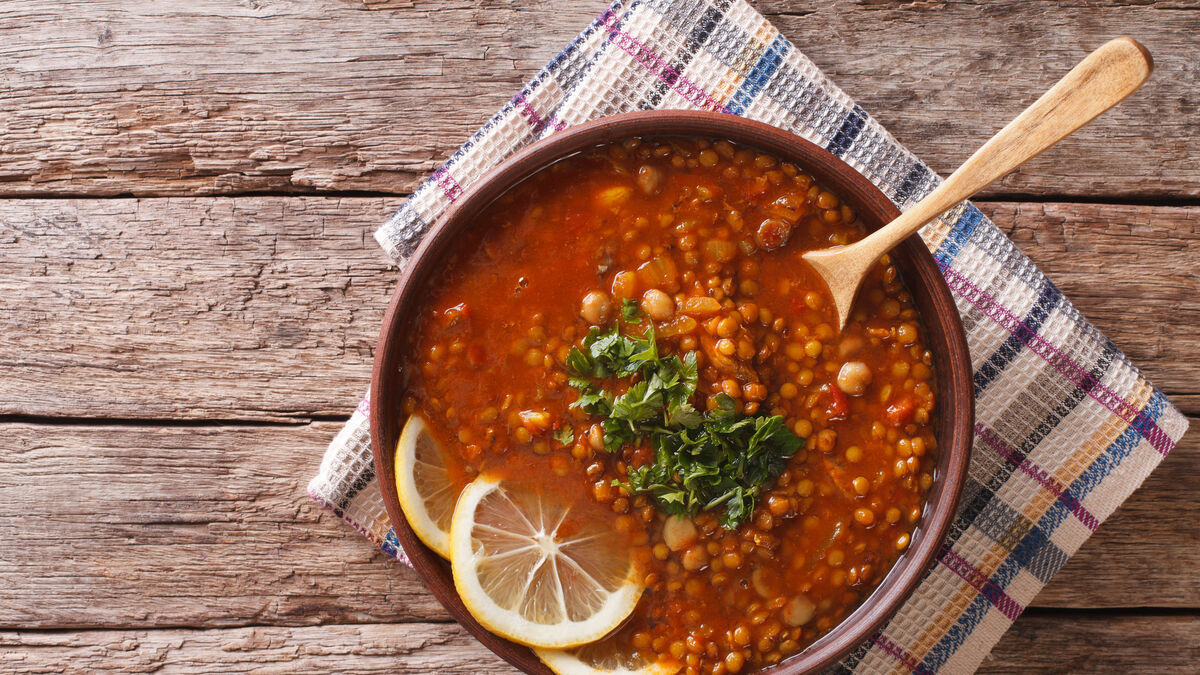
Rory O'Connell's Moroccan harira soup
In Marrakesh steaming bowls of Haria are ladled into large bowls every evening in Djemaa el-Fna, a soup that is bursting with chickpeas and spice
Servings
4Preparation Time
20 minsCooking Time
2 hours 0 minsTotal Time
2 hours 20 minsCourse
StarterIngredients
110g dried chickpeas, soaked overnight and drained
110g Puy lentils
450g leg or shoulder of lamb, diced into 7mm cubes
175g onion, chopped
1 tsp turmeric
½ tsp ground cinnamon
¼ tsp each ground ginger, saffron strands and paprika
salt
pepper
50g butter
110g long grain rice
4 large ripe tomatoes, skinned, seeded and chopped
2 tbsp chopped fresh coriander
4 tbsp chopped flat-leaf parsley
lemon quarters, to serve
Method
Tip the chickpeas and lentils into a large saucepan. Add the lamb, onion, turmeric, cinnamon, ginger, saffron strands and paprika, then pour in 1.5 litres water. Season with salt and freshly ground pepper.
Bring to the boil, skimming all the froth from the surface as the water begins to bubble, then stir in half the butter. Turn down the heat and simmer the soup, covered, for 1 ½-2 hours until the chickpeas are tender, adding a little more water from time to time as necessary – it can take up to 900ml more water or stock, it should be soupy in texture.
Towards the end of the cooking time, prepare the rice. Bring 850ml (scant 1 1/2 pints) water to the boil in a saucepan, sprinkle in the rice, the rest of the butter and salt to taste. Cook until the rice is tender. Drain, reserving 3 tablespoons of the liquid.
To finish, cook the chopped tomato in the reserved rice cooking water, seasoning it with salt, pepper and sugar. It should take about 5 minutes or until the tomato is “melted”. Add this and the drained rice to the pot and simmer for a further 5 minutes to allow the flavours to mix.
Correct seasoning with salt and pepper and perhaps a pinch of salt. Add the chopped herbs, stir once or twice and serve accompanied by lemon quarters.
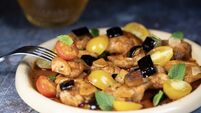
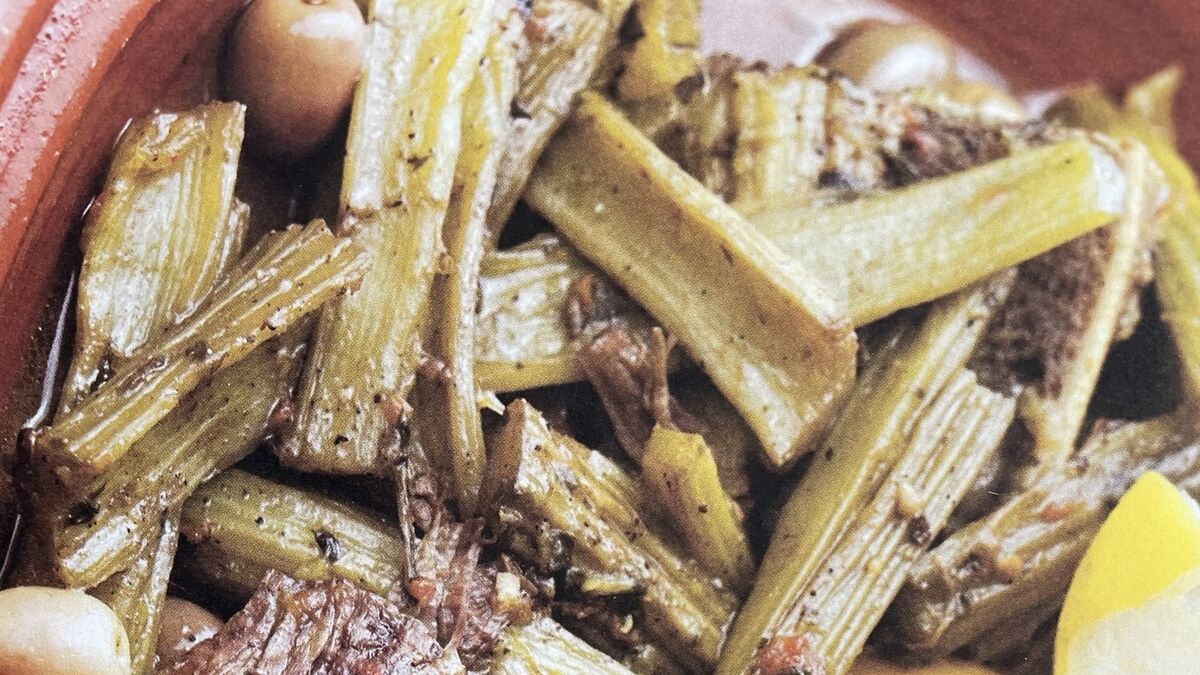
Lamb tagine with cardoons, lemon and olives
Cardoons are domesticated thistles found in markets all over Marrakech, Italy and other parts of Europe. We grow them here in our garden in Shanagarry. They have a taste similar to globe artichokes and an appearance similar to that of celery.
Servings
6Cooking Time
3 hours 0 minsTotal Time
3 hours 0 minsCourse
MainCuisine
MorroccanIngredients
1kg (2 1/4lbs) boneless lamb shoulder chops, trimmed of excess fat
2 garlic cloves, peeled
salt
¾ tsp ground ginger
¼t tsp ground turmeric
2 tbsp saffron water (see note at end of recipe)
115g (generous 4oz) grated red onion
4 tbsp extra virgin olive oil
20g (¾ oz) flat-leaf parsley leaves, chopped
3 bundles cardoons (about 15-18 tender stalks)
juice of 2 lemons
1 ½ preserved lemon, pulp removed, rind rinsed and divided into 6 wedges
12 green-ripe, midway or red olives, rinsed and pitted
Method
About 5 hours before serving, rinse the lamb chops, cut each into six pieces and place in a 28 - 30cm (11 - 12 inch) tagine. Crush the garlic to a paste with 1 teaspoon salt. Add the ginger, turmeric, saffron water, grated onion and oil and turn to coat the lamb on all sides. Leave to marinate for 2 hours.
Set the tagine on a heat diffuser over a medium-low heat and slowly cook the meat for about 15 minutes or until it turns golden brown. Add 180ml (generous 6fl oz) hot water and the parsley, raise the heat to medium and bring to the boil. Reduce the heat to medium-low again, cover and simmer for 2 hours, turning the lamb often in the sauce.
Meanwhile, separate the cardoon stalks and cut away the tough bottom parts and the leaves. Wash the inner stalks well. With a paring knife or a vegetable peeler, remove the strings. Cut the stalks into 7.5cm (3 inch) lengths and keep in acidulated water (with vinegar or lemon juice) to prevent discolouration.
After the lamb has cooked for 2 hours, push the meat to one side and slide in the rinsed and drained cardoons. Add enough hot water to cover them. (For the first 15-20 minutes of cooking, the cardoons must be covered by liquid). Place the lamb pieces side by side on top of the cardoons and cook for a further 40 minutes.
Add 4 tablespoons of the lemon juice to the sauce. Then continue adding the lemon juice by the tablespoon, tasting before adding more each time. Simmer gently, uncovered, to allow the sauce to reduce and the flavours to blend. If there’s a lot of liquid left when the meat is cooked, tilt the tagine, spoon the liquid into a saucepan and boil rapidly to reduce the liquid to a sauce with a coating consistency.
Rearrange the pieces of lamb and cardoons in the tagine so the meat is completely covered with the cardoons. Garnish with the preserved lemon rind wedges and the olives. Taste the sauce for seasoning and add more lemon juice, if you like. Serve at once.
Note: To make the saffron water, dry half teaspoon crumbled saffron strands in a warm (not hot) pan. Crush again, then soak in 240ml hot water and store in a small jar in the refrigerator. This will keep for up to a week.
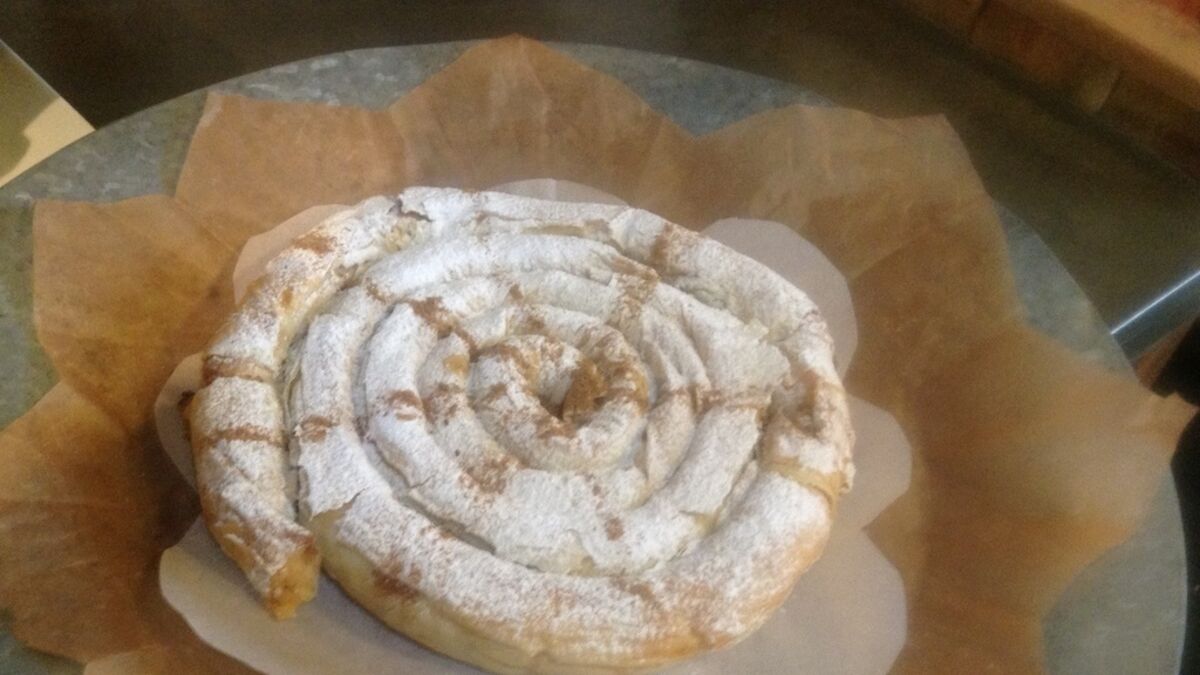
Moroccan Snake
This is one of the glories of Moroccan confectionery, great for a party. Individual snakes can be made with a single sheet of filo.
Servings
4Preparation Time
30 minsCooking Time
30 minsTotal Time
60 minsCourse
BakingCuisine
MoroccanIngredients
1 packet best-quality filo pastry
For the filling:
450g ground almonds
340g caster sugar
1 tbsp cinnamon
90-100ml orange flower water
90-100ml melted butter
Method
Mix all the filling ingredients together in a bowl to form a paste.
Then begin to assemble. Lay one sheet of filo on the worktop and brush with melted butter. Take a fist full of the paste and make into a snake about 2.5cm thick.
Lay this along the long side of the sheet of filo, about 2.5cm in from the edge. Roll up and bend into an accordion shape and then roll up into a ‘snail’. Put a sheet of tin foil on a baking sheet and lay the snail on top, continue with the rest of the filo and paste. Press the ends together to seal the joining and continue to make the snake. Brush with egg wash and then with melted butter.
Bake in a preheated moderate oven 180°C/gas mark 4 for approximately 30 minutes or until crisp and golden, then cool. Dust with icing sugar and perhaps a little sweet cinnamon.
Congratulations to Bread 41 in Dublin which has just an Irish Food Writers’ Guild Food Award. Founded in 2018 by BCS alumni Eoin Cluskey, the Dublin 2 location has become one of the city’s best-known and well-loved artisan bakeries. Each perfectly unique loaf is sustainably made with Eoin committed to running a zero-waste, carbon-neutral company — Bravo!
see @bread41dublin
We’re hearing many good things about Karen Coakley’s Kenmare Foodie Tours. Discover the foodie secrets of the Kerry coastal town. Stroll through the streets with Karen and enjoy meeting food artisans and tasting produce including beer, cheese, bread, smoked salmon, charcuterie and much more.
see @kenmarefoodie
I’ve just got a copy of from the bestselling author of , Jennifer Ryan. ‘Two years into the Second World War, German U-boats are frequently disrupting Britain’s supply of food. In an effort to help housewives with food rationing, a BBC radio programme called The Kitchen Front launches a new cooking contest — and the grand prize is a job as the programme’s first-ever female co-host.’
A brilliant, entertaining post-Covid read. Published by Macmillan on March 22