Currabinny cooks: How to cook turnip and our favourite recipes using the swede

Swede and salsa verde are a match made in heaven

In Ireland what we call turnip is, in fact, swede. Turnips are those small white and violet orbs with the green tops like a big white radish. Swede is a root vegetable that belongs to the cruciferous family (other family members are broccoli, cauliflower, kale, cabbage, brussels sprouts etc).
Swede is actually a cross between a turnip and cabbage. They are known as rutabaga in the United States but are called swede throughout the rest of the world. They are one of the hardiest root vegetables to harvest, they grow seasonally — autumn through to winter. Swede are rounded in shape, with a purple-green skin fading in colour towards the base, the flesh is a creamy-yellow colour. Swede have a sweet, earthy flavour and are best cooked until tender/soft but if overcooked they can fall apart.
Swede are versatile and can be a substitute for potatoes. Swede is a hardy winter veg, and available from September to March. We have never grown it ourselves but they are apparently quite an easy crop but require patience. Swede can take up to 5 months to mature. If you sow the seeds in late spring then your swedes will be large enough for harvesting in early autumn. If buying, a good specimen should be undamaged, firm and heavy. In terms of size, the larger, the tougher, but it would be rare to find a swede so large as to be unusable.
Interestingly they are packed full of vitamin C, with just 100g of swede containing 30% of your daily needs. Useful indeed for the cold winter months.
Swede has the sweetness of a carrot, the tartness of a radish and the texture of a turnip. When roasted, its flesh goes a deeper orange and it becomes sweeter, a bit like butternut squash, with a nutty, buttery flavour. It’s absolutely delicious.
With Halloween just gone, it may also be relevant to point out that swede served as the original Jack ’O’ Lantern in the traditional Irish festival Samhain which, of course, influenced Halloween. People would carve scary faces into swedes to ward off evil spirits. Pumpkins took over from this tradition when Halloween was imported back from America.
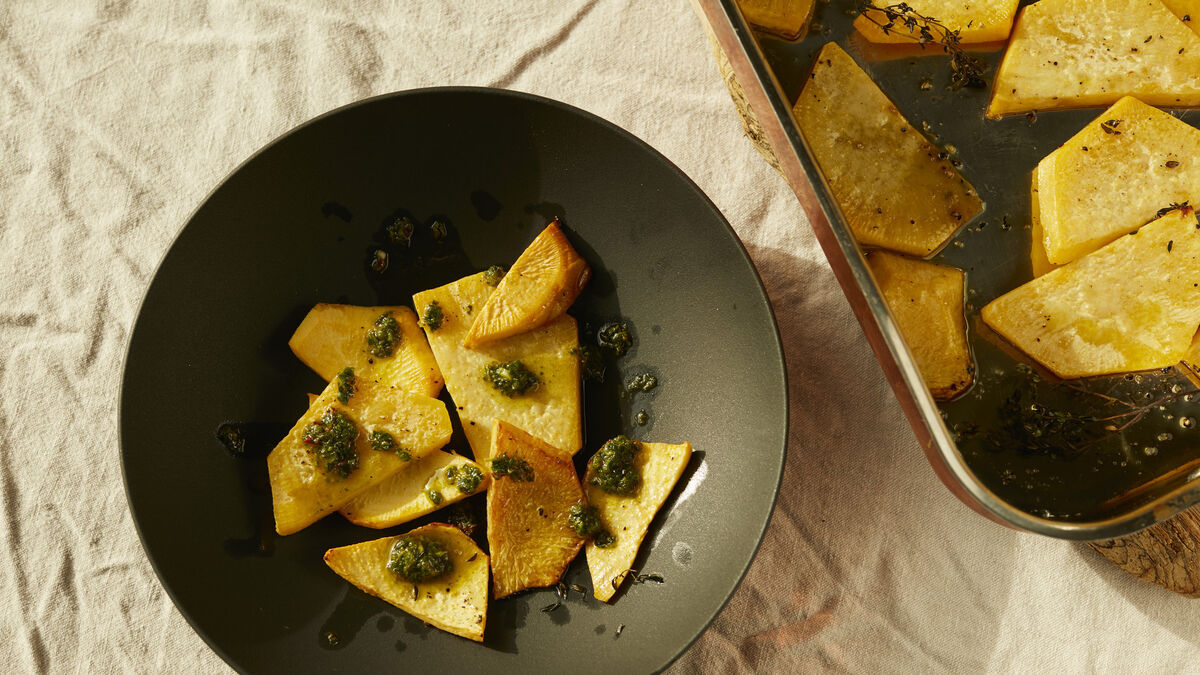
Swede with salsa verde
This method is a little bit of a departure from how you might have had swede before but the results are delicious
Servings
4Preparation Time
10 minsCooking Time
40 minsTotal Time
50 minsCourse
InputIngredients
1 large swede, peeled roughly with a sharp knife
175ml white wine vinegar 60ml of white wine
4-5 whole black peppercorns
½ tsp coriander seeds
½ tsp mustard seeds
2 fat cloves of garlic, peeled and halved
2 small dried chilli pods
4 sprigs of thyme
Good pinch of sea salt
For the salsa verde:
juice of 1 lemon
2 cloves of garlic, crushed
1 tbsp capers
1 small shallot, finely chopped
1 good handful fresh parsely, chopped
1 good handful fresh tarragon, chopped
1 tbsp chopped fresh chives
1 tsp dijon mustard
6 tbsp olive or rapeseed oil
salt and pepper to taste
Method
Cut the peeled swede in half and then into ¼ inch slices. Place the slices in large pot along with all the other ingredients along with 700mls of water. Bring to the boil and then lower the heat to a steady simmer for around 15-20 minutes until the swede is tender. Take off the heat and then leave the slices to cool in the liquid while you prepare the salsa verde.
To make the salsa verde, simply blitz all the ingredients together using a food processor, stick blender or even mash it all together in a large pestle and mortar, adding the oil in slowly until well combined.
Serve the slices warm or cold on a plate with good dollops of salsa verde on top.
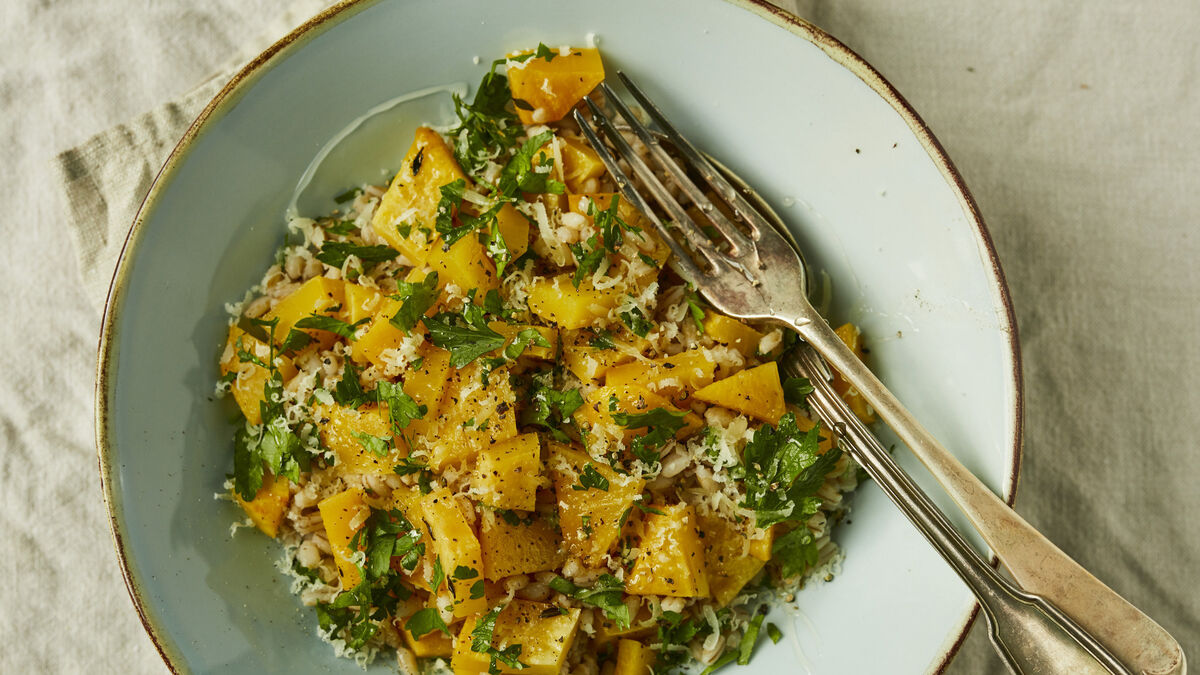
Swede and pearl barley risotto
This is a simple but deeply satisfying version of a pearl barley risotto
Servings
4Preparation Time
10 minsCooking Time
30 minsTotal Time
40 minsCourse
MainIngredients
1-litre good vegetable stock
50g butter
1 tablespoon olive oil
1 medium onion, finely chopped
2 cloves of garlic, finely chopped
1 small to medium swede, peeled and cut into small cubes
300g pearl barley
Handful of parsley
80g hard sheep's cheese or Parmesan
Sea salt and freshly ground black pepper
Method
Heat the stock in a small pot and keep at a steady low simmer. In a large frying pan, heat the butter and oil over a medium heat. Add the onion, season lightly and cook for a few minutes until starting to turn translucent and soft.
Add the garlic and cubed swede and cook for another 5 minutes or so. Next, add the pearl barley and stir everything around the pan so it is all well coated in butter. Now start adding the stock by the ladleful. Stirring after each addition of stock so that it all gets soaked up nicely by the pearl barley.
Do this until all the stock is gone and the pearl barley is cooked through. This all should take roughly 20 to 25 minutes and the swede should be tender as well.
Take off the heat and stir in the chopped parsley and grated cheese. Check the seasoning and add more salt and black pepper if needed. Serve hot in bowls.
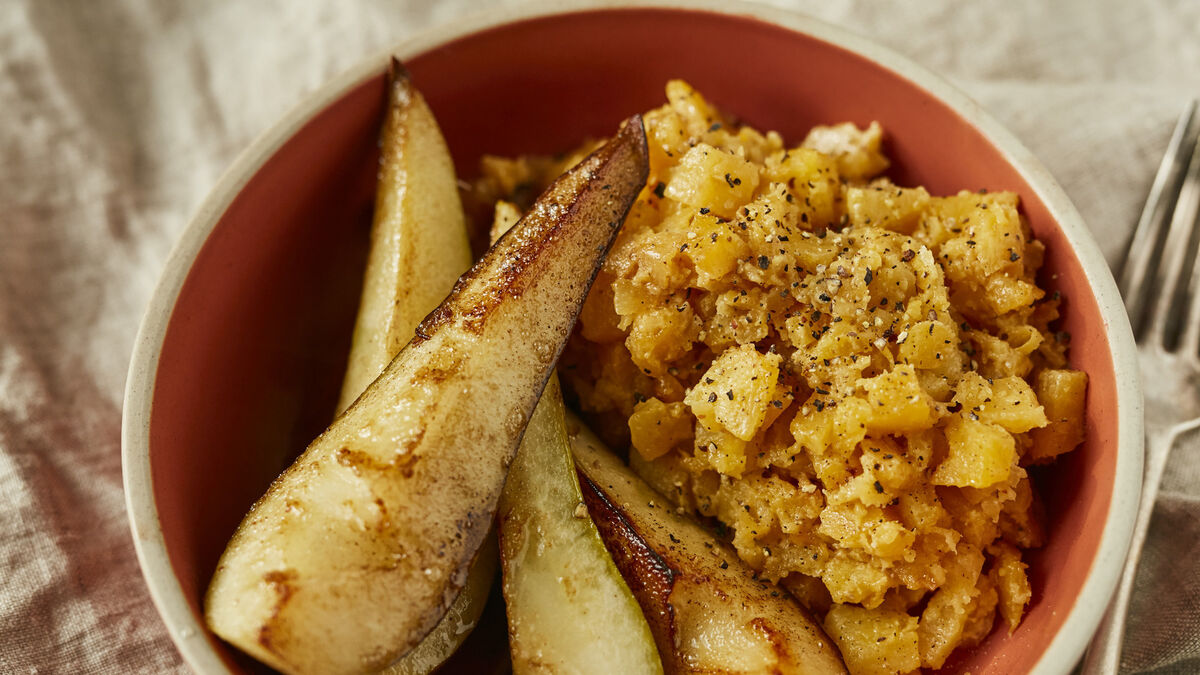
Swede mash with pears
You can peel the pears if you wish but I tend to leave them with the skin on as I think they hold together better and I rather like pear skin
Servings
4Preparation Time
10 minsCooking Time
35 minsTotal Time
45 minsCourse
SideIngredients
1 large swede, peeled and cut into small cubes
100g butter
Olive oil
Juice of ½ lemon
½ thumb ginger, peeled and grated
2 firm pears, quartered vertically seeds removed 100ml cream
1 tbsp of thyme leaves
Sea salt and black pepper
Method
Boil the swede in a large pot of salted water over medium high heat. This should take around 15-30 minutes. Drain and then mash vigorously with 50g butter, most of the thyme leaves, and all of the cream. Season well to taste and cover in a warm bowl.
Place a large frying pan over a medium high heat and add a small amount of olive oil and the rest of the butter.
Put the grated ginger in the pan along with the pear. Squeeze over the juice of half a lemon and then allow the pears to fry all over in the buttery, ginger and lemon until starting to turn golden brown on the cut sides.
Serve the mash alongside the cooked pears, garnished with a final sprinkle of thyme leaves.