Currabinny Cooks: A bubbling vegetable gratin that's perfect for colder nights
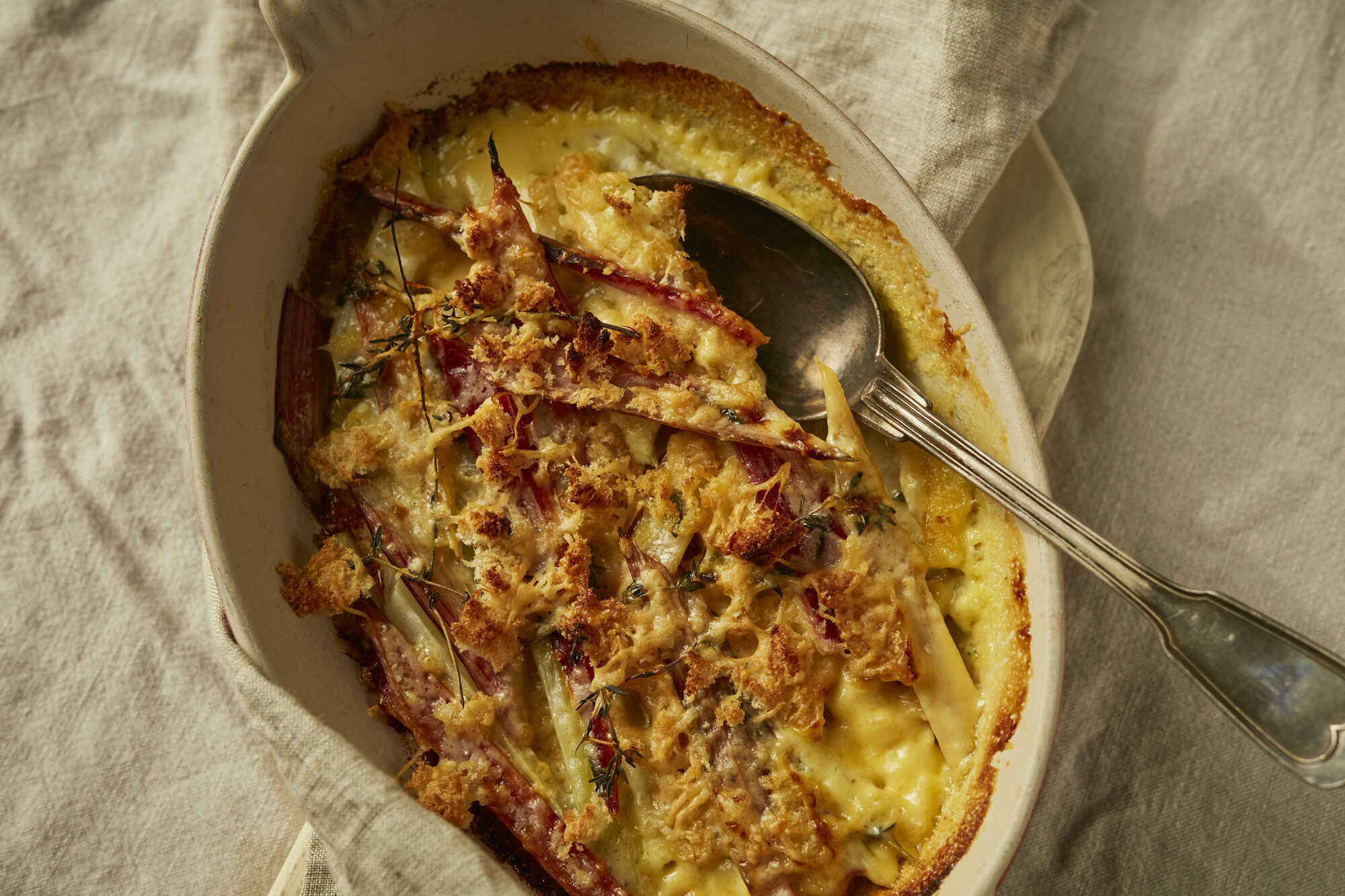
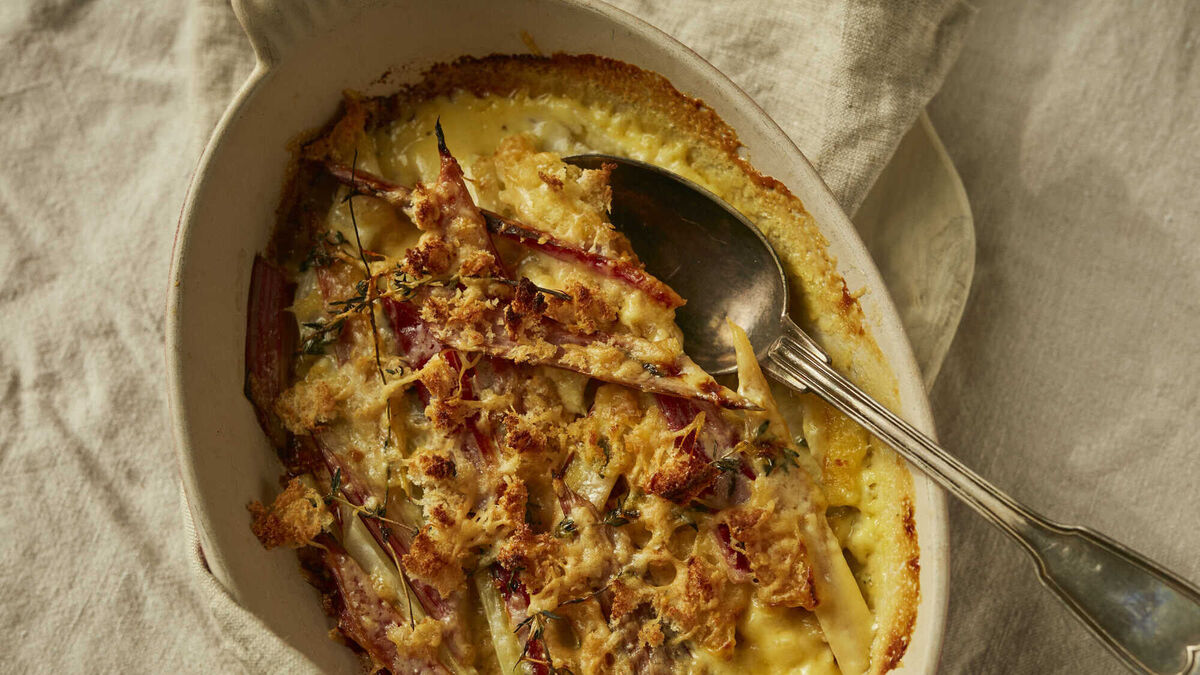
A bubbling chard gratin. Picture: Bríd O'Donovan

If you’ve never grown anything before, then I would strongly urge you to start with chard. It doesn’t need much care, sow the seeds in spring through to the end of summer and reap the benefits as it grows. It can be picked young or mature (as long as you can protect it well enough from hungry bugs). I always find it so cheerful in a garden patch, great big candy coloured stalks in pink, red and orange with shiny green leaves.
Chard is in the same family as spinach and can be used in much the same way, except it is even more useful given how delicious its colourful stalks can be.
You can separate the chard into its leafy greens and its stalks; each part of the plant tastes different. The greens are milder than spinach, with a sweet, earthy flavour and a bit of bitterness when eaten raw. When cooked, the bitterness lessens, and that sweet, earthy flavour (think beetroot) becomes more prevalent.
The stalks, meanwhile, are crunchy, crisp and have a sweetness that falls somewhere between celery and beets.
Chances are, if you like spinach, you’ll like Swiss chard; the two are often compared to each other since the leaves taste similar and the vegetable can be prepared in a similar fashion. You can — and should! — eat both parts of chard, but it's easier to separate the stalks and the leaves for cooking and storage.
This is quite late in the season for chard but they still persist in our garden patch at least, indeed they always grow quite prolifically for some reason, compared to everything else. The salty, windswept conditions of Cork Harbour can often prove difficult for growing but chard can always be relied upon to grow extremely well.
If buying, I cannot promise you will find chard easily at this time of year, but farmers markets or good greengrocers are always the best bet. Look for brightly coloured stalks that are firm and bright, shiny green leaves that haven’t been left hole-punched by bugs.
You can cook chard in many of the same ways that you cook spinach, and it's a fine swap in salads, sautéed preparations or in quiches. Just know that when eaten raw in a salad, chard leaves will have a texture that's more similar to kale.
Leek and chard soup with tarragon
Serve this hot in deep bowls with plenty of crusty white bread, enthusiastically buttered.

Servings
4Preparation Time
10 minsCooking Time
20 minsTotal Time
30 minsCourse
StarterIngredients
1 tbsp olive oil
50g butter
2 large leeks, greens discarded, whites sliced thinly
1.5 litres of good chicken or veg stock
Zest of half a small lemon
A small bunch of tarragon, roughly chopped
A good handful of chard leaves ( use the stems for another dish)
2 medium potatoes, peeled and cubed
A small handful of parsley, chopped
Sea salt and freshly cracked black pepper
Method
In a large pot or casserole heat the oil and butter over medium heat. Add the leeks and potatoes, coating everything in the melted butter and oil. Cover the pot and let the ingredients soften for around 5 minutes. Pour over the chicken stock and bring to the boil before reducing to a simmer. Season with lemon zest and add the chard leaves.
Let it simmer for around 15 minutes on a low, gentle heat. Check the seasoning and then add the tarragon and most of the parsley (reserving some for garnish).
Once the potato has cooked through the soup should be ready to serve.
Chard stem gratin
Chard stalks can be tricky enough to cook with as they can be stringy or tough if not treated properly. Making them into a gratin is great as the heat of the oven and the bubbling cream with make them deliciously soft and easy to eat.
Servings
4Preparation Time
5 minsCooking Time
60 minsTotal Time
1 hours 5 minsCourse
SideIngredients
2 stalks of celery
The stalks from a large bunch of chard, leaves kept for another dish
Few sprigs of thyme
100ml double cream
100g good quality breadcrumbs
30g hard sheep's cheese like Cais na Tire
Sea salt and freshly ground black pepper
Method
Preheat the oven to 160°C.
Cut the celery and chard stems into finger length batons. Place in no more than two layers in a medium-sized casserole dish. Scatter over the sprigs of thyme and 3 or 4 tablespoons of water along with a good pinch of sea salt and black pepper. Cover the whole thing in foil and place in the oven for around 40 minutes. Take the dish out of the oven and turn the heat up to 200°C.
Discard the thyme sprigs and pour off the liquid from the casserole into a measuring jug. Add the cream to the jug and whisk it all together. Taste and add more seasoning if necessary. Pour back over the chard and celery and scatter the breadcrumbs and grated sheep's cheese on top. Return uncovered to the hot oven for a final 15-20 minutes until golden brown and bubbling.
Creamed chard
I have always loved creamed spinach, even though it wouldn’t be the most contemporary or exciting ways of eating spinach. This chard version gives you a more elevated and complex result compared with creamed spinach.

Servings
4Preparation Time
5 minsCooking Time
15 minsTotal Time
20 minsCourse
SideIngredients
2 large bunches of chard, washed with stems and leaves separated
50g butter
2 spring onions, sliced thinly
150ml double cream
Pinch of freshly ground nutmeg
Sea salt and freshly cracked black pepper
Small handful of pine nuts
Method
Toast the pine nuts, gently on a dry frying pan over medium heat until lightly browned. Remove to a bowl and set aside.
Cut the chard stems into small diced pieces no bigger than the nail on your little finger. You can roughly chop the leaves to make them more manageable.
Melt the butter on the frying pan over a medium high heat and add the sliced spring onion and chard stalks. Cover the frying pan with a lid and let cook down for around 5 minutes.
Once the stalks have softened, add the chard leaves and cook uncovered for a further 5 minutes so that everything has wilted down nicely. Lower the heat to medium low and add the cream to the pan along with a pinch of nutmeg, sea salt and a good scattering of freshly cracked black pepper. Cook for around 3-4 minutes and then remove from the heat. Serve in a small serving bowl or dish with the toasted pine nuts scattered liberally over.