Currabinny Cooks: three ways to serve up chard - a hidden gem among veg
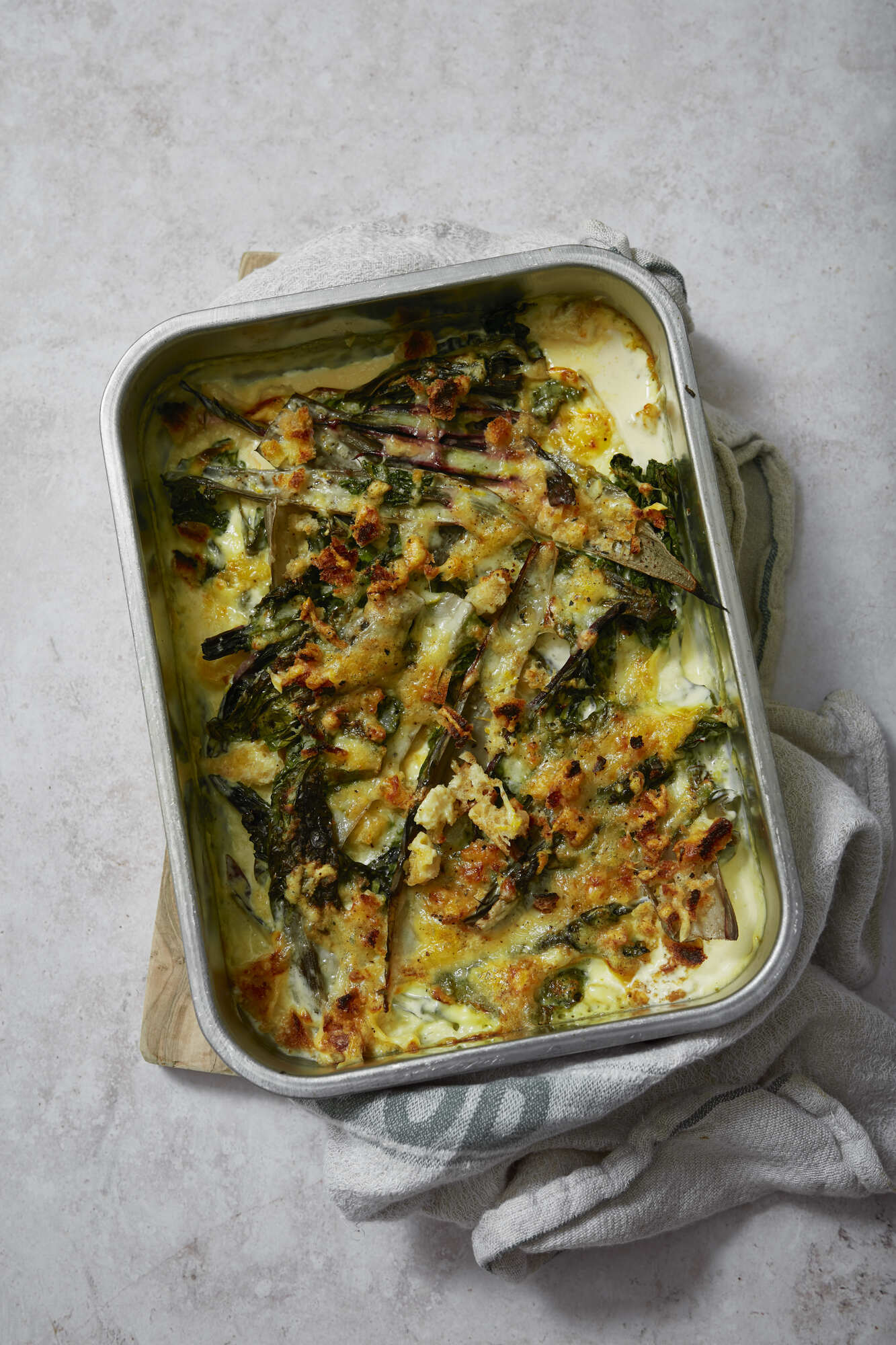
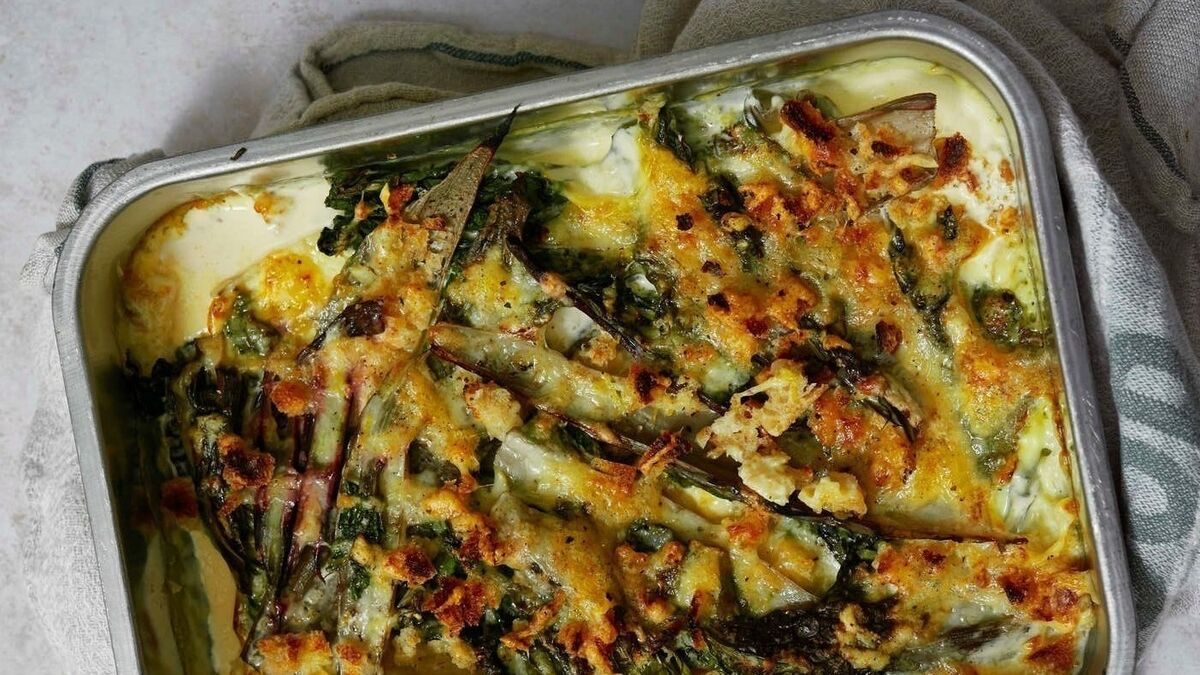
Currabinny Cooks. June 19th. Gratin of Chard Stalks. Photo: Bríd O'Donovan.

Gratin of chard stalks
Colourful chard, a hardy vegetable related to beet, is a hidden gem to include in this refreshingly light and zesty gratin, a vibrant side dish
Servings
2Preparation Time
15 minsCooking Time
15 minsTotal Time
30 minsCourse
SideIngredients
large bunch of chard, leafy tops removed
thyme
40g butter
150ml cream
75g good quality leftover bread, torn into rough breadcrumbs
50g hard sheep's cheese, grated
zest of ½ lemon
sea salt
pepper
Method
Preheat the oven to 160°C.
Cut the chard stalks into 1-inch batons. Do not worry if there are still leafy bits at the end, it looks all the better with a bit of green. Place a shallow ovenproof pan on the hob on medium heat. Melt the butter in the pan and add the chard batons with a pinch of sea salt and black pepper.
Stirring regularly, allow the chard batons to soften in the butter for around 8-10 minutes.
Take off the heat and leave cool a little. When it has cooled, but still warm, pour the cream over the buttery chard with another pinch of sea salt and black pepper.
Stir in the grated ½ lemon and sprinkle over the rough breadcrumbs.
Add the leaves off a few sprigs of thyme and lastly top with the grated cheese.
Pop into the oven for 15-20 minutes until the crumbs are golden and crispy and the cheese and cream bubbling.
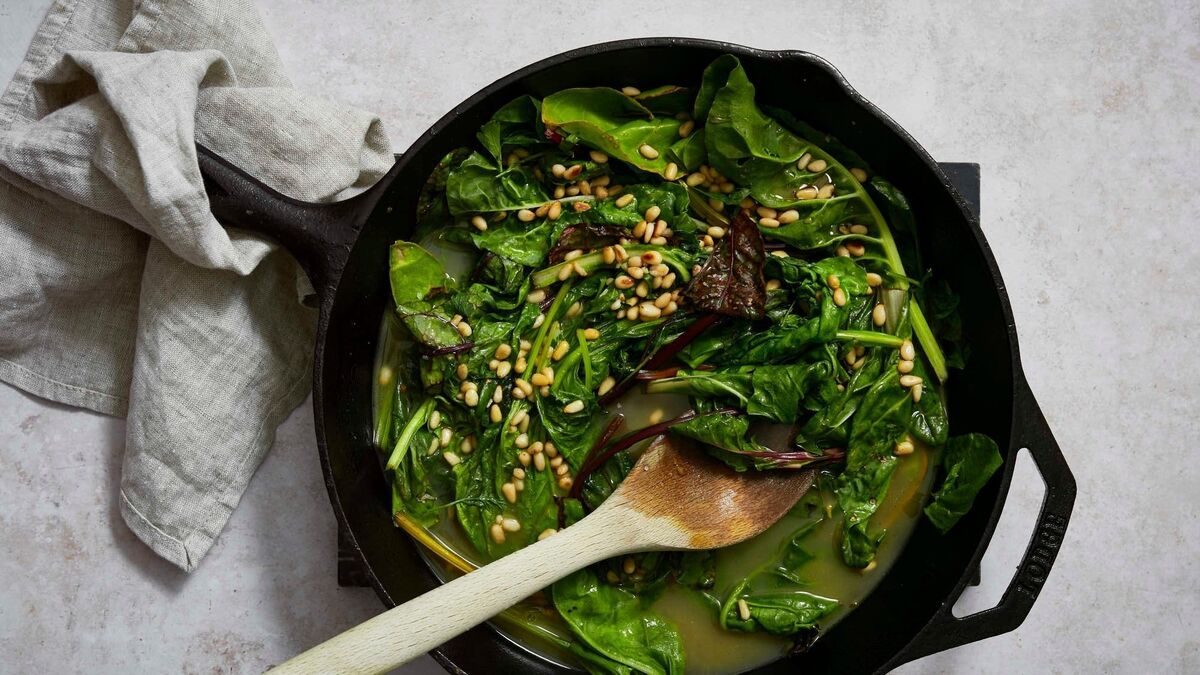
Wilted chard with pine nuts
Tender young chard contribute a soft texture and vivid colour, and combining pine nuts with this hardy vegetable creates a summertime side dish
Servings
2Preparation Time
10 minsCooking Time
10 minsTotal Time
20 minsCourse
SideIngredients
large bunch of tender young chard stalks, roughly chopped or torn
olive oil
1 large shallot, sliced very thinly
2 garlic cloves, sliced very thinly
2 tsp red wine vinegar
handful pine nuts
sea salt
black pepper
Method
Toast the pine nuts on a dry pan over medium heat until lightly toasted and browned. Be careful not to burn them. Set aside.
Heat a little oil in a large frying pan or cast-iron skillet over a medium high heat. Add the shallot and cook for a minute or two before adding the garlic.
Add the chard after a minute or two along with some sea salt and freshly cracked black pepper. Cook the chard, tossing them around the pan, mixing them well into the garlic and shallot. The chard will release a bit of liquid, which is fine.
Add the red wine vinegar and cook down for another 3-4 minutes so that you have well-wilted leaves, softened stems and a little liquid left in the pan. Check for seasoning and then sprinkle over the toasted pine nuts.
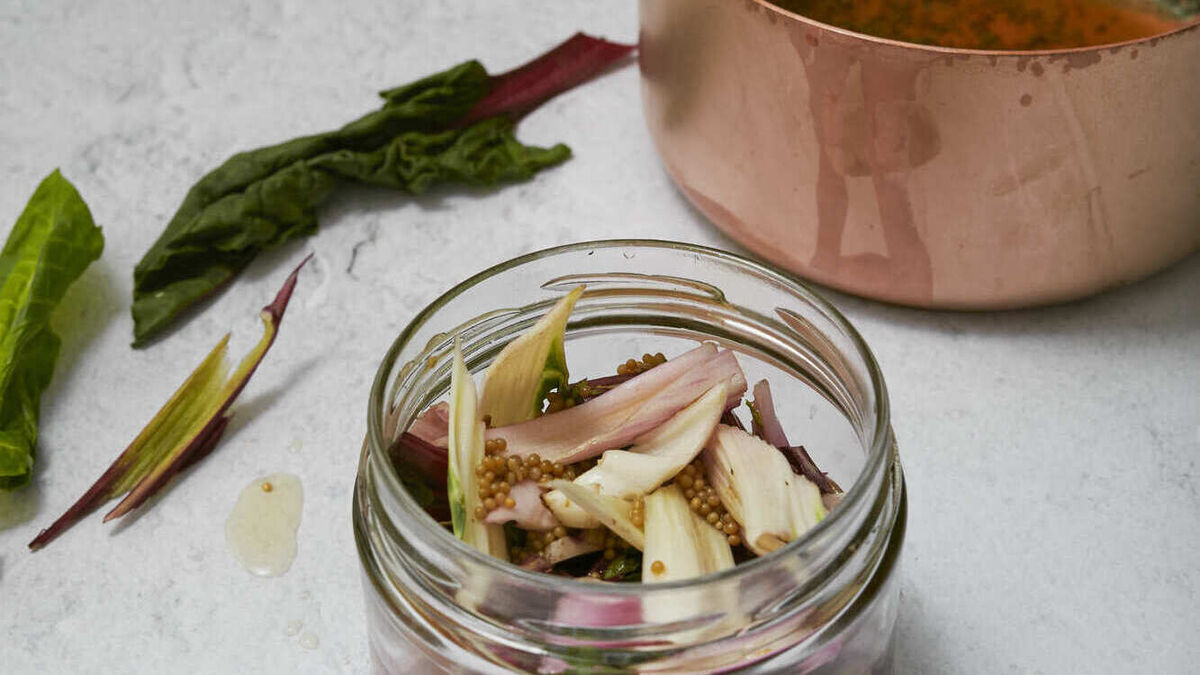
Pickled chard stems
Pickling chard stems softens this hardy vegetable gives them such a deliciously deep flavour – perfect with cheese and crackers
Servings
2Preparation Time
10 minsCooking Time
10 minsTotal Time
20 minsCourse
SideIngredients
1 large bunch rainbow chard stems, good mix of colours, leaves removed
1 garlic clove, peeled and sliced thinly
1 tsp mustard seeds
½ tsp fennel seeds
500m white wine vinegar
250ml water
65g caster sugar
3 tbsp good sea salt
Method
Trim the chard stems of any bits of leaves and put them in a medium sterilised kilner jar (around 1-2 litres).
Add the sliced garlic to the jar.
Toast the seeds by tossing them on a hot frying pan over medium heat until fragrant, be careful not to let any of the seeds burn. Set aside to cool.
In a small saucepan, heat the vinegar, water, sugar and salt until just about boiled (make sure the sugar is totally dissolved) and then remove from the heat and leave to cool a little.
Pour the brine into the jars, add the seeds and cover it. Leave on the countertop until cooled to room temperature. Make sure all the stems are completely submerged.
Place in the fridge. These are best eaten within a week of opening but should keep longer.