Currabinny Cooks: Three recipes for bok choy
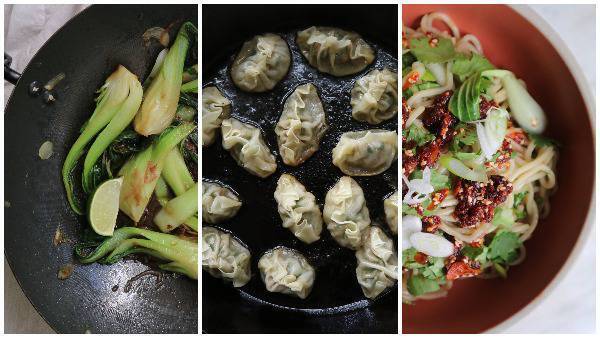
This trio of Asian dishes offers everything we want from a weekend feast.

Bok choy is probably the most recognisable of the East Asian vegetables that you can find in Ireland.
There are many which are available that you might not have heard of such as choy sum, lotus root, gai lan, bitter melon and tatsoi. These are all worth exploring but bok choy is definitely a good place to start. Bok choy is a staple of what is often known as here as ‘Asian greens’. The Asian greens are almost all a closely related bunch with similar names but bok choy stands out for its substantial, crunchy and juicy stems and mild flavoured leafy ends. Bok choy originated in China and is a member of the brassica family, closely related to other brassicas like cabbage and broccoli. Unlike a cabbage, bok choy looks more like exotic celery with thick pale stalks and dark green leaves.
The general term embraces several growth stages of the same plant: seedling, baby, mature, and flowering. Confusion arises because each stage may look like a distinctly different vegetable. The term also designates scores of varieties of bok choy, the bulk of which fall into these general groups: large white-stemmed (the most common type), dwarf white-stemmed, and green stemmed. What is often referred to as ‘baby bok choy’ can either be the larger varieties picked before becoming fully mature or dwarf varieties.
When cooking with bok choy the texture can be as crunchy as that of celery if cooking times are short, but if you leave them in the pan a little longer, they develop a creamy texture that is unique among greens. Bok choy can also be sliced very thinly and eaten raw.
You can usually find bok choy in your local supermarket but if you live near a good Asian market then there is usually a good range of varieties. Almost all will have been imported, although you can in fact grow it here in Ireland and there are a couple of good organic producers.
Packed with goodness bok choy loves the flavour of garlic, ginger, chilli and honey. It is a vegetable which goes so well with lamb, beef, pork, poultry and fish not forgetting it is also great in broths like ramen.
Bok choy stems are juicy and taste faintly of cabbage, yet they are sweet and sharp whilst the flavour of the leaves are more gentle.
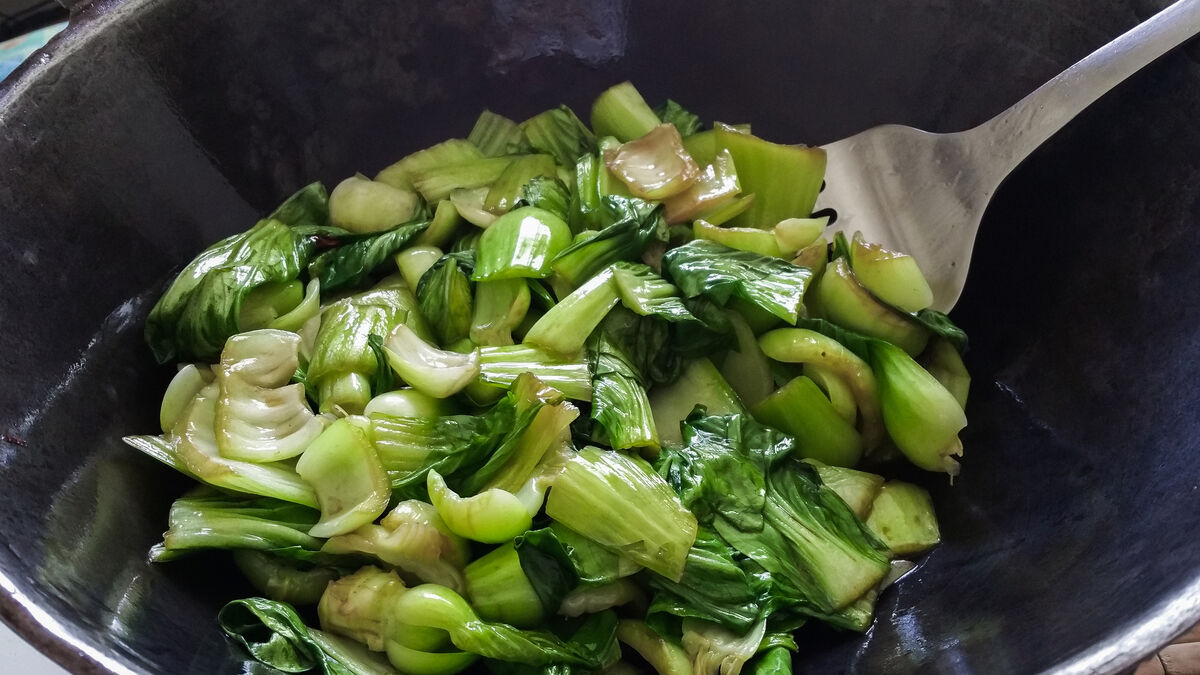
Wok-fried Bok Choy
The perfect starter recipe to experiment with bok choy (pak choi): this supper celebrates the juicy, sharp and sweet flavours of this popular East Asian vegetable
Servings
2Preparation Time
10 minsCooking Time
5 minsTotal Time
15 minsCourse
MainCuisine
East AsianIngredients
2 large or 4 small bok choy, cut in half or quarters
vegetable oil
1 large shallot, sliced thinly
½ thumb of ginger, peeled and cut into thin matchsticks
2 garlic cloves, sliced thinly
3 tbsp soy sauce
1 lime, quartered
small handful of fresh coriander, chopped
Method
Pour some vegetable oil into a large wok on medium high heat.
Add the ginger and shallot to the pan and leave simmer for around two minutes before adding the ginger.
Simmer for another minute or two in the hot oil, just enough so you can start to smell the aroma from the garlic.
Add the bok choy to the pan and stir into the other ingredients and hot oil. Leave the leaves wilt as you toss the ingredients around the pan for around four minutes. You want the stems to become a little tender but still retaining a good crunch.
Add the soy sauce and let cook for another 30 seconds before taking off the heat.
Serve as a side dish or with some sticky rice or noodles with the lime wedges and coriander to garnish.
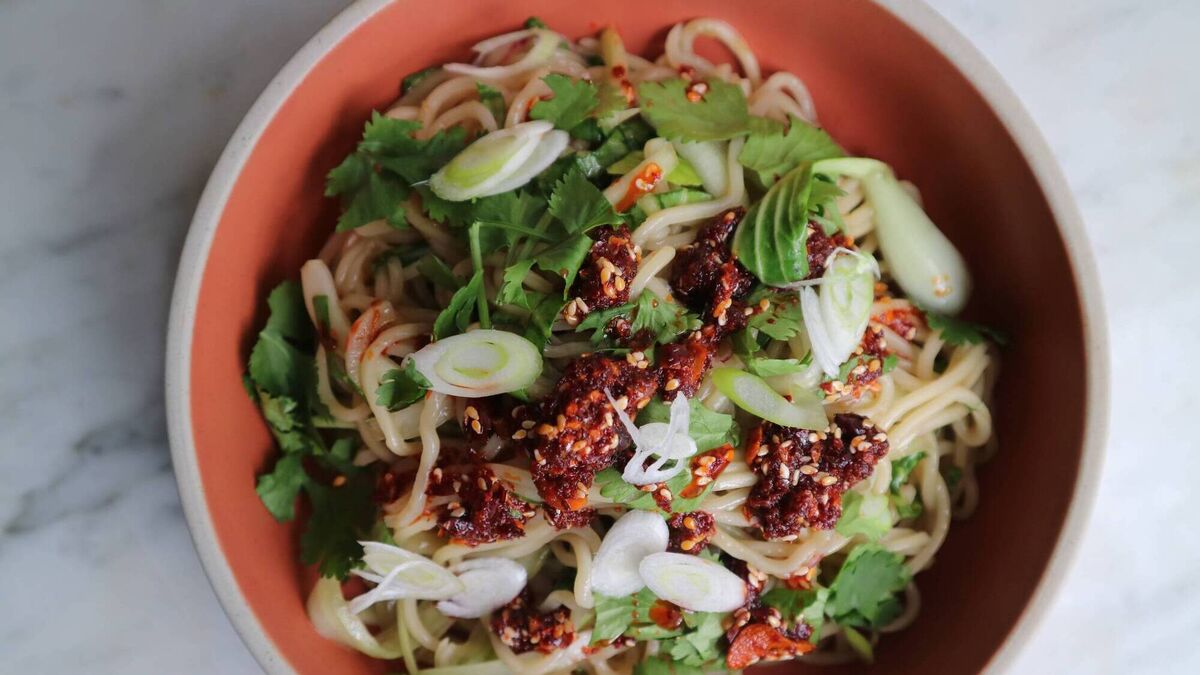
Bok choy noodle salad
Bok choy (pak choi) stems offer a juicy crunch that balances the flavoursome noodles to create a lunchtime delight
Servings
2Preparation Time
15 minsCooking Time
10 minsTotal Time
25 minsCourse
StarterCuisine
East AsianIngredients
200g noodles, cooked and refreshed in cold water
thumb of ginger, peeled and chopped
2 limes
1 tbsp soy sauce
4 spring onions, sliced finely
3-4 bok choy, sliced very finely, leaves and stems
handful of fresh coriander, roughly chopped
2 heaped tbsp peanut rayu
Method
Using a pestle and mortar, bash the ginger into a pulp and then muddle in the soy sauce along with the juice and zest of one lime.
Add 2 tablespoons of vegetable oil and whisk it all together to make a dressing.
In a large mixing bowl, mix together the noodles, spring onion and thinly shredded bok choy.
Pour the sauce into the bowl and mix well through the salad, again using your hands.
Tip out into a large serving bowl and squeeze the juice of the remaining lime over along with a few dollops of peanut rayu and garnish with coriander.
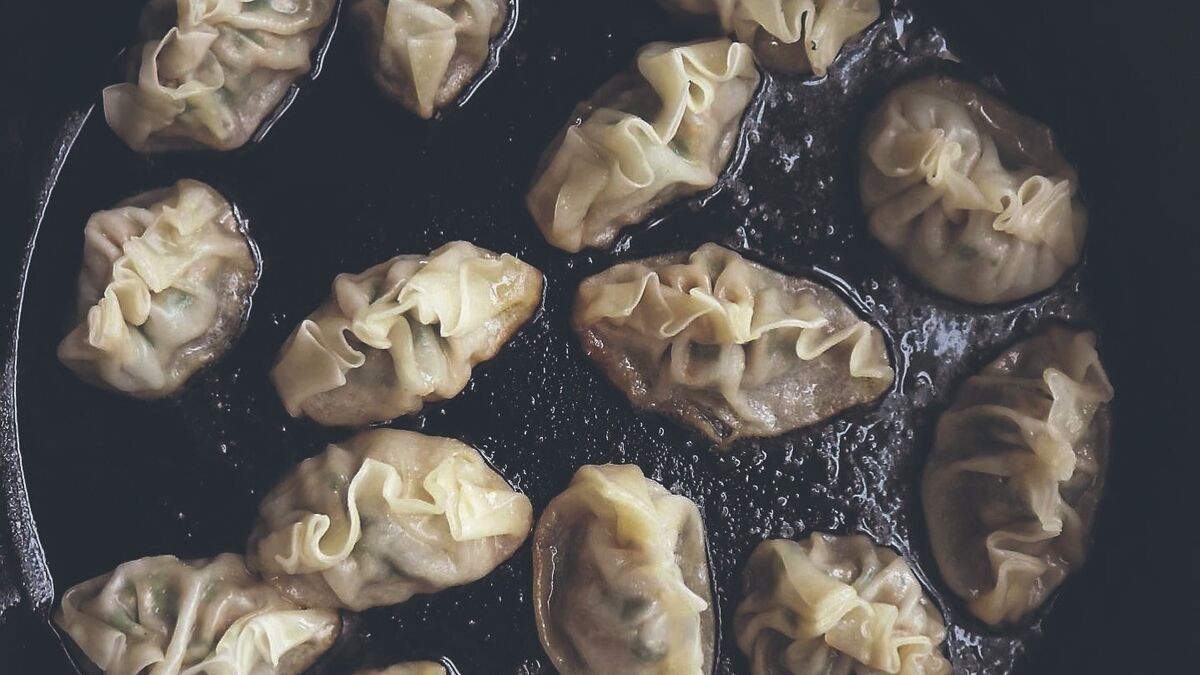
Pork and bok choy dumplings
This recipe combines the sharp flavour of bok choy (pak choi) and tender pork to yield 50 dumplings — perfect for getting the kids involved in the kitchen
Servings
4Preparation Time
15 minsCooking Time
15 minsTotal Time
30 minsCourse
SideCuisine
East AsianIngredients
500g minced pork
1kg bok choy, finely shredded
150ml Chinese cooking wine
100ml vegetable oil
2 tbsp sesame oil
½ tbsp salt
2 tbsp soy sauce
fresh chives, finely chopped
2 packets of Chinese round dumpling wrappers, thawed
Method
In a large mixing bowl, mix together the pork, wine, soy sauce, salt, bok choy, sesame oil and chives.
Make space in your kitchen for preparing the dumplings. You will need a small bowl of water, your dumpling wrappers thawed and the bowl with the filling at hand.
To make a dumpling, place a teaspoon and a half of the pork mixture in the middle of a wrapper.
Wet your finger and trace around the outside of dumpling wrapper. Fold over and pinch to close. Pinch the edges into a tight fan-like arrangement so you have a tight seal. Arrange the dumplings on a tray and cook in batches.
Heat the vegetable oil in a large frying pan over medium high heat. Add enough dumplings to fill but not crowd the pan.
Cook for around two minutes until the bottoms turn a nice golden brown.
Pour in a thin layer of water, turn the heat to a medium low and then place a lid on the frying pan, letting dumplings steam until most of the water has evaporated.
Take the lid off and let the water completely evaporate out of the pan. The dumplings should be ready.
Remove from the pan using a spatula before the ends stick to the pan. Repeat this process until all the dumplings have been cooked.