Fallen trees the responsibility of landowners in most cases
Did you know that it is generally illegal to cut hedges in Ireland from February 28 until September 1?
Did you know you generally need a tree felling licence, before you can cut down a tree more than 10 years old?
The owner and/or occupier of land upon which trees stand is generally liable for any loss or damage resulting from falling trees (while the incidence of accidents is low, falling branches have resulted in deaths, and caused serious road crashes). Last Christmas, a woman was killed in Mullingar, Co Westmeath by a falling tree.
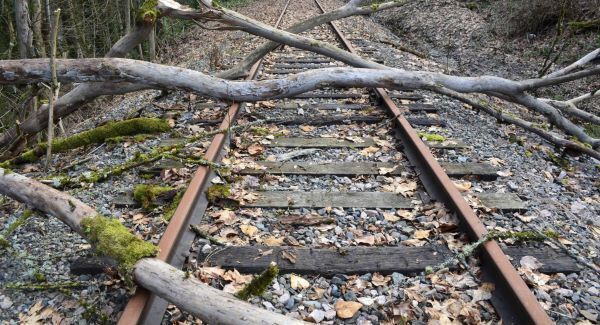
Cork County Council had to ask landowners to check their properties for damaged trees, after many trees fell during Storm Darwin in February.
The matter is confusing, because if a tree on your land falls when it is not stormy, you are usually liable.
Tree damage during a storm is usually considered a “natural” event that is nobody’s fault. Unless a tree or limb falls on a sunny day, and damages property or causes injury; then you can be held responsible.
Each case is unique and handled on its own merits. Liability can depend on the condition of the tree before it fell. If the tree was dead or dying, the landowner where the tree was located could be held negligent for not properly maintaining the tree.
Anyone with responsibility for land or trees should put in place procedures to identify and manage the risk. If there is any doubt about the status or ownership of land containing trees, landowners are strongly advised to clarify the situation urgently.
In the meantime, it would be sensible to assume ownership and responsibility, and take action as necessary to minimise potential future liabilities. Occupiers and anyone with responsibility for trees, for example a tenant, must take reasonable steps to manage and reduce risk.
Where a contractor is used, it is essential to ensure any person carrying out work is competent and has adequate public liability insurance that covers the contractor and their employer (the occupier), against any unforeseen consequence of the work. If the contractor has employees, it is important to ensure he or she has adequate employer’s liability in place. In the event of an accident, the occupier may be held liable if the contractor does not have suitable or sufficient insurance.
Padraig Teahan of RT Hedge and Tree Cutting Limited advises: “It’s important for farmers to ensure any dangerous trees are taken down, to prevent an incident. The best advice is to keep hedges and trees on the farmland managed on a regular basis by qualified and fully insured contractors, who know how to carry out this work safely.”
Local authorities and the ESB have certain powers to deal with dangerous trees that overhang roads. They can give notice to the owner requiring them to cut or prune the tree. If the owner fails to comply, they have authority to carry out the work and charge the owner.
It is wise to take note of the trees where your land abuts a public road. Under the Roads Act, 1993, landowners and occupiers of land are obliged to take all reasonable care to ensure the trees, ditches, hedges and other vegetation on their land are not, or could not become a danger to people using or working on a public road, including pedestrians and cyclists.
Examples of hazards might be dead or dying trees, ditches or hedges interfering with traffic, blocking footpaths, obscuring road signs or obscuring a view of the road ahead. You are required to fell, cut, log, trim or remove such trees, ditches and hedges. Adequate sign posting should be provided, and the council and the gardaí notified, before works start.
Hedgecutting operations, as far as possible, should only be undertaken outside the critical nesting period of the March 1 to August 31.
The Forestry Act, 1946 contains the main provisions for the felling of trees. Under this Act, it is an offence for anyone to uproot or cut down any tree unless the owner has obtained permission in the form of a felling licence from the forestry service. An application for a licence is made on the felling notice available from any garda station.
The gardaí will then refer the matter to the Department of Agriculture, Food and the Marine. On receipt of a completed felling notice, an order prohibiting the felling of the trees is automatically issued. The tree is then protected until a licence is issued.
There are some exceptions where a felling licence is not required, such as trees standing within 100ft of a building other than a wall or temporary structure, or a tree certified by the local authority as dangerous to road traffic on account of age or condition.