Kay O'Sullivan: Sometimes doing less can help nature more
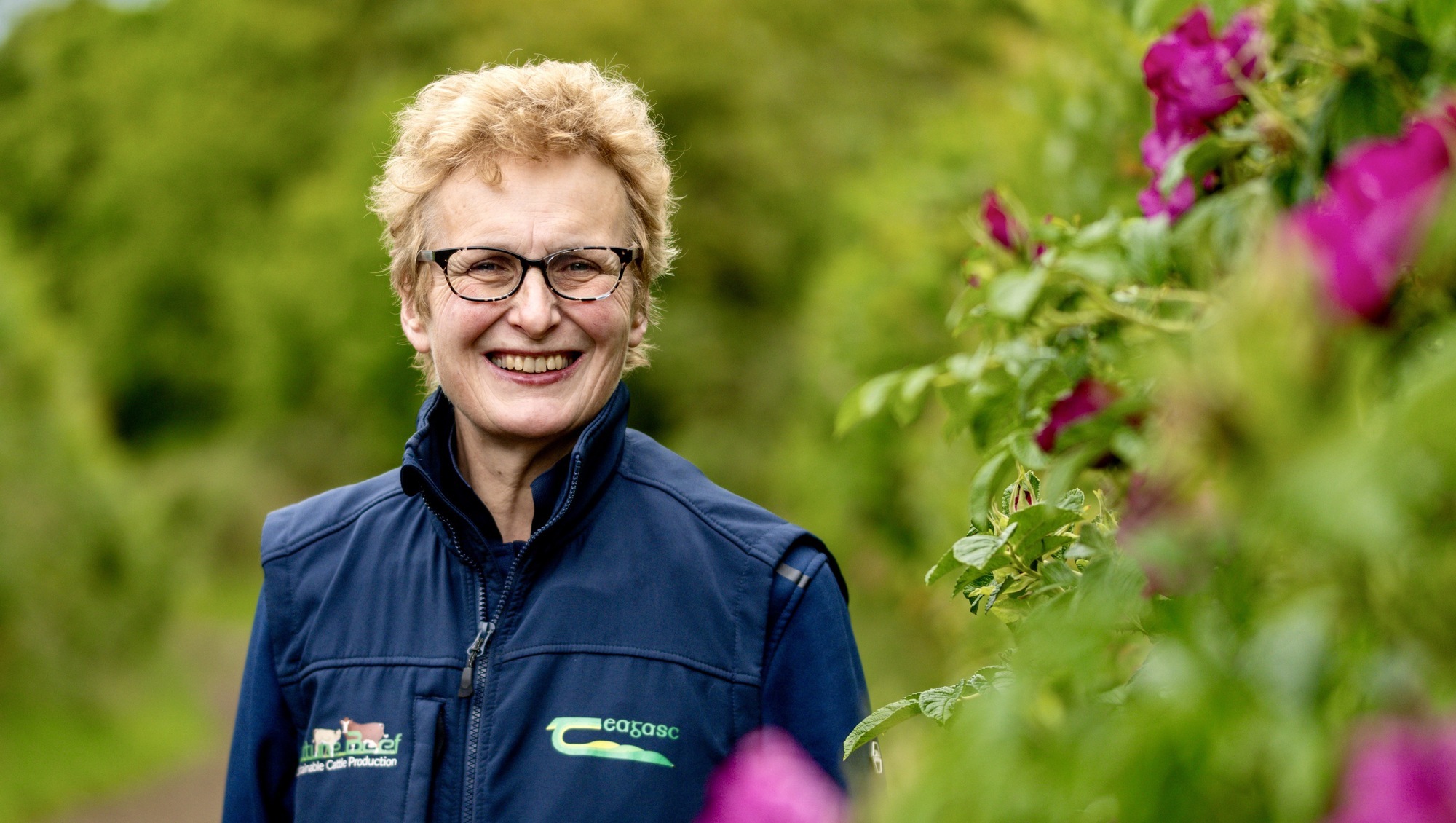
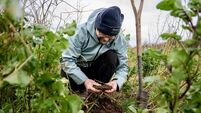
Kay O’ Sullivan beside the flowering hedgerows on Glynn Organic Farm near Mallow. They have been planted to purposefully encourage pollinators and birdlife to the farm. Picture: Chani Anderson
At this time of the year, I pay particular attention to the hedgerows around the farm, especially those not cut in the last four to five years.
I will give these hedges a very light trim along the sides, allowing them to grow upwards. This is important to give nature a chance by allowing hedges to mature.
This promotes habitats, corridors for wildlife, food supply, nests for the birds, shelter for animals and carbon storage.
Sometimes doing less can be just as important when it comes to protecting nature.
I am part of Pollinators Ireland, which I have been involved with since 2022. As part of the programme, a surveyor comes onto my farm every month between April and August to record pollinator activity on the farm.
There were 98 pollinators found in pan traps on my farm, together with four red-listed species, recorded on the farm between 2022 and 2025.
It is always very interesting to see what has been found on the farm, and I am delighted with the results.
Earlier this year, under the Farming for Water EIP, I planted a 70m willow bed with 70 willows alongside a silt trap.
Read More
In a few weeks’ time, I will be pruning back the willow and planting the cuttings on the bank of the willow bed. Willow is a very hardy tree and will grow in any condition.
During a recent check of my linear riparian zone under the EIP, where I planted oak, silver birch and hazel, I found two of the trees have been damaged by recent storms. I will plant two replacement trees.
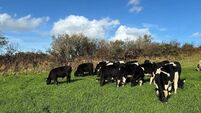
There is still plenty of grass on the farm. The cows, calves and sheep are still continuing to graze paddocks.
From now on, once a paddock has been grazed out, it will be closed for the winter and will not be grazed until next spring.
Based on my recent grass walk, I have a farm cover of 788kg/LU. A total of 33 grass walks have been completed on the farm this year, with one more closing grass walk to be completed towards the end of the month.
The calves will be weaned shortly. I apply a nose paddle to the calves. They are then left back with the cows for two weeks before being separated.
I find this a completely stress-free weaning system on both cows and calves. After the two weeks, they are weighed, and they get a bolus.
I gradually introduced them to the Redstart, which I strip graze. They have access to a dry lie-back, clean water and multi-species and red clover silage.
The October bank holiday weekend, I attended the Farming for Nature Awards held in the Burren as part of the Winterage Festival.
It was an honour to be nominated and to be named as one of 14 new Farming for Nature ambassadors for 2026.
Farm walks took place across the weekend as part of the Burren Winterage weekend. On the Saturday in Fanore, I took part in the annual cattle drive, where hundreds of people join a local farming family in herding their cattle to their winterage pastures in the Burren.
The weather was not in our favour, but a very enjoyable event just the same.
October brought some interesting opportunities away from the farm.
I received an invitation from the Department of Agriculture to attend the EU Organic Conference held in Cork over two days in October. It brought together 250 people from farmers, policy makers and researchers. The theme of the congress was 'Organics – A Strategic Investment in Europe’s Resilience'.
Another very special invitation took me to the Institute of International and European Affairs in Dublin, where I was invited to join Mary Robinson, former president of Ireland, for a private lunch.
The lunch preceded a keynote address by Mary Robinson to mark the Year of the International Woman Farmer.
After what has been an exceptionally busy 2026, it is now time for some downtime, with the holidays postponed until this month.
- Kay O’Sullivan is an organic farmer from Mourneabbey and a participant in the Teagasc Signpost Future Beef Programme

BLACK FRIDAY
Already a subscriber? Sign in