EPA warns of nitrogen levels increasing for a second year in a row

EPA's Early Insights report indicate an increase of nitrogen levels in the first six months of the year.
Initial data show that nitrogen levels have increased within the first six months of the year for the second consecutive year.
The Environmental Protection Agency (EPA) recently published its for nitrogen concentrations in monitored rivers, which revealed that in the first six months of the year, nitrogen levels have increased by 4.3% compared to the same period in 2025.
Commenting on the report, director of the EPA's office of evidence and assessment, Roni Hawe, said: “These results will be disappointing for many, given the greater focus in recent years on reducing nitrogen losses to water and the work being undertaken by farmers, industry and other stakeholders to address the issue.”
The report provides an early indication of national trends in river nitrogen levels based on the combined data from 20 monitoring sites across Ireland's major river catchments.
Each catchment has its own agronomic, geological and meteorological characteristics, which influence how nitrogen levels respond at a local scale.
Read More
Nitrogen levels fluctuate year on year due to a number of factors, including source loading, agricultural land management and weather patterns.
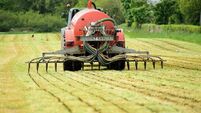
Source loading includes any source of organic or chemical sources of nitrogen from the environment, including livestock and fertiliser.
A hydrogeological lag, reflecting the time required for nitrogen to move through soils and groundwater, means that land management and weather patterns in a given year contribute to river nitrogen losses observed in subsequent years.
The EPA has identified key factors that have influenced nitrogen concentrations between 2024 and 2026, including fertiliser sales, national herd figures, and rainfall.
Fertiliser nitrogen sales reportedly increased by 10.6% in 2024 compared to 2023 figures.
This was followed by a further 12.5% increase in 2025.
Early figures issued by the department suggest another increase in fertiliser sales by 7.3% in the six months up to the end of March this year.
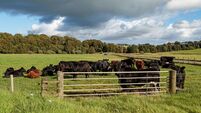
The EPA highlighted that the overall national herd has reduced by 3.3%, with a further 0.5% reduction in 2025, according to Central Statistics Office (CSO) data, which is linked to a decrease in source loading.
The EPA reported above-average rainfall in 2025, with 2024 levels being considered average.
The first half of 2026 was wetter than normal, with five of the six months recording above-average rainfall.
River flows were also generally above the long-term normal range for most of the period, particularly from February to April and again in June.
May was the only month that was below normal for both rainfall and river flows.
The organisation suggests that nitrogen rates recorded in waterways were increased due to high levels of rainfall coupled with increases in nitrogen source loading between 2024 and 2026.
The EPA warned that while weather can influence the movement of nitrogen through catchments, sustainable agricultural systems need to account for such variability through appropriate management measures that minimise nutrient losses and protect water quality.
Ms Hawe said: “While there has been growing engagement and a stronger emphasis on targeted measures, these findings highlight that more work is needed to translate actions on the ground into improvements in water quality.
There is also a need for stronger joining up of policy and practice, recognising that measures to improve water quality can deliver wider benefits for agriculture, biodiversity and climate.”
is available to read on the EPA website.