Talking Timber event guides forest owners on how to enhance their woodlands
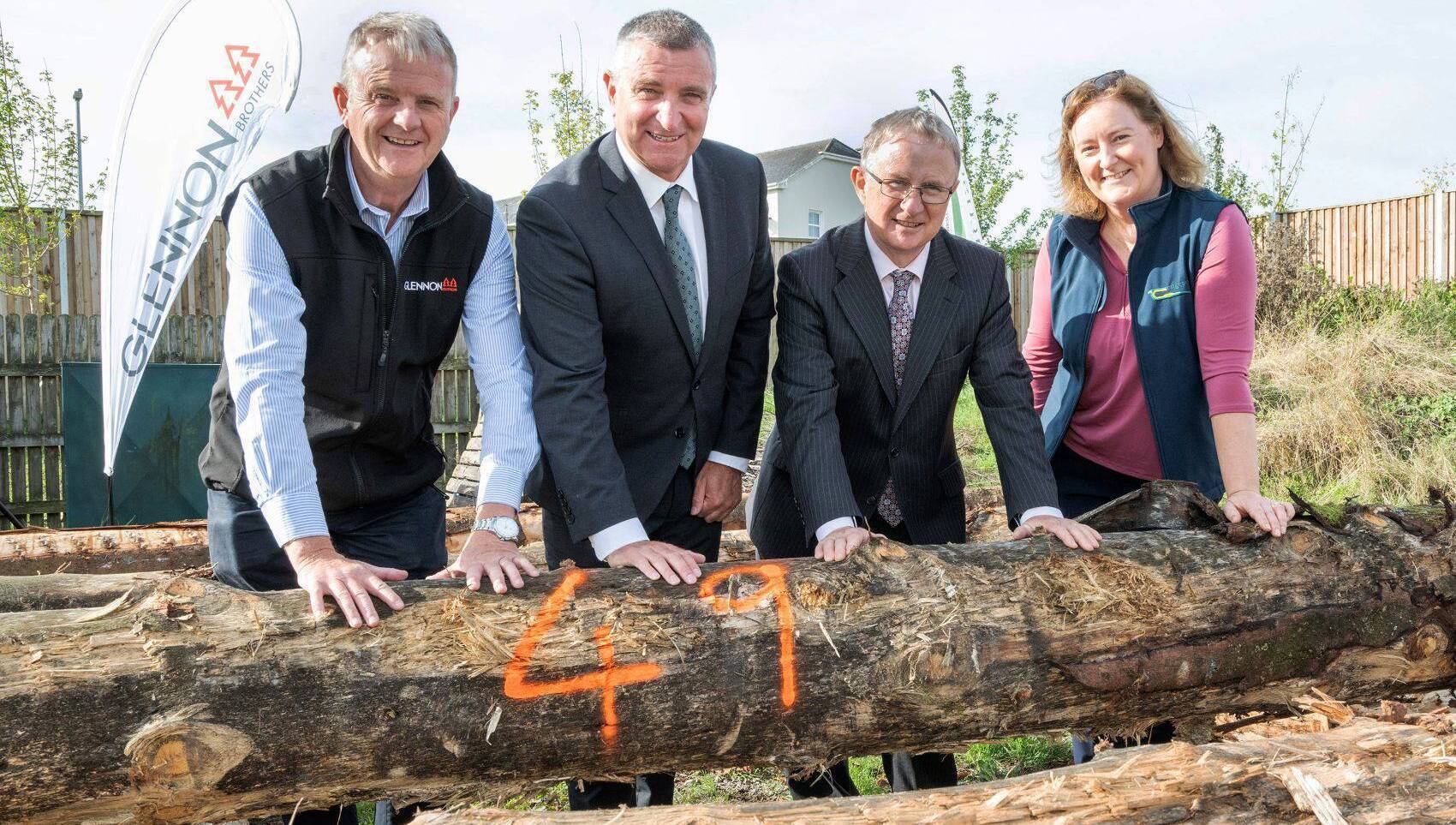
(Left to right): Dermot Fenton of Glennon Brothers; Niall Collins, minister of state at the Department of Agriculture, Food and the Marine with special responsibility for forestry, farm safety and horticulture; Professor Frank O'Mara, Teagasc director and Frances McHugh, Teagasc forestry communications specialist at the Teagasc Talking Timber Event on ‘Sustainably increasing the value of your forest‘ in Charleville, Co Cork. Picture: O'Gorman Photography
Forest owners preparing for thinning, timber harvesting or clear felling are being encouraged to plan and take a whole-forest approach to maximising the value of their land.
Organised by Teagasc in conjunction with the Department of Agriculture and Forest Industry Ireland (FII) the event was held in the Charleville Park Hotel in Co Cork on September 1. It brought together forest owners, researchers, timber processors, forest owner representatives, service providers and taxation expertise.
Under the theme “Sustainably Increasing the Value of Your Forest,” the programme focused on how good silviculture, timber quality, forest certification, available supports, market developments and financial planning can help enhance the value of privately owned forests.
Talking Timber 2026 also celebrated a milestone of 15 years of the event and represents one of a wide range of Teagasc research-based advisory supports available to all forest owners.
The minister of state with responsibility for forestry, Niall Collins, delivered a keynote address and highlighted his department's ongoing commitment and the supports available.
Read More
Minister Collins said: “It is great to have the opportunity to meet forest owners, foresters, and the many organisations working across the forestry sector, hear from them, and update them on recent developments and supports available from my department.
“I am also very pleased to launch Teagasc’s new reforestation factsheet today, which provides practical information for forest owners as they move from harvesting to replanting their forest.”
An outdoor timber quality presentation by Seán Kelly of Glennon Brothers Sawmills, representing Forest Industries Ireland, provided owners with a practical insight into the timber characteristics sought by processors and how forest management decisions can influence timber quality and value at harvest.
Teagasc forestry advisor and organiser of the event, John Casey, said: “Forest value is created over many years, not simply at the point of sale. Timely assessment and interventions are important for all forests.”
Teagasc forestry researcher, Niall Farrelly, examined how site conditions, species choice and timely management influence productivity, timber quality and resilience. His presentation emphasised the importance of the “right tree, right site, right management” approach.
The event showed attendees that on productive, stable sites, appropriate thinning can redirect growth toward better-quality trees, increasing the potential for higher-value timber. More exposed, less stable forests require robust consideration of wind risk factors before a decision is made on management interventions.
Irish Forest Owners, Kathleen Lucey covered practical routes to forest certification and the department’s Forest iPLAN scheme.
Certification is becoming increasingly important as private timber supplies expand, and timber processors seek independently verified, sustainably managed timber. Group certification can offer private owners a practical route by sharing audit requirements and providing centralised support.
Department support for owners approaching thinning and clear felling also featured strongly at the event, as outlined by department forestry inspector, Ciaran Nugent.
Details of available support measures, including the Woodland Improvement Scheme, Forest Road Scheme and Climate Resilient Reforestation (Pilot) Scheme, together with decision support tools were presented.
Member of the Timber in Construction Steering Group David Gil-Moreno highlighted opportunities to increase the use of home-grown timber in higher-value, long-lived construction products. Expansion within these markets will help strengthen domestic demand and provide additional outlets for Ireland’s growing private timber supply.
Tax consultant Declan McEvoy addressed the taxation and financial considerations around timber income and the transfer of forest assets. He highlighted the importance of professional advice when forest owners are approaching timber sales.
The overall message from Talking Timber 2026 informed forest owners that the best financial outcome from a forest begins well before harvesting starts.
Measuring the crop, managing for timber quality, planning access and licences, considering certification and grants, preparing for market, efficient tax planning and planning for reforestation can all contribute to increasing the long-term value of the forest. For more information, visit the Teagasc website.