Succession: Older farmers need an exit and young farmers need a chance
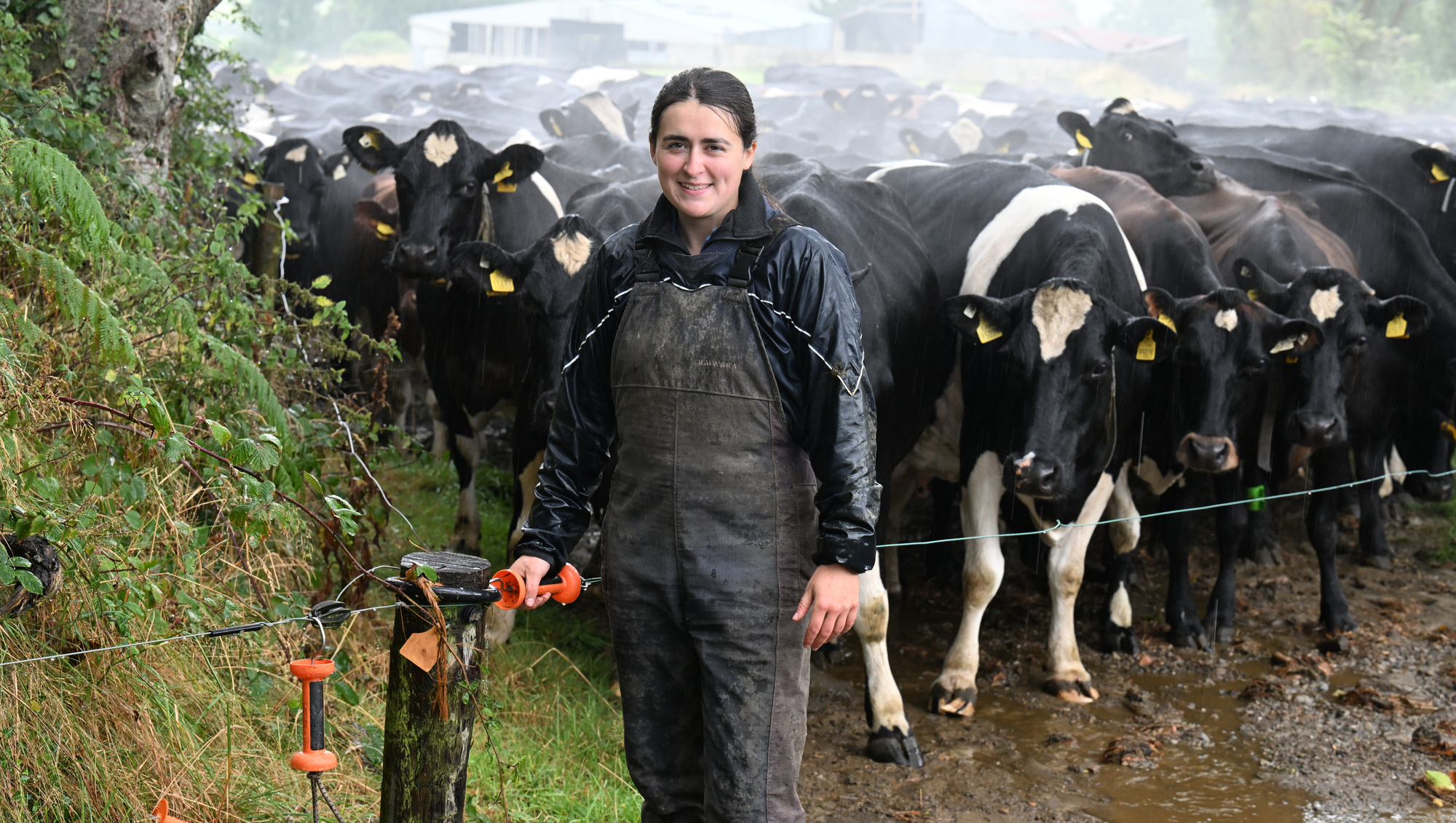
Jane Stocker who works on a dairy farm in Clonakilty, Co Cork. Picture: Larry Cummins
For generations, succession on Irish farms followed a familiar pattern: a son stayed at home, learned the trade, and eventually took over the family farm.
Today, however, the picture is far more complicated.
An ageing farming population, rising land values, changing family structures and shifting attitudes towards careers and lifestyles are forcing farm families to rethink how they plan for the future. While succession remains one of the most important issues facing Irish agriculture, it is also one of the most difficult topics for families to discuss.
Jane Stocker, a 24-year-old farmer, does not come from farming stock but has fallen in love with the work.
Read More
Currently, she works alongside Ben Ridgeway and James Healy, helping manage Mr Ridgeway’s 240 Jersey cross herd.
"Dairy farming wasn't just something I tried… It's more of a vocation really than anything. There's nothing else I'd rather be at than getting up in the morning and milking cows," she told the .
Ms Stocker and her partner Connor O’Farrell want to start farming and even have high EBI stock to bring with them.
"All we want really is our own herd of cows," she said.
Still, with no family farm to inherit between them, they have begun to look into partnerships or collaborative farming to try to get into the sector and the work they adore.
Both Ms Stocker and Mr O’Farrell are actively looking for an opportunity through Carbery’s generation renewal officer Ellen Hurley, hoping to be paired with a farmer that suits them.
While many farm families worry about who will eventually take over their land, people like Ms Stocker highlighted the barrier was not necessarily a willingness to farm but, in fact, the lack of access to the sector.
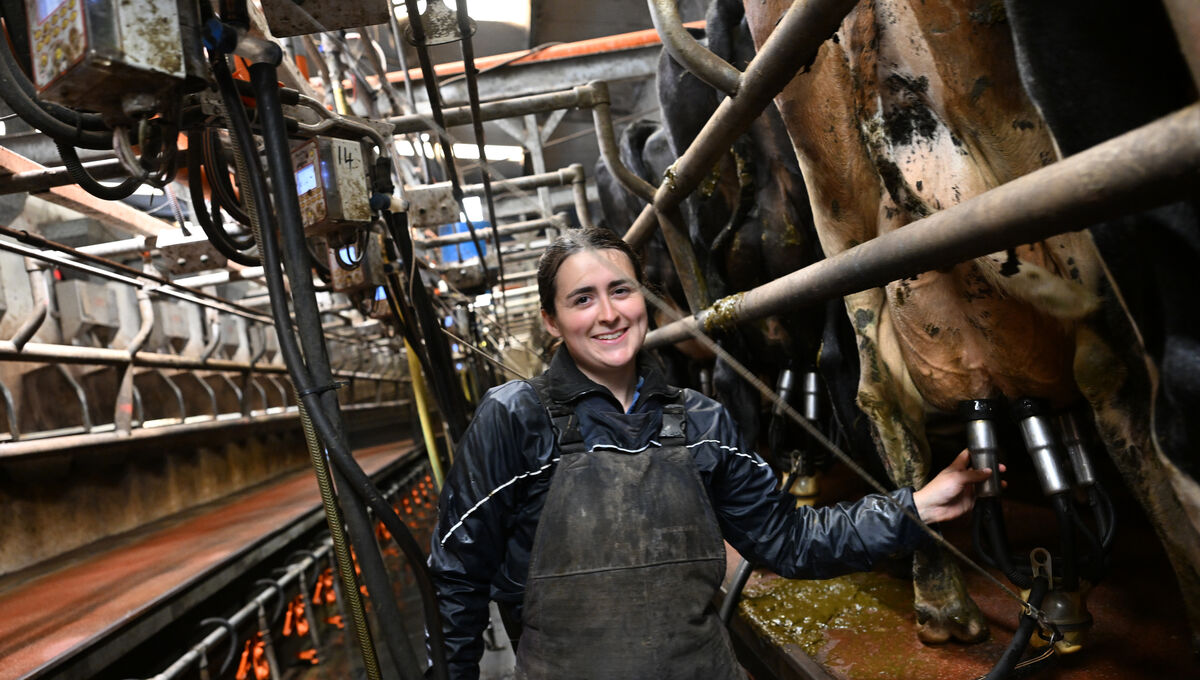
"The access to land is probably the biggest barrier… It is nearly impossible for someone like us to buy a farm," she explained.
Ms Stocker originally studied arts in college before realising it wasn’t for her and pivoted to veterinary nursing.
Alongside her studies, she leaned into her “grá for cows” and began relief milking for farmers and milk recording for Munster Bovine, and was given a chance to build up her farming experience helping local farmer Bertie Bateman in her hometown of Ballygarvan, Co Cork.
“I’ve met people who’ve been extremely kind and show you the way,” she explained, grateful for the opportunities she received to explore her passion for farming.
From there, she moved out to West Cork and now works alongside Mr Ridgeway, and has also completed an AI course and is currently working to complete her Green Certificate.
Looking to build their future around farming, the couple are now searching for a pathway into an industry they believe still has room for a new generation.
Ms Stocker's situation reflects a wider challenge across Irish agriculture. A recent Carbery census highlighted the scale of the challenge, finding 54% of participating farmers had not identified a successor.
For generation renewal officer Ms Hurley, that statistic suggests many families are postponing conversations that ultimately cannot be avoided.
"It is clear that it's something that farmers are probably trying to avoid for as long as they can," she said.
Ms Hurley said the traditional model of succession had changed significantly. While farms were once typically passed from father to son, younger generations now have far more educational and career options available to them.
"It was always nearly the oldest son who basically took over the farm… That's no longer the case," she said.
She said there is also a growing misconception that young people don’t want to farm.
Increasingly, farmers are exploring alternatives including registered farm partnerships, share farming, and long-term leasing arrangements, which allow older farmers to gradually step back while creating opportunities for younger entrants.
A farm partnership sees two or more people jointly operate a farm, sharing responsibilities, profits and decision-making, allowing for the option of gradual transfer of responsibility.
Share farming involves a landowner and farmer operating separate aspects of the business on the same farm, but sharing costs, responsibilities and profits.
Under a share-farming arrangement, a landowner and a younger farmer share responsibility for operating a farm. Typically, the landowner provides the land and infrastructure while the share farmer contributes labour, livestock and day-to-day management, with costs and profits divided between both parties.
Ms Hurley is particularly interested in this form of collaborative farming as there has been success with this model in other countries like New Zealand. It lowers start-up costs, reduces financial risk and gives opportunity to build and expand for younger farmers, while allowing older farmers space to remain involved, not have to completely step away and still facilitate knowledge transfer.
Long-term leasing occurs when a landowner leases a farm to another farmer for an extended period, with the new farmer operating the business independently and the landowner receiving income via the lease.
Michael Mack from OFFA, a UK-based network aiming to connect farmers with landowners and encourage collaboration, believes collaborative farming models will become an increasingly important part of the solution across both Ireland and the UK.
Yet despite the focus on land, tax and legal structures, he argues the biggest barriers to succession are often emotional rather than financial.
"The main challenge for those in this situation is around conflict in the family farm," he said.
For older farmers, the challenge can involve relinquishing an identity built over decades.
"If we talk about succession, suddenly you're talking about a farmer losing their identity as a farmer," he said.
For younger farmers, the pressure can be equally intense, with Mr Mack saying it can come with a lot of stress surrounding success.
"They're worried about letting the family down, letting the heritage down."
Mr Mack said family conflict, fear and control were among the factors that can delay succession conversations.
According to Mr Mack, many families are now willing to discuss succession, but progress remains slow.
"People are saying they talk about it in increasing numbers. But it's about 10 years before any action takes place."
He believes the language surrounding succession may even be part of the problem. By focusing on the future of the farm business rather than simply who inherits the assets, families can have broader discussions about retirement, management, finances and long-term sustainability.
"We need to stop talking about succession planning and start talking about long-term strategic planning."
An example of how strategic planning can benefit a farming family is Gavin O'Donoghue's experience.
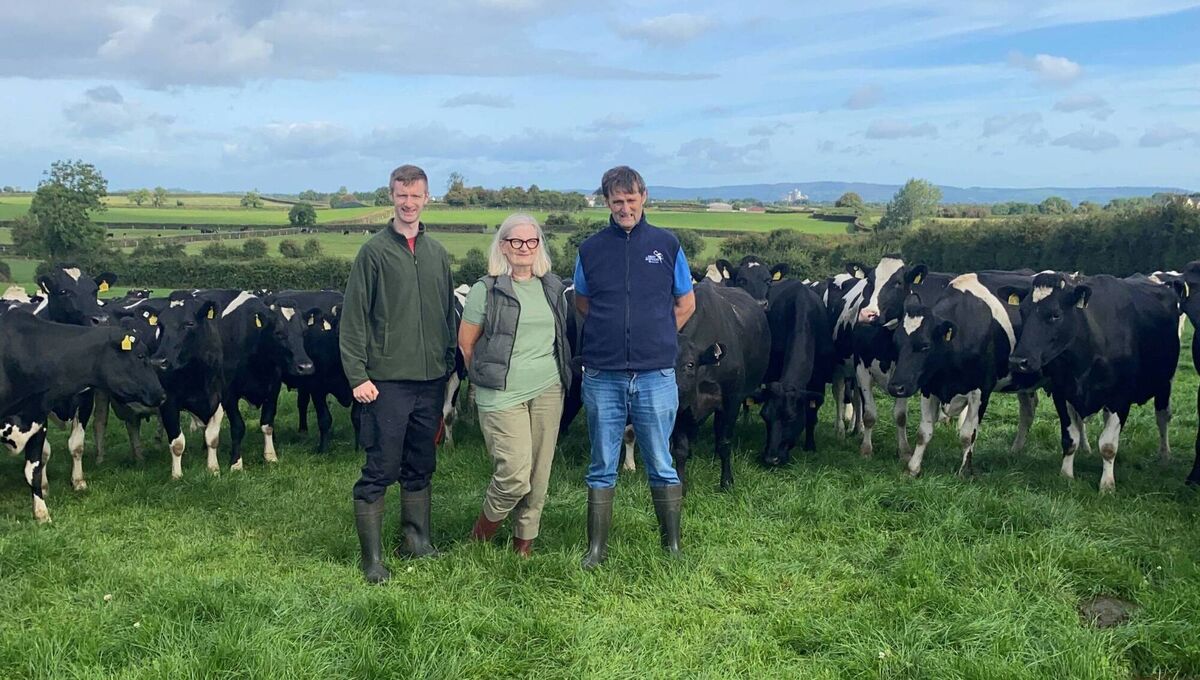
Mr O'Donoghue entered a registered farm partnership with his parents, Kate and Liam O’Donoghue, in 2020. Farming 100 spring-calving cows Holstein Friesiens, he always intended to return home after agricultural college, while his two older brothers pursued careers outside farming.
"Over the years I've been taking on more responsibility," he told the .
Rather than waiting until Liam and Kate O'Donoghue were ready to retire, the family chose a gradual transfer of responsibility through a farm partnership.
The partnership has allowed Mr O’Donoghue to be phased into the management side of the farm and has allowed for equal stakes in decisions, costs and profits of the family’s Holstein dairy herd.
The O’Donoghues’ partnership is not just an inheritance arrangement; it is a functional business structure with a shared workload, decision-making, and time off, and has benefited the family in the long run.
The family did not navigate negotiations alone and got support from their Dairygold adviser and Teagasc adviser to understand the steps that needed to be taken.
"It's definitely a challenge for people starting… We communicate well together. If there was anything wrong, we'd always discuss it and work it out," Mr O’Donoghue explained.
The O’Donoghues represent what successful succession can look like when families plan early, communicate openly and gradually transfer responsibility rather than waiting for a single handover moment.
Discussing the hurdles young farmers who do not have a farm to inherit face, Ms Stocker warned that: "If the only route into dairy farming is inheriting a farm, we're closing the door on a huge number of young people coming into the industry."
Ms Stocker believes more people and organisations need to get involved with facilitating succession and opening up the topic to farmers to try and encourage generational renewal.
She agrees succession facilitation programmes from co-ops are of benefit, as it is more personal, and having a familiar face helping around such a sensitive topic is beneficial, but if the Government got involved to help promote or centralise these types of networks to put farmers in touch with like-minded young people, it “could only benefit all parties involved”.
Highlighting the ambition of young farmers wanting to enter the sector, she said young people looking for partnerships already are showing a drive and want to become custodians of the land.
“It’s all about mutual respect,” Ms Stocker explained.
"It's a step in the door that people like me and Connor need," she said.
The challenge may not be finding people willing to farm, but creating pathways that allow them to do so.