Farmer-led group for organic beef and lamb launched
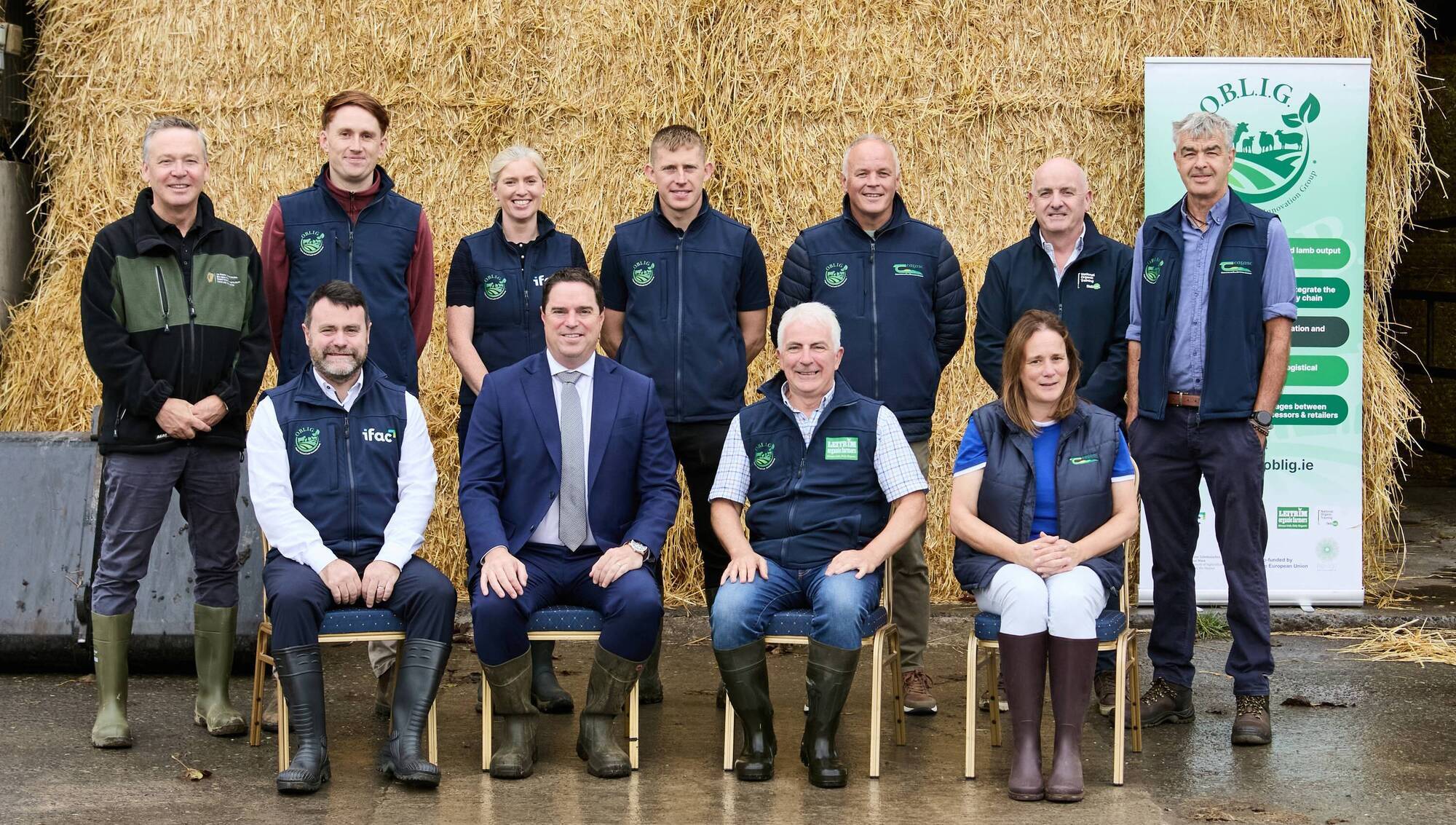
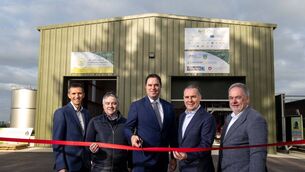
(Front left to right): Karol Kissane, minister Martin Heydon, John Brennan, and Elaine Leavy. (Back left to right): Brian McGee, Julian Pawlowski, Maura O'Callaghan, Declan Pyne, Joe Kelleher, Sean McGloin, and John Noonan at the official launch.
A new farmer-led group with the aim of retaining the value of organic beef and lamb for the farmer and the consumer has been launched.
The Organic Beef and Lamb Innovation Group (OBLIG) was officially launched in August to support organic production and processing chains.
Ireland's organic production is on a steep growth curve, with the area of land farmed organically increasing by 223% between 2020 to 2025. As production grows, our national target is also to treble the wholesale value of organic food output to €750 million by 2030, from €200 million in 2023.
Led by Irish Farm Accounts Co-operative Society Limited (ifac), the farming, food and agribusiness advisory firm, and delivered in partnership with Teagasc, National Organic Training Skillnet and Leitrim Organic Farmers Co-op, OBLIG brings together farmers, finishers, processors and retailers behind a single goal: building a stronger future for Ireland's organic beef and lamb.
This European Innovation Partnership (EIP) project is co-funded by the Department of Agriculture and the European Union. The project tackles structural problems that make it difficult to process organic livestock through organic supply chains.
Read More
Due to many weanling/store producers, finishers, marts, processors and retailers operating in isolation, much of the organically raised beef and lamb does not reach supermarket shelves under an organic label. Every animal that is not sold through the organic channel is a lost premium for the farmer and a lost supply for the processor, retailer, and consumer.
This EIP was officially launched by the minister for Agriculture, Martin Heydon, with a farm walk demonstrating the project's work on the ground at Paul Kennedy's farm in Stamullen, Co Meath.
The OBLIG group is built around five objectives:
- Reducing leakage of organic produce into the conventional supply chain.
- Improving co-ordination across the supply chain.
- Enhancing collaboration and support among producers.
- Addressing distribution and finishing challenges.
- Strengthening the market linkages that connect farmers to buyers.
Hosting the launch on his own farm, OBLIG participant and organic farmer Paul Kennedy said: "Every organic farmer knows the frustration of doing everything right on their farm and then watching the value disappear at the point of sale. You put in the years to convert your farm to organic, and then the animal is sold as conventional, and the premium is gone.
"On your own, there is very little you can do about it. That is why OBLIG matters. For the first time, we have farmers, finishers, processors and retailers communicating with each other and working on the same problem.
"Being able to connect with a finisher, plan around the season, and know there is a buyer at the end of it changes how I look at the next few years. This is farmers taking the sector into their own hands, and I would encourage any organic producer to get involved."
The groups' aim will be to focus on addressing the disconnect between weanling/store beef producers in the West and finishing capacity in the Midlands and South and East, and the seasonality that leaves processors and retailers short of certified organic supply for parts of the year.
OBLIG have also said it will work with hill lamb producers and finishers, co-ordinate activity across participating farmers to extend the season, and engage directly with marts.
Through farmer networks, training, capacity building and better data on how the supply chain behaves, the project aims to turn a fragmented organic beef and lamb sector into a co-ordinated, resilient and profitable one.
With a group of participating farmers already in place, OBLIG will recruit a second cohort of farmers throughout 2026, opening the project to more organic beef and lamb producers who want to connect with finishers, processors and retailers and capture the full value of their organic status.
Speaking at the launch, minister Heydon said: "Ireland has had significant success in growing organic farming over the past five years.
"For farmers to retain the premium they have earned through their hard work, this growth in production must be matched with a functioning supply chain that brings the food to the consumer and is proudly displayed on supermarket shelves as organic. This will also support the market with the supply of organic food it needs to grow.”
OBLIG project manager and Food and Agribusiness director at ifac, Maura O'Callaghan, said: "The talent and commitment in Ireland's organic sector has never been in question. What has been missing is co-ordination, the connections that make sure an organically raised animal reaches the market as organic.
"That is where ifac and our partners are focused. By working alongside Teagasc, National Organic Training Skillnet and Leitrim Organic Farmers Co-op, and with the backing of DAFM, the European Union and EIP-Agri, OBLIG is putting the structure and the support in place to keep value in farmers' pockets.”