Ireland's first on-farm biorefining and anaerobic digestion plant opens in Cork
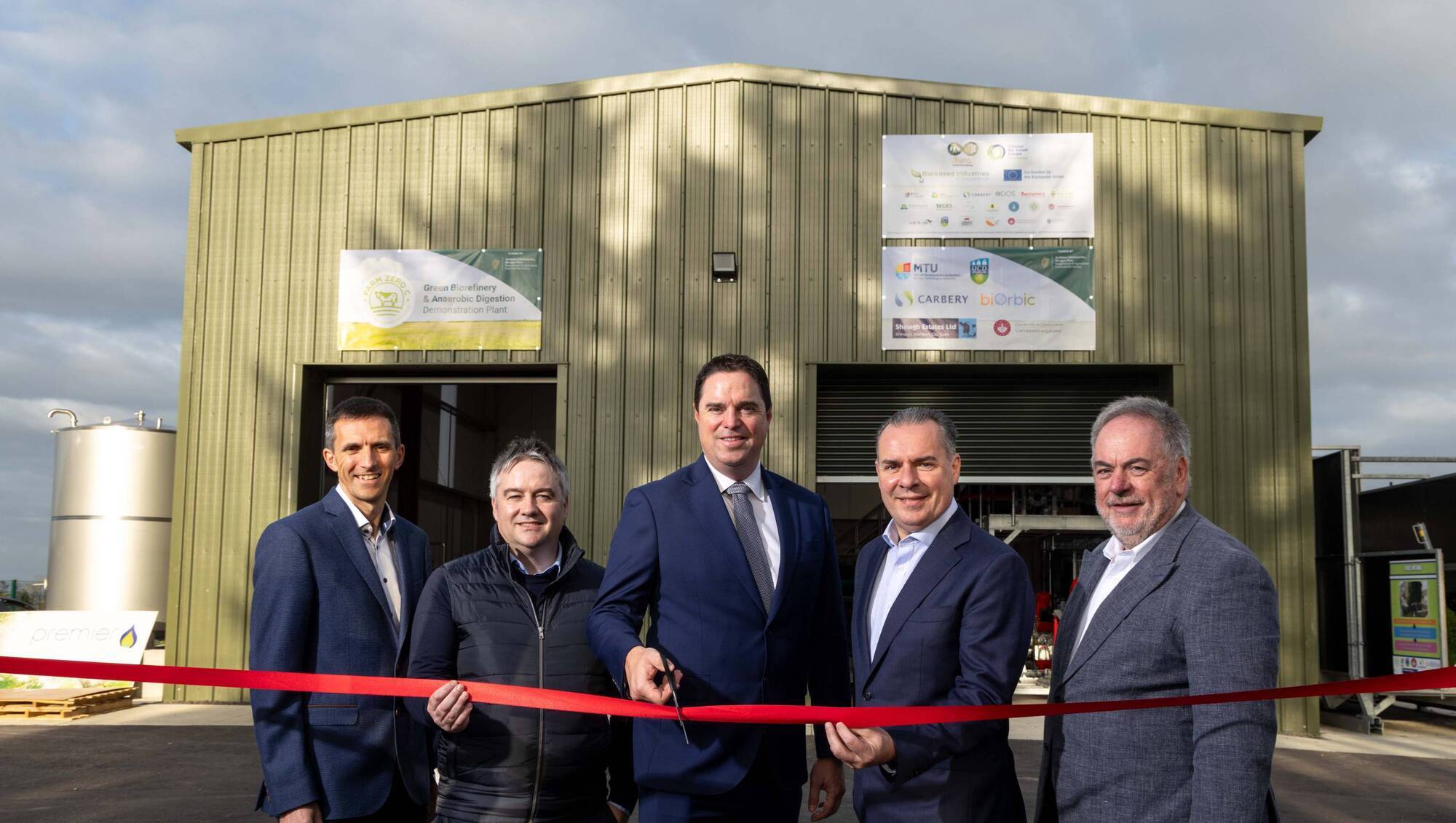
From left: Kevin O'Connor, Farm Zero C / BiOrbic; James Gaffey, MTU CircBio Research Group; agriculture minister Martin Heydon; Jason Hawkins, chief executive, Carbery; and John O'Brien, chair, Carbery at the official opening of Ireland's first on-farm integrated grass biorefinery and anaerobic digestion demonstration facility at Shinagh Estates Demonstration Farm, Bandon, Co Cork. Pictures: Michael O'Sullivan / OSM
Ireland's first on-farm demonstration plant integrating grass biorefining and anaerobic digestion has officially opened.
The plant is located at the Shinagh Estates Demonstration Farm, Co Cork, and is part of the Farm Zero C project and is one of the largest facilities of its kind in the world.
Opening the facility, agriculture minister Martin Heydon said: “Today is another significant milestone for the Irish bioeconomy with the opening of the €3m integrated grass biorefining and anaerobic digestion demonstration plant here as part of the Farm Zero C project on Shinagh Estate’s dairy farm in Co Cork.
“This is Ireland’s first on-farm demonstration facility at scale. The facility will process fresh grass to produce a range of products, including high-protein animal feed, a grass fibre fraction that can be used for applications in packaging and livestock feed, bioenergy and biofertiliser, and with the potential for new human food ingredients in time.
Read More
"Instead of just using grass for one purpose, animal feed, this facility will show at a pre-commercial level how we can make further use of our grass and open up new business models and income streams for our grassland farmers.”
Ireland has some of the highest yields of grass in the world, supported by good soils and temperate climate and aided by expert grassland management. Currently, grass has one primary use as a feed for livestock.
Research and innovation have developed technologies for green biorefining that allow grass to be processed into a range of new, high-value products, without adversely affecting its primary use as an animal feed source.
‘Green Biorefining’ separates fresh grass into a fibre-rich press cake for livestock feed, and a juice stream from which protein and other biobased ingredients can be recovered.
What remains can then be directed to anaerobic digestion to produce renewable energy and nutrient-rich material with potential for use as biobased fertiliser, subject to quality, agronomic and regulatory requirements.
The demonstration plant will act as a testing and learning platform. Its purpose is to generate evidence, validate feed and biobased products and business models, support farmer and industry engagement, and reduce the risk involved in wider deployment.
The facility will also be used by Rural BioReFarmeries, a project coordinated by Munster Technological University (MTU) and supported with about €7.35m in EU funding through CBE JU, to assess the model’s potential for replication across European grassland regions.
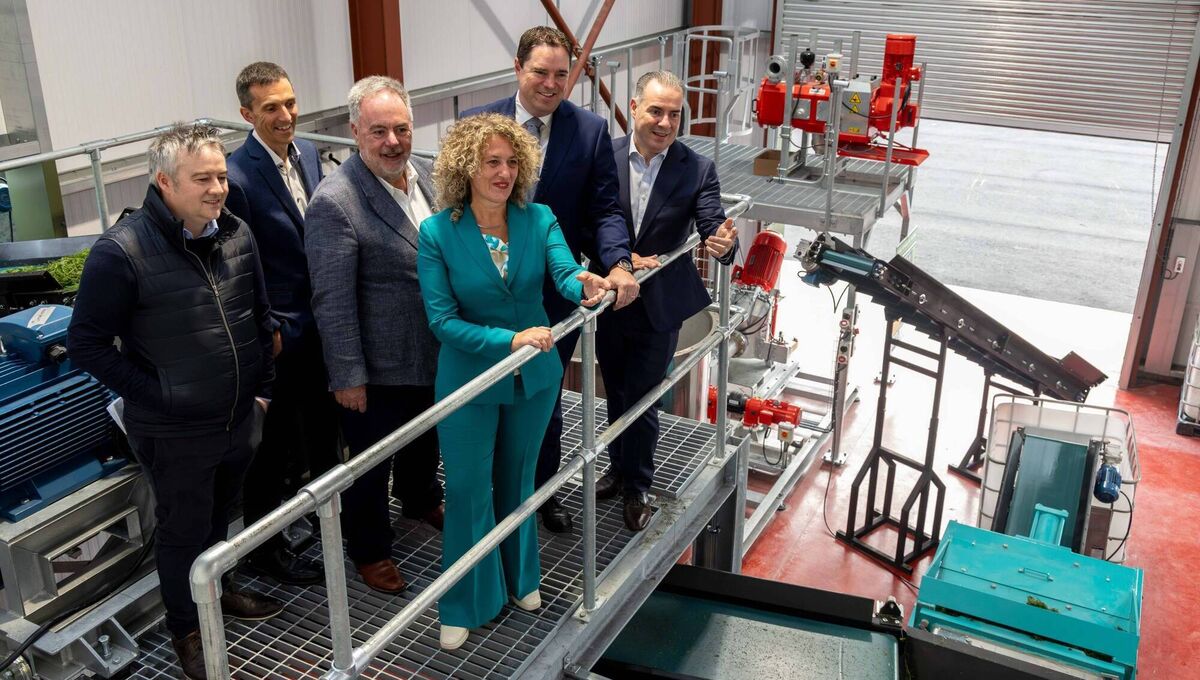
MTU and BiOrbic’s James Gaffey said: “The launch of this new state-of-the-art green biorefinery and anaerobic digestion plant, one of the largest facilities of its kind in the world, is a key development given the importance of grassland to our rural economy and farmers.
"This places Ireland firmly as a leading player in this emerging innovation space. These facilities will help us to unlock the full potential of our grasslands, bringing significant national and regional benefits.”
Head of programme at Circular Biobased Europe Joint Undertaking, Virginia Puzzolo, said: “This facility shows how European funding and national investment can work together to bring bio-based innovation to demonstration scale. Through the CBE JU-funded Rural BioReFarmeries project, partners are testing a small-scale, farmer-centred green biorefinery model under real farming conditions and assessing its potential for replication in other European grassland regions.
"Grass is a widely available but underused resource in Europe. Demonstrating its potential as a source of protein and other bio-based products can contribute to reducing the EU’s protein deficit while strengthening the EU’s strategic autonomy. This approach can also support rural economies and more efficient resource use, contributing to a more competitive, resilient and circular European bioeconomy.”
The range of products and services that grass biorefining could deliver will also contribute to reducing exposure to volatile international markets and energy costs, while developing new, diversified economic opportunities for grassland farmers.