From wedding bells to show rings: What a world without cows would mean for us
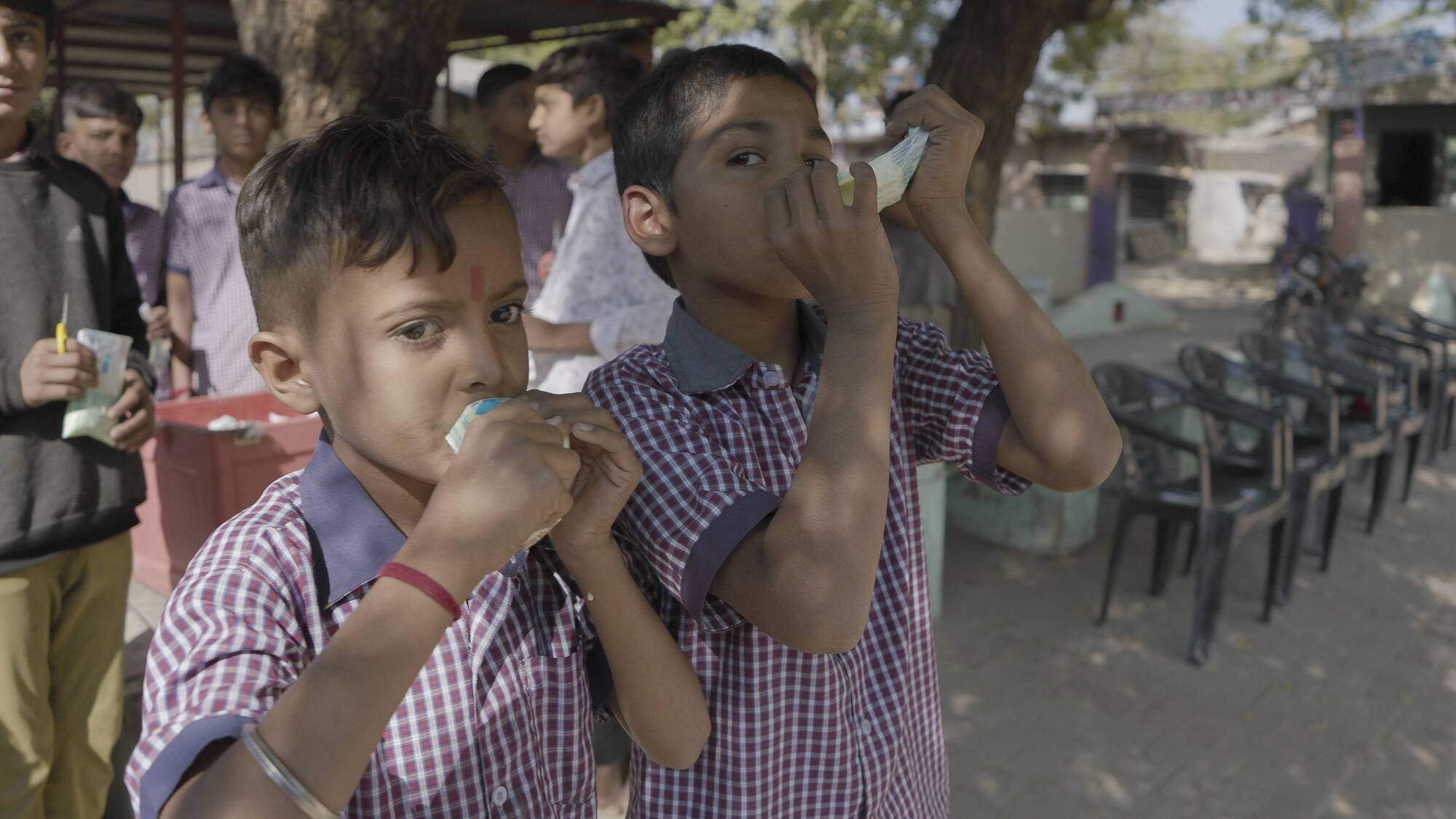
School children in India rely on milk as a key source of nutrition. Picture: World Without Cows.
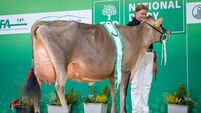
When you’re in the midst of the National Dairy Show buzz at Millstreet, where cows are, of course, the centre of the universe, it’s difficult to imagine a world without them.
Inside the Green Glens Arena, “debate around cows” might mean an overzealous natter on the trade stands about breeding, feeding, production, or just about any other aspect of livestock management.
The focus on and passion for top-quality stock has me reflecting on — a documentary asking the almost inconceivable question: what would a world look like without our bovine companions?
I was privileged to attend its recent premiere in Dublin, but many of the film’s tensions and arguments have niggled in the back of my mind in the weeks since.
The documentary explores both the scientific debate as well as the side of the story which is typically overlooked — the place of cows in societies around the world.
There are much bigger questions to be asked in who gets to have a voice in the greater climate debate, particularly around farming.
Many farmers will feel those working closest to cows are furthest from the debate, despite their livelihoods being right at its centre.
turns the lens towards those people, exploring cattle’s many roles through the lives of those who work with them.
In India, the film explores commercial dairy production and the contribution of nutrition, breeding and animal care to increasing milk output. It considers dairy’s importance in children’s nutrition, but also asks what happens to cows when they no longer have a productive role.
Read More
We need science and figures to inform debate. We also need to understand the consequences of proposed changes and the perspectives of those who will live with them.
It would have been easy for a film financially backed by an agri-food technology company to simplify the debate to the point of becoming propaganda. Instead, I felt the filmmakers explored tensions and nuances that a promotional account might have avoided.
Even grass-based production receives scrutiny, including the pressures that arise when a system becomes more intensive. There is room to consider both what a system offers and what can go wrong when it is pushed further.
An example near Okehampton in England examines the difficulties of using marginal land for horticultural production, including soil erosion and nutrient leaching. A segment on lab-grown meat in Singapore also considers its merits and challenges.
Together, these examples encourage a more demanding question: what would a proposed change involve in practice, on this land, for these people?
Arguments might stack up on paper, but farming’s practical realities can expose challenges that sweeping proposals overlook.
There were practical responses, too. Waterford dairy farmer Niall Moore shows a wetland system used to capture and filter run-off before it reaches waterways, while regenerative systems also improved soil structure and fertility.
It is clear the next chapter requires listening to farmers and ranchers, and working with them. Their experience deserves a place alongside scientific evidence in deciding what happens next.
I don’t think too many wedding bells depended on this year’s National Dairy Show, but there were plenty of other reasons to celebrate — and perhaps a few bottles of champagne to pop after this year’s historic championship.