Children's book highlights 'the most misunderstood tree in Ireland', bodies claim
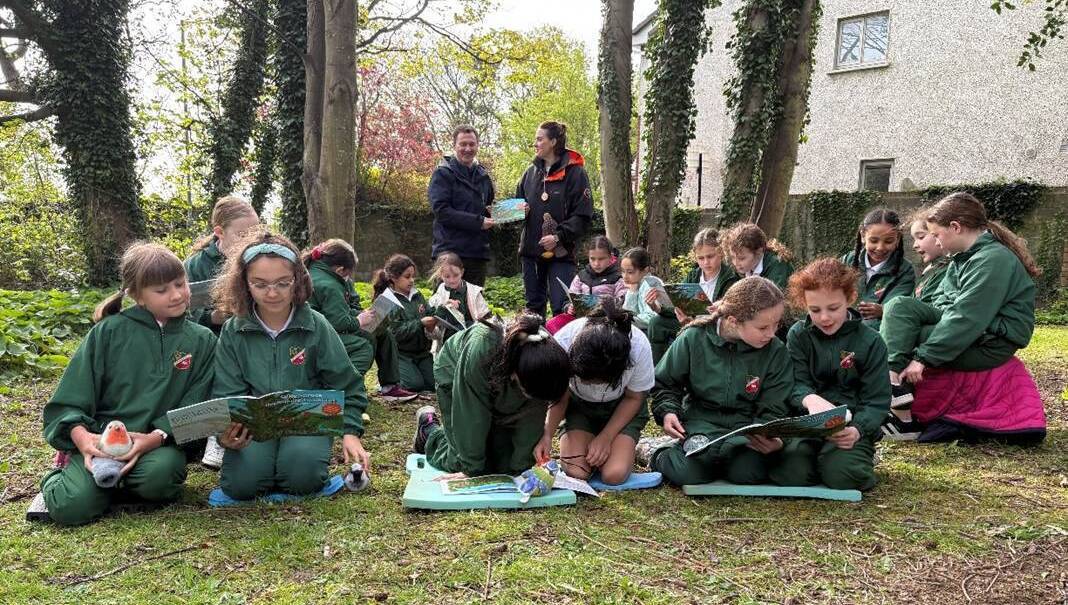
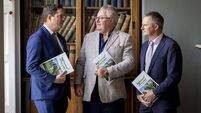
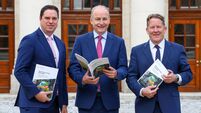
Students and teachers from St. Augustine’s Special Primary School in Stillorgan are presented with the book 'Sitka Spruce – the Amazing Timber Tree' from the Society of Irish Foresters, Irish Timber Council and SEEFA.
Primary school children countrywide are being given a chance to learn more about “the most misunderstood tree in Ireland” — the Sitka spruce.
Two copies of are being delivered to every primary school on the island, but the Irish Wildlife Trust claims the book is not objective and is a promotional framing of a non-native plantation species that omits significant ecological context.
Read More
The initiative is funded by the Society of Irish Foresters, the Social, Economic Environmental Association of Ireland and the Irish Timber Council.
A digital version, including a narrated story with sound effects, is also being sent to the schools. The promoters say Sitka spruce helps Ireland produce its own timber for housing, fencing, packaging, energy and other daily needs.
Growing trees locally relies less on imported wood, supports jobs in rural areas, and helps the climate by storing carbon in forests and timber products, they stress.
Society of Irish Foresters PRO, Joe Codd, said Sitka is a major species in Ireland's Climate Action Plan, especially in construction and energy, where it displaces fossil-based materials.
“It is also a key recreational species since Ireland adopted an open forest policy in the 1970s. Most of the annual 29 million visits to Irish forests are to Sitka spruce-dominated recreation sites,” he said.
Teige Ryan, PRO, Social Economic Environmental Forestry Association, said the book outlines how Sitka spruce is a vital tree in helping Ireland achieve carbon neutrality, but also acknowledges its role in a balanced forestry programme alongside native and naturalised tree species.
“Sitka is mistakenly depicted as the only species in Irish forestry. While dominant, the current forest estate — public and private — comprises 45% Sitka, 16% diverse conifers, 24% native species, 4% non-native broadleaves and 11% mainly open biodiverse forest areas,” he said.
Niall Grainger, Irish Timber Council, said the book will be a useful educational resource for the schools and will generate debate on sustainable forestry, which is a major resource in 21st-century sustainable living.
However, the Irish Wildlife Trust is calling for immediate action from the Department of Education and Youth to address and revise what it terms as “misleading messaging” presented to primary school children in the book.
It urged the department in the context of the global biodiversity crisis, to provide schoolchildren with educational materials which offer a more balanced understanding of Ireland’s biodiversity, native ecosystems and the pressures they face.
The IWT says the material being distributed to the primary schools presents a one-sided and commercially aligned narrative that fails to acknowledge the well-documented ecological impacts associated with Sitka spruce monoculture forestry.
It warns that children are being exposed to material that normalises industrial forestry systems as environmental best practice, without adequate reference to native ecosystems, biodiversity loss, or ecological trade-offs.
The Department of Education and Youth said it does not have a role in approving, commissioning, sponsoring or endorsing any content in any publication or product.