Argentina beef sector eyes growth boost from EU-Mercosur deal and rising global demand
Trade deals and rising demand offer opportunity, but efficiency, disease control and production shifts remain key challenges for growth
Argentina beef sector eyes growth boost from EU-Mercosur deal and rising global demand

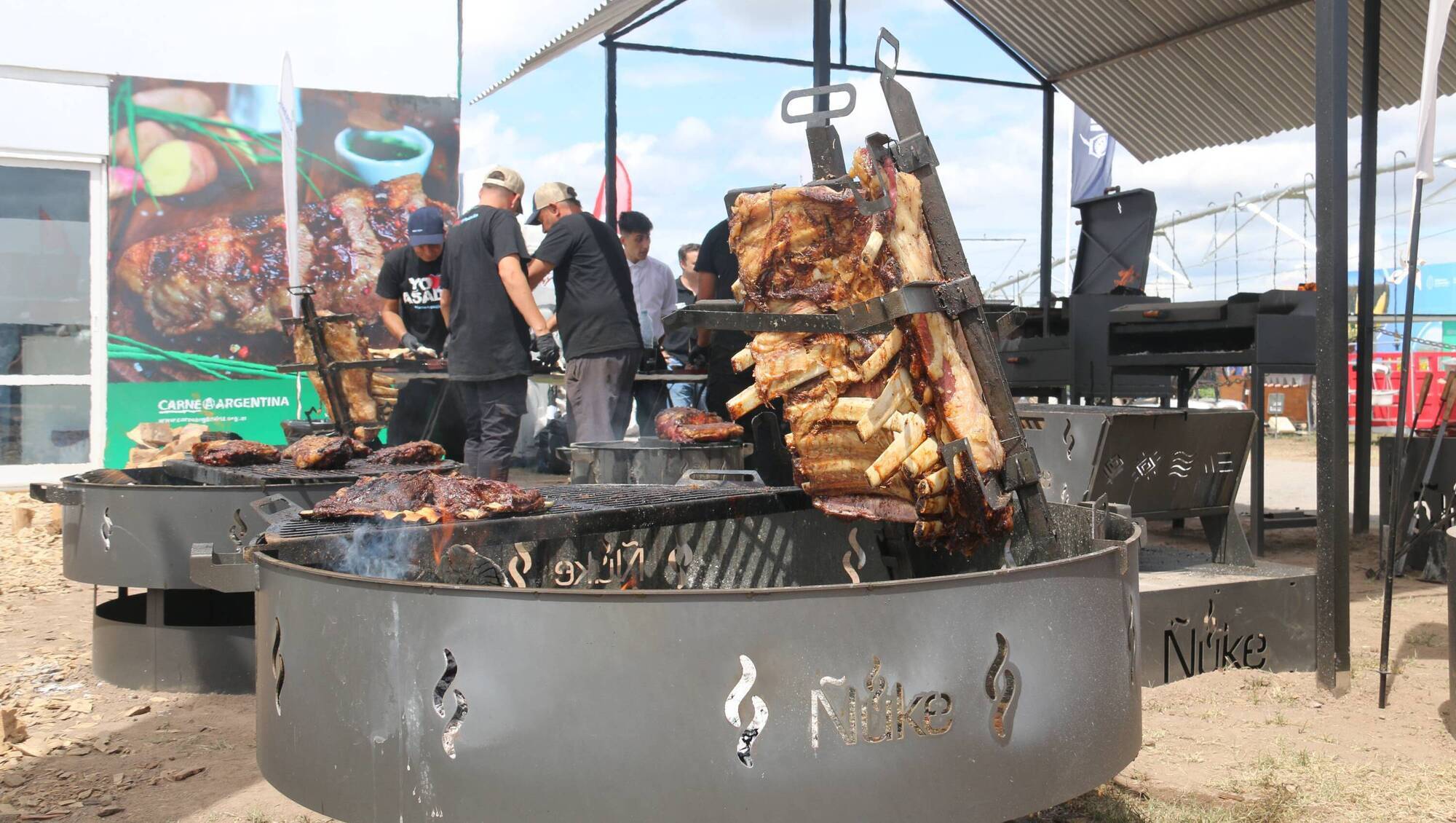
Meat, particularly beef, is very much at the centre of Expoagro, South America’s largest agricultural show, with many stands hosting their own parrilla — a traditional Argentine barbecue.

Argentina’s livestock sectors could be on the brink of a major growth phase and well-positioned to capitalise on new trade deals, including the EU-Mercosur deal, if production challenges can be managed.
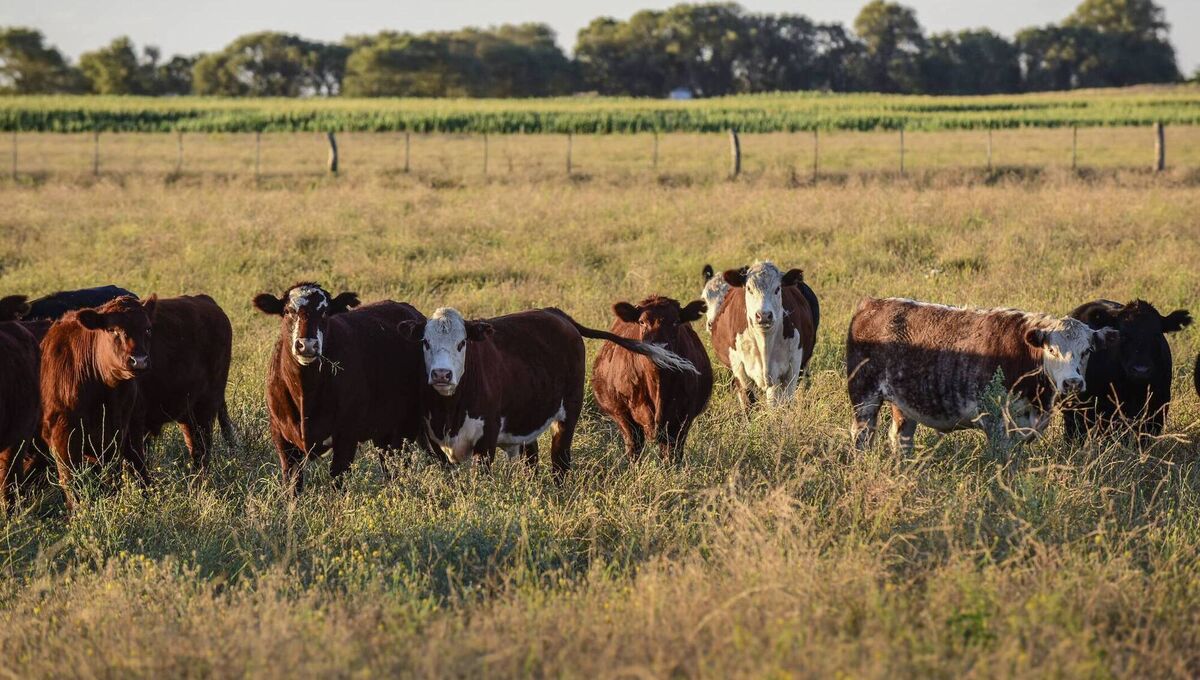
That was the key message from meat industry leaders speaking at Expoagro, South America’s largest agricultural show, who say that Argentine beef industry productivity gains have significant potential to come from heavier slaughter weights and intensification rather than simply increasing cattle numbers.

Held less than two months after the signing of the long-anticipated EU-Mercosur trade deal, the 2026 show marked the first major agricultural gathering in Argentina since the landmark trade agreement — which includes Argentina, Brazil, Paraguay and Uruguay — was signed.

The EU–Mercosur agreement will create one of the world’s largest free-trade zones, gradually removing tariffs on key commodities such as beef, poultry, pork, sugar, and ethanol traded between the EU and the Mercosur bloc.

Among the most anticipated for South American livestock producers is a 99,000 tonne annual beef quota, which will enter the EU at a reduced tariff of 7.5%, while poultry exports could reach 180,000 tonnes duty-free once the quotas are fully phased in.

The quota has been closely watched by European beef producers, including farmers in Ireland who fear increased South American imports could intensify competition in the EU market.

Rising global demand

Speaking to the Irish Examiner, Gabriel Gualdoni, a former president of the Argentine Chamber of Animal Nutrition Companies (CAENA), said Argentina was “very well positioned” to benefit from rising global demand for meat in light of the EU deal as well as a new trade deal with the US.

“2026 could be the year of animal protein if we know how to take advantage of it,” he said, pointing to decades of investment in genetics, technology, and professionalisation across the livestock sector, and highlighting the role animal nutrition could play in improving Argentina’s international competitiveness.

“One of the major challenges will be moving from a logic focused exclusively on cost reduction to one focused on production efficiency, where animal nutrition, input quality, traceability, and technological innovation play an increasingly decisive role,” he added.

Fernando Eluchans, the owner of a 5,000-head beef farm and elite Angus breeder based in Buenos Aires, told the Irish Examiner that global demand for animal protein will continue to grow.

However, he said that growth in Argentina’s beef sector “will not necessarily come from increasing herd numbers but from improving production efficiency — particularly through heavier slaughter weights”.

“We still have a lot to grow in that respect. We have to work a lot on slaughter weights,” he said.

“We are delivering far less protein than we have the potential to be able to generate.

“In Argentina, we keep slaughtering at extremely low weights. Yet, the genetics of the smallest-framed cattle you might find anywhere in our country are capable of producing 550kg or more of high-quality carcasses.

Among the most anticipated for South American livestock producers is a 99,000 tonne annual beef quota, which will enter the EU at a reduced tariff of 7.5%, while poultry exports could reach 180,000 tonnes duty-free once the quotas are fully phased in. Picture: iStock

“You could say that meat quality is achieved with ageing after slaughter, but also by ‘pre-ageing’. In that pre-ageing, the animal needs to follow its growth curves. So why do we develop genetics for animals that can be slaughtered at 600kg like in the US, where they aim for 700kg? Because that’s what the industry wants. Why do we do that and then slaughter at 400kg? Because that’s what the domestic market demands.

“With a 400kg animal, all the marbling and everything we were talking about does not have the chance to materialise.

“We have to start being very serious about this, slaughtering at higher weights.

“There is room to increase the kilos produced per animal by between 20% and 30%, just by moving from slaughter weights of around 350kg towards values closer to 500kg.

“Years ago, people in Argentina told me that grain-fed animals wouldn’t work here because it was an American fad, that the meat was lower quality and would harm people, clog arteries, all that. That’s not how the world sees it.”

Pork industry inspires

Argentina's pork industry has already undergone rapid transformation over the past two decades, with consumption rising steadily and production becoming increasingly concentrated among technologically advanced farms. It has become a sector many beef producers now look to for inspiration.

Daniel Fenoglio, the president of the Argentine Pork Federation, said per capita consumption has climbed to around 20kg per year, compared with just a few kilos two decades ago.

Although more than 2,500 producers recorded pig sales last year, Mr Fenoglio said the industry is now largely driven by a smaller number of modern operations.

“In reality, about 350 producers account for roughly 80%–85% of national production,” he said, adding that technological levels on those farms were now comparable to those of the world’s main producing countries.

“Many of these farms have been built relatively recently and incorporate advanced technology, improved genetics, and sophisticated manure management systems,” he said.

He said that shifting focus from processed meats to fresh cuts, and improving their marketing, had helped pork consumption grow sharply.

“When I started, most pigs went into cold cuts and processed products,” he said.

“Today, the majority of consumption is fresh pork. What we have done with pork, precisely with quite a bit of ingenuity when we decided to sell more fresh meat, is that we copied the same names that beef uses for its cuts. At the beginning, they were all Spanish names that people didn’t know. We said: ‘Well, we have to sell the leg cuts with the same names we use for beef cuts.’”

Biosecurity is the “first, second, and third challenge” RaĂșl MarsĂł, the president of poultry firm Las Camelias, was bullish about the potential of both domestic and export opportunities for his sector.

The opportunities are already there. We have them, and we’re going to seize them

“What we have to do is turn the challenges into opportunities for our company, for our wealth, and for our sector.”

However, he warned that, for the poultry sector, the greatest concern was bird flu and the threat it poses to both production and export markets, explaining that biosecurity has become the dominant issue facing the industry.

“If we don’t strengthen biosecurity — raising birds in highly controlled environments — avian influenza is here to stay,” he said.

“There is the real [biological] influenza, and there is the ‘political’ influenza. There is the ‘trade’ influenza, which each country uses however it wants in order to put up tariff and non-tariff barriers. In that sense, we have a huge challenge: How we can maintain what we’ve been insistently doing for 20 years — exporting and growing?”

At one stage, he said, Argentina had reached export levels of around 15%–18% of poultry production, however, he added that disease restrictions can quickly disrupt that progress.

“Suddenly, all that product you have has to be sold in the domestic market,” he said.

The pork sector is working to overcome Aujeszky’s disease through a national programme. With export opportunities emerging under the EU–Mercosur agreement, industry leaders say addressing these production challenges will be critical if Argentina is to realise its ambition of turning 2026 into what some are calling the “year of animal protein”.

x

More in this section

Farming

Newsletter

Keep up-to-date with all the latest developments in Farming with our weekly newsletter.

Cookie Policy Privacy Policy Brand Safety FAQ Help Contact Us Terms and Conditions

© Examiner Echo Group Limited