A 50% audit hike still leaves Mercosur beef checks in single digits
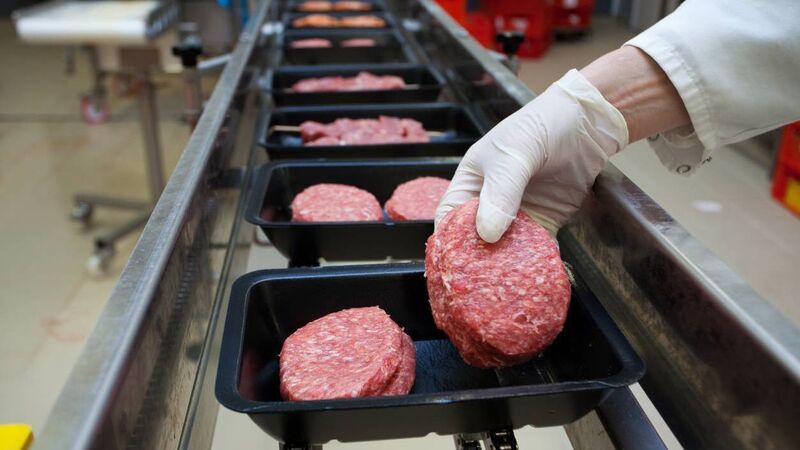
The proposal comes amid warnings that current audit levels do not go far enough to protect EU food standards, following the recall of a container of beef found to contain banned growth hormones. File picture.
Plans to increase European Commission audits on Mercosur-imported beef by 50% could see the number of on-site checks rise from just six to nine.
The proposal comes amid warnings that current audit levels do not go far enough to protect EU food standards, following the recall of a container of beef found to contain banned growth hormones.
Responding to questions from the on how farmers and the public can be assured that checks are sufficient after Brazilian beef was recalled in Ireland earlier this month, European Commission officials said they plan to increase the number of checks by 50% over the next two years.
A Commission spokesperson confirmed that six on-site audits are currently planned, including two in Brazil next year.
“There are two levels to the checks,” the official said. “One is at the border and is implemented by national authorities. The other level is implemented by the European Commission, and that involves audits carried out in third countries.”
He added that over the last two years the Commission had carried out nine on-site audits in Mercosur countries across the agri-food sector.
“In this specific case, we identified a shortcoming in the certification system,” he said. “There is a discussion ongoing on corrective measures, followed by a follow-up audit.” Responding to a further question, the official stressed that recalls carry significant consequences.
“When consignments have to be recalled, it has a huge cost. There was a scandal back in 2017, and since then, the level of controls has been much higher,” he said.
“If the situation is not satisfactory, it is always possible to delist a country. The conclusion of a trade agreement does not protect a country from these measures.
“The fact that we catch these minimal infractions means that our controls work.” However, the view in Ireland is that the checks do not go far enough.
Irish Farmers’ Association president Francie Gorman said the scale of inspections remains inadequate.
“It should be pointed out that those inspection levels are very small. We’re talking about five or six inspections, so by committing to an increase of 50%, we’re going from six to nine,” he said.
“I don’t believe the resources are being put in place to convince farmers. I met the Commissioner after a recent trip to Brazil, and he did find that he can turn the switch off overnight if he’s not happy. I think he needs to be prepared to do that.” Agriculture Minister Martin Heydon said the issue extends beyond reassuring farmers.
“This is actually about reassuring consumers across Europe,” he said. “Mercosur stopped being something that only concerned farmers worried about their livelihoods.
“Over Christmas, many constituents contacted me directly to say they were concerned about Brazilian beef being recalled from shelves here. That is a real concern not just for farmers from a business perspective, but also for consumers. Europe cannot have a lax attitude. It hasn’t happened in the past.”
The EU already imports approximately 200,000 tonnes of beef from Mercosur. Under the new agreement, an additional 99,000 tonnes will be available at low-tariff rates, though officials project actual usage at around 74,000 tonnes.
The Commission argues that the impacts are manageable and smaller than initially feared.
Its economic projections estimate that beef prices could fall by 1–2%, equating to €342m in production losses. Officials also pointed to Ireland’s own analysis, which suggests a 0.08% drop in national beef production.
Despite this, Commission officials stressed that farmer concerns have been heard. They highlighted new safeguard rules for sensitive products, a €6.3bn CAP crisis reserve under the next multi-annual financial framework, and the recent decision to release €45m for farming under the current framework.
On the European side, early beneficiaries include car manufacturers, who will see tariffs cut from 35% to 25%, and to 7.5% for the first 50,000 cars. Exporters of olive oil, wine, cheese, and skimmed milk powder are also expected to benefit.
These products will be subject to staged liberalisation through tariff-rate quotas (TRQs), which allow a predetermined volume of imports to enter at reduced or zero duty rates.
The Commission has framed the deal as strategically important in competing with China in Mercosur markets, noting that more than two-fifths of electric vehicles sold in Brazil are manufactured in China.